To the uninitiated, magic is a tool of boundless wonder, capable of mending broken bones, summoning lost objects across vast distances, and defying the very laws of gravity. Yet, woven into the very fabric of the wizarding world is a much darker, far more sinister thread. The Dark Arts of Harry Potter represent the most volatile, corrupting, and fundamentally dangerous branch of magical theory. While students at Hogwarts School of Witchcraft and Wizardry spend years learning how to defend against these forces, the true depths of dark magic remain shrouded in secrecy, myth, and terror.
For fans and scholars of J.K. Rowling’s universe, understanding the lore behind dark magic is essential. The magical system is not simply divided into “good” and “bad” spells; it operates on complex laws of intent, consequence, and soul-altering sacrifices. This comprehensive guide will demystify the rules, history, and terrifying mechanics of the Dark Arts. From the psychological weight of the Unforgivable Curses to the grotesque creation of Horcruxes, we will explore the forbidden lore that shapes the darkest corners of the wizarding world.
Defining the Dark Arts: Jinxes, Hexes, and Curses
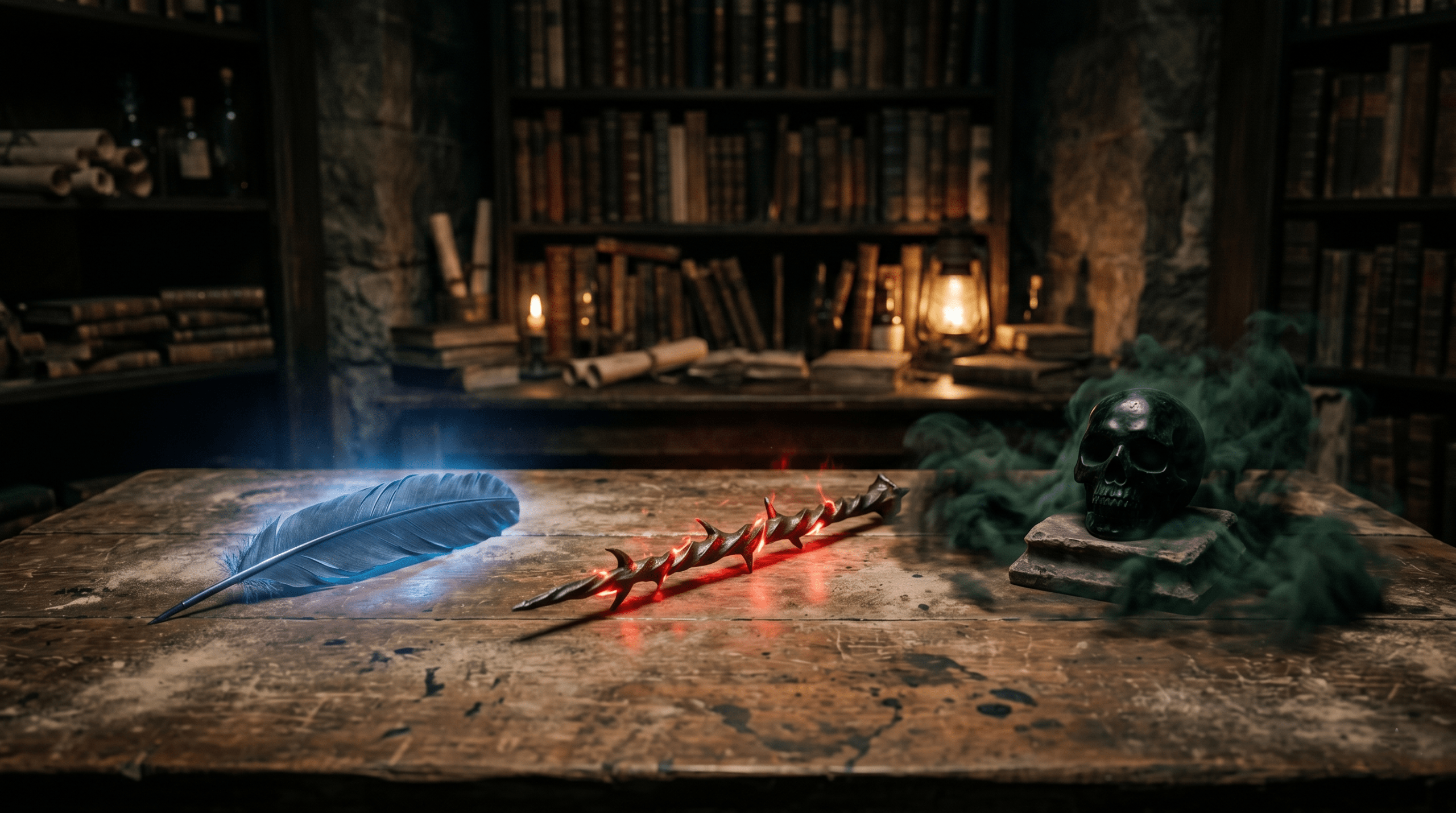
The term “Dark Arts” is an umbrella classification for any spell, potion, or magical artifact intended to cause harm, exert malicious control, or violate the natural laws of life and death. However, not all dark magic is created equal. The Ministry of Magic uses a distinct classification system to categorize these spells based on their severity, intent, and the permanence of their effects.
The Ministry of Magic’s Classification System
Understanding the legal and theoretical distinctions between spells is the first step in mastering dark magical theory. The Ministry recognizes three primary tiers of dark charms:
-
Jinxes: The lowest level of dark magic. Jinxes are primarily irritating rather than deeply harmful. Their effects are typically minor, temporary, and often used as practical jokes or minor defensive tactics. Examples include the Jelly-Legs Jinx or the Impediment Jinx.
-
Hexes: A step up in severity, hexes carry a darker intent and cause moderate suffering, though they are usually reversible with basic counter-curses. The Bat-Bogey Hex, famously mastered by Ginny Weasley, falls into this category.
-
Curses: The highest and most severe tier of dark magic. Curses are designed to cause lasting, profound damage, excruciating pain, or death. They are incredibly difficult, and sometimes impossible, to reverse. Spells like Sectumsempra and the dreaded Unforgivable Curses belong here.
 Why the Dark Arts Are “Unpredictable”
What truly separates the Dark Arts from standard charms or transfiguration is the indelible mark they leave behind. Standard healing magic cannot mend wounds inflicted by dark magic. When George Weasley’s ear is severed by Severus Snape’s Sectumsempra curse during the Battle of the Seven Potters, Molly Weasley—a highly proficient witch in household and healing magic—is powerless to replace it. A wound cursed off is lost forever.
“The Dark Arts are many, varied, ever-changing, and eternal. Fighting them is like fighting a many-headed monster, which, each time a neck is severed, sprouts a head even fiercer and cleverer than before. You are fighting that which is unfixed, mutating, indestructible.”
— Severus Snape
This canonical rule highlights the insidious nature of the Dark Arts: they defy the natural order, leaving physical and spiritual scars that standard magic cannot erase.
The Unforgivable Curses: Mechanics and History
In 1711, the British Ministry of Magic officially classified three specific spells as the “Unforgivable Curses.” The use of any one of them on a fellow human being carries an automatic, mandatory life sentence in Azkaban prison. These spells bypass conventional magical defenses like Protego and require immense dark intent to cast successfully.
The Cruciatus Curse (Crucio) – The Magic of Pure Agony
The Lore:
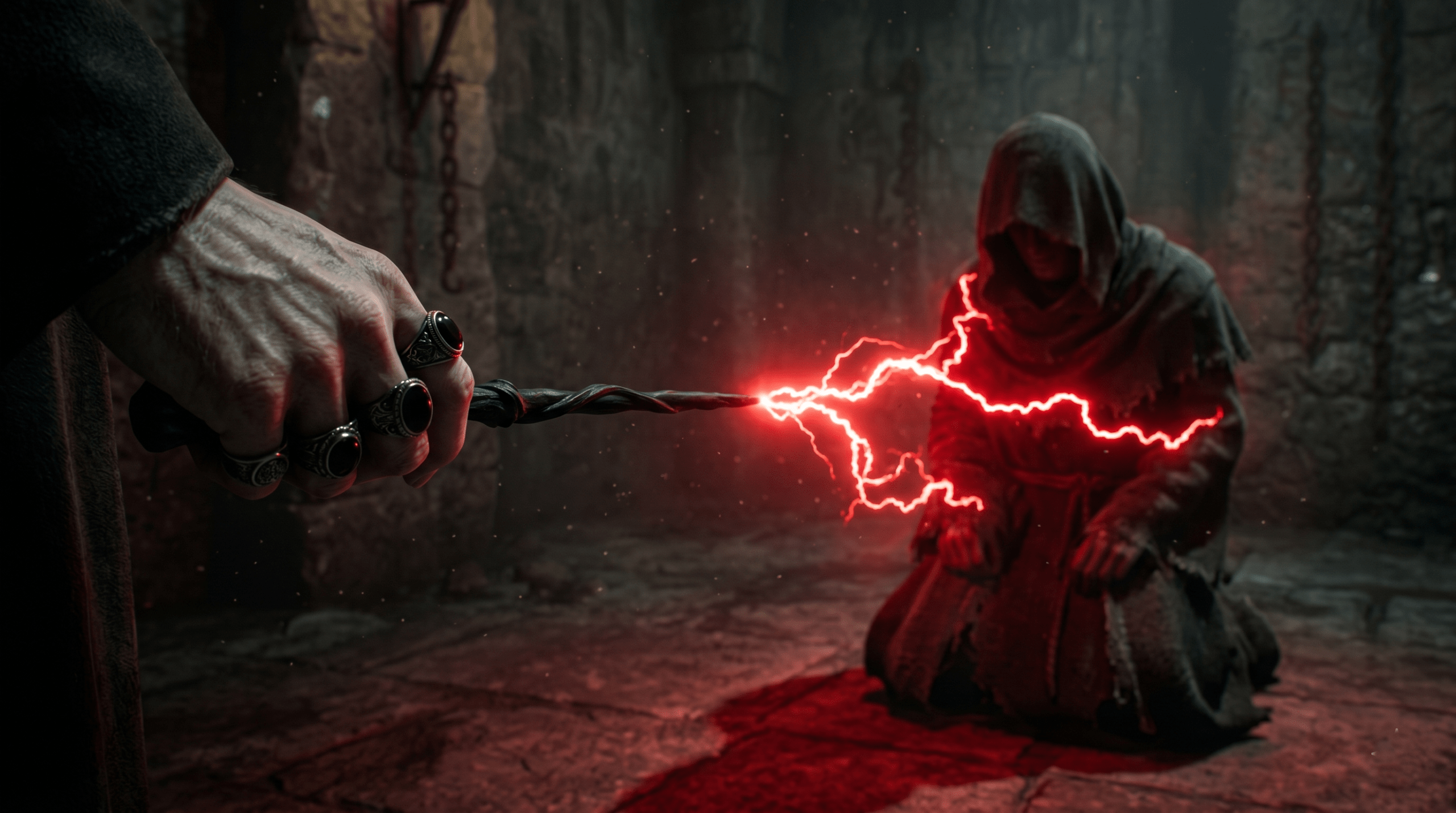
Invented during the early days of wizarding history, the Cruciatus Curse was likely used as a tool for interrogation and torture. When cast, it inflicts excruciating, white-hot pain upon the victim, described by Harry Potter as feeling as though his head was being split open while his bones were set on fire. The curse leaves no physical marks, making it a terrifyingly efficient instrument of psychological and neurological torture. The prolonged use of this curse famously drove Frank and Alice Longbottom to permanent insanity.
The Requirement:
One cannot cast the Cruciatus Curse through mere anger or righteousness. As Bellatrix Lestrange taunts Harry in the Department of Mysteries: “You need to mean them, Potter! You need to really want to cause pain—to enjoy it.” When Harry attempts to curse Bellatrix out of righteous fury over Sirius Black’s death, the spell merely knocks her off her feet. True dark magic requires a fundamental darkness within the caster—a sadistic desire to inflict suffering for its own sake.
 The Imperius Curse (Imperio) – The Loss of Free Will
The Lore:
The Imperius Curse places the victim under the absolute control of the caster. During the First and Second Wizarding Wars, Lord Voldemort and his Death Eaters weaponized this curse to infiltrate the Ministry of Magic, turning high-ranking officials into unwitting puppets. The insidious nature of Imperio lies in the fact that it is almost impossible to tell who is acting of their own volition and who is being controlled, breeding mass paranoia.
The Mechanics:
Unlike the Cruciatus Curse, Imperio does not inflict pain. Instead, the victim feels a floating, blissful sensation, completely absolved of responsibility or worry. Resisting the curse does not require immense magical power, but rather an incredibly strong sense of self and unyielding willpower. Harry Potter is remarkably adept at throwing off the Imperius Curse because of his innate defiance and strength of character.
The Killing Curse (Avada Kedavra) – The Ultimate Violation
The Lore:
Derived from ancient Aramaic (similar to the muggle phrase “Abracadabra,” meaning “let the thing be destroyed”), the Killing Curse manifests as a blinding flash of green light accompanied by a rushing sound. It causes instantaneous biological death, leaving no physical trauma. The Ministry of Magic and wizarding healers are completely incapable of diagnosing the cause of death in muggle autopsies, as the curse simply rips the soul from the body.
The Exception:
Avada Kedavra is unblockable by any standard shield charm. It can only be dodged or intercepted by a solid physical object. However, the deepest lore of the Harry Potter universe provides one exception: Sacrificial Protection. When Lily Potter willingly sacrificed herself for Harry, refusing to step aside when given the choice by Voldemort, she triggered an ancient, deeply rooted magic based on profound love. This ultimate sacrifice acted as an impenetrable counter-curse, causing the Killing Curse to rebound, destroying Voldemort’s physical body and cementing Harry as “The Boy Who Lived.”
Forbidden Lore: The Deepest Secrets of Dark Magic
Beyond the wands and incantations of daily combat lies the realm of esoteric, forbidden dark lore. These are the magics that the Ministry attempts to scrub from the Hogwarts library, hidden away in the Restricted Section for their grotesque violations of nature.
Horcruxes and the Mutilation of the Soul
A Horcrux is the darkest and most abominable magical object in existence, designed to anchor a wizard’s soul to the earthly plane, granting them conditional immortality.
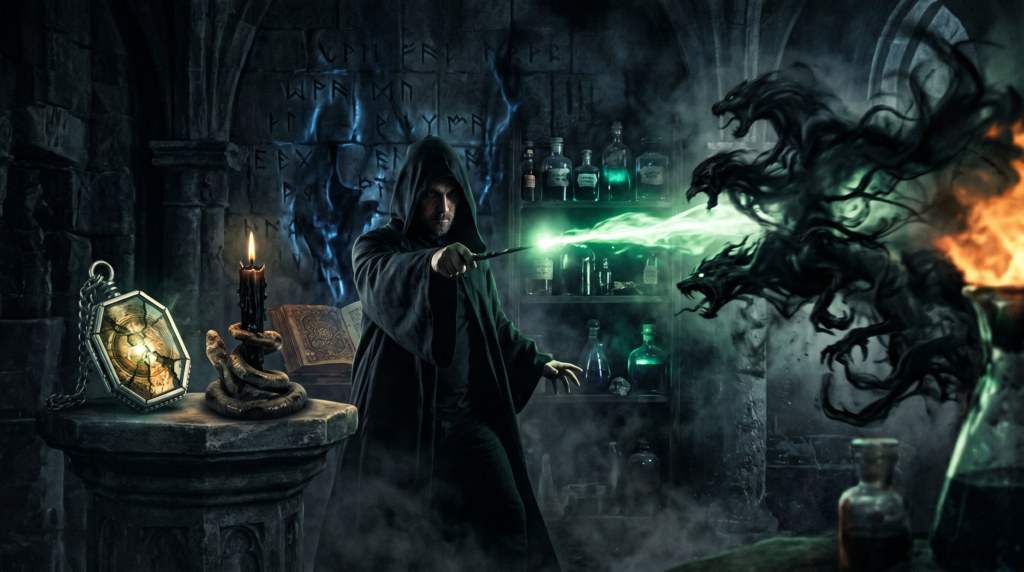
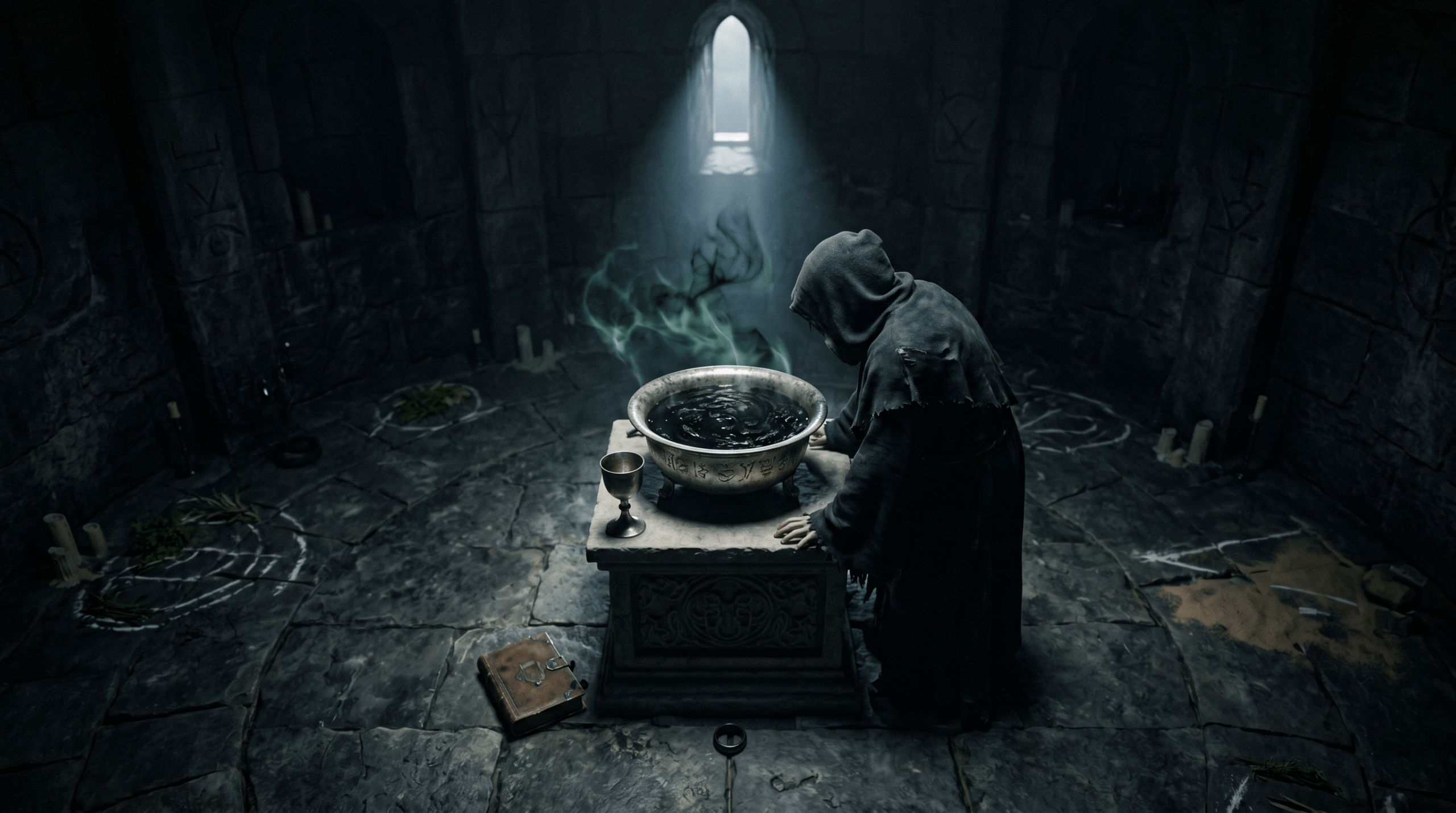
The process was first discovered by the ancient Greek Dark Wizard, Herpo the Foul, who also bred the first Basilisk. To create a Horcrux, a wizard must commit the ultimate act of evil: cold-blooded murder. This act fractures the soul. The wizard must then use a horrific, unspecified incantation and ritual to encase that torn fragment of soul into an object.
Lord Voldemort pushed this foul magic further than any wizard in history by intentionally splitting his soul into seven pieces. However, this pursuit of immortality comes at a terrible cost. The creator loses their humanity, their physical appearance degrades into something serpentine and monstrous, and they are rendered incapable of crossing over peacefully in the afterlife, trapped forever in a state of limbo (as seen by the flayed, whimpering creature Harry encounters in the spectral King’s Cross Station).
 Necromancy and the Inferi
While the Resurrection Stone can recall mere echoes or shades of the deceased, true resurrection is biologically and magically impossible in the wizarding world. However, the Dark Arts offer a grim alternative: Necromancy.
Dark wizards can create Inferi (singular: Inferius)—animated, reanimated corpses manipulated like marionettes to do a dark wizard’s bidding. Unlike zombies from muggle pop culture, Inferi have no free will, no minds, and no souls. They are simply physical shells driven by dark magic.
During the First Wizarding War, Voldemort murdered countless Muggles and wizards to build a hidden army of Inferi, storing them in the subterranean lake where he hid Salazar Slytherin’s locket. Because they are creatures of darkness, cold, and decay, Inferi possess a single, glaring weakness: fire and warmth. The spell Partis Temporus or the creation of magical firestorms is the only way to successfully repel an Inferi hoard.
Destructive Elementals: The Uncontrollable Fiendfyre
Fiendfyre is cursed fire of unnatural size and heat. It is a highly advanced, exceptionally volatile form of dark magic that manifests in the shape of monstrous beasts—chimaeras, serpents, and dragons.
What makes Fiendfyre so uniquely terrifying is that it possesses a malevolent sentience. It actively seeks out living targets to consume and grows stronger with everything it burns. It is one of the few known substances capable of generating enough destructive power to destroy a Horcrux beyond magical repair. Because the spell is notoriously difficult to control, casting it is practically a death sentence for the unskilled. Vincent Crabbe famously lost his life to his own Fiendfyre within the Room of Requirement, unable to halt the ravenous inferno he unleashed.
Artifacts of Malice: Dark Magical Objects
Dark magic does not solely exist in the form of spoken spells; it can be bound and imbued into physical objects, turning everyday items into lethal traps. The creation and distribution of these objects fuel an entire black-market economy within the wizarding world.
Borgin and Burkes: The Hub of Dark Trade
Located in the shadowy, unwelcoming Knockturn Alley, off the main thoroughfare of Diagon Alley, Borgin and Burkes serves as the premier antiquities shop for dark magical artifacts. Frequented by Death Eaters and Dark Arts enthusiasts, the shop deals in items of sinister origin—from human bones and rusty, spiked instruments to cursed jewelry. The shop’s proprietors, Mr. Borgin and Caractacus Burke, have spent decades profiting off the malice of others, even employing a young Tom Riddle after his graduation from Hogwarts to act as an aggressive procurer of rare, historical artifacts.
Legendary Cursed Objects
The danger of dark artifacts is that they can lie dormant for years, only to strike the unwary.
-
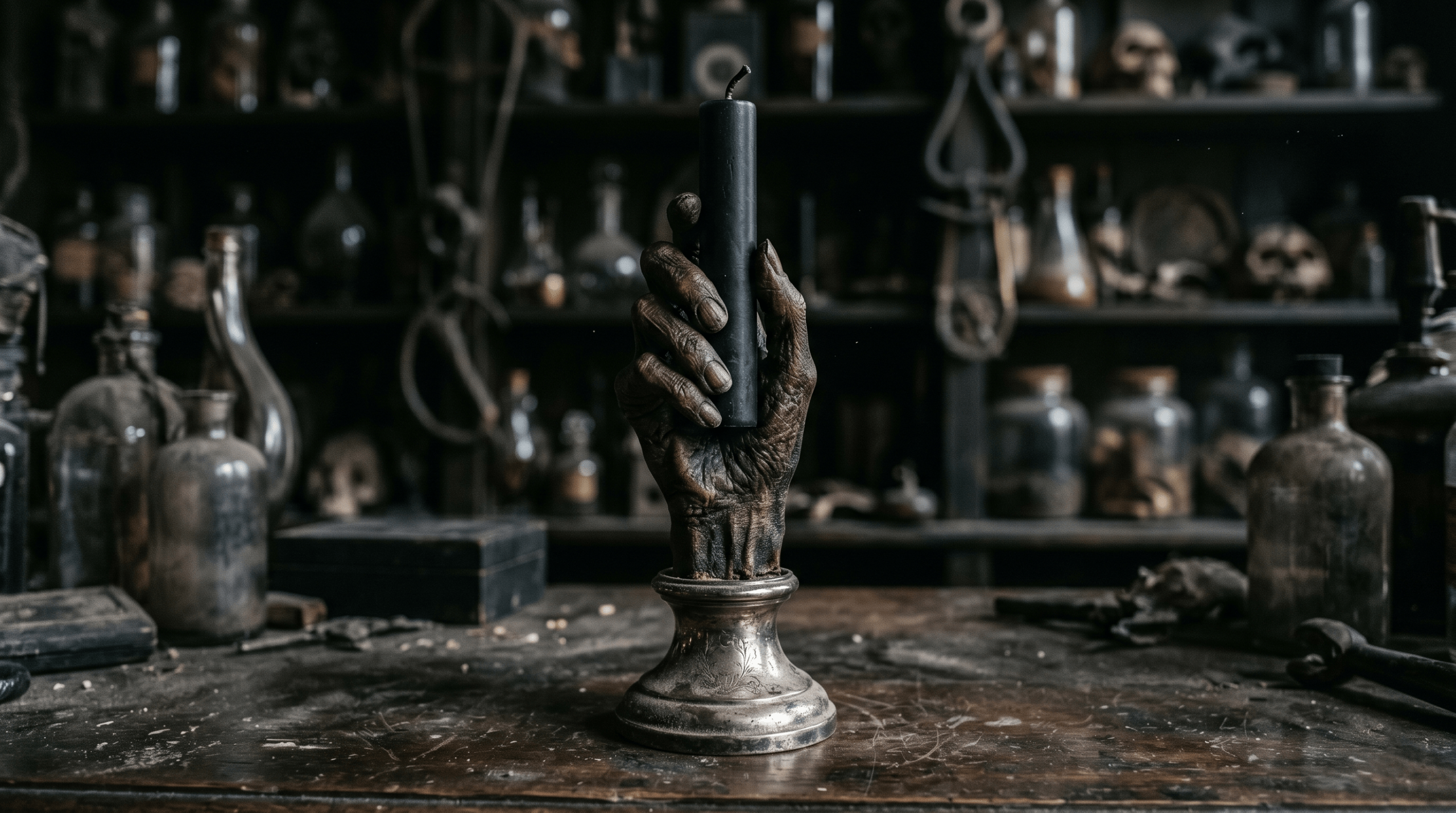
The Hand of Glory: A gruesome artifact made from the severed, shriveled hand of a hanged man. When a candle is placed within its grasp, it provides light only to the person holding it. Draco Malfoy utilizes this dark tool in Harry Potter and the Half-Blood Prince to navigate through Peruvian Instant Darkness Powder, effectively bypassing the defenses of Dumbledore’s Army.
-
The Opal Necklace: An infamous, stunningly beautiful piece of jewelry that claimed the lives of nineteen muggles. The curse imbued within the stones is so virulent that merely brushing against it with exposed skin is enough to cause near-instantaneous death. Katie Bell’s agonizing, levitating seizure after accidentally touching the necklace through a tear in her glove perfectly illustrates the indiscriminate lethality of cursed objects.
 Philosophy and Alternate Timelines: Grindelwald vs. Voldemort
While Voldemort is the central antagonist of the Harry Potter narrative, he is not the only Dark Wizard to terrorize the globe. Analyzing the contrast between Lord Voldemort and Gellert Grindelwald offers a fascinating look into the varying philosophies behind the Dark Arts.
Different Approaches to the Dark Arts
Lord Voldemort viewed the Dark Arts as a blunt instrument of terror and a means to achieve personal, eternal power. He operated in the shadows, using Unforgivable Curses to torture, silence, and subjugate. His approach was highly localized to Great Britain and relied on a cult of personality, fear, and blood supremacy. For Voldemort, dark magic was a weapon of self-preservation.
Gellert Grindelwald, however, viewed the Dark Arts as a necessary, systemic tool for global revolution. Grindelwald rarely resorted to mindless torture; instead, he used dark magic to break rules, bend minds, and rally followers under the guise of “The Greater Good.” Grindelwald’s magic was elegant, persuasive, and dangerously charismatic. He envisioned a world where wizards ruled over Muggles, and he believed that mastering the Dark Arts was simply a prerequisite for a superior society.
 What If the Dark Arts Were Legal?
A popular theoretical discussion within the Harry Potter fandom involves the Durmstrang Institute. Unlike Hogwarts, which strictly teaches Defense Against the Dark Arts, Durmstrang embraces the Dark Arts as a core part of its curriculum.
If the wider wizarding world adopted the Durmstrang approach, the geopolitical landscape of magic would drastically shift. The stigma against dark spells would dissolve, potentially leading to a heavily militarized wizarding society where preemptive dark strikes replace defensive shield charms. However, given the canonical reality that dark magic inherently corrupts the soul, a society that legally embraced the Dark Arts would inevitably descend into madness, cruelty, and self-destruction, completely devoid of the empathy and love that J.K. Rowling establishes as the highest forms of magic.
Frequently Asked Questions (FAQ)
Can a Squib use Dark Magic?
No. Squibs are individuals born to magical parents who possess no magical ability whatsoever. Because the Dark Arts require not only profound malice but also a conduit of raw magical power to manifest, a Squib cannot cast dark spells, nor can they brew dark potions.
Why didn’t the Ministry use the Unforgivable Curses against Death Eaters?
During the First Wizarding War, they actually did. Desperate to curb the immense casualties inflicted by Voldemort’s forces, the Head of the Department of Magical Law Enforcement, Barty Crouch Sr., passed emergency legislation authorizing Aurors to use Unforgivable Curses against suspects. This controversial decree led to widespread brutality, trials without juries, and a blurring of the lines between the “good” aurors and the dark wizards they were hunting. The authorization was revoked after the war.
Is Sectumsempra considered an Unforgivable Curse?
Legally, no. Sectumsempra, invented by Severus Snape, is a devastatingly dark curse that slashes the target as if by an invisible sword. While it is highly illegal and incredibly dangerous, it does not carry the automatic life sentence in Azkaban associated with the three Unforgivable Curses.
Can a Dementor’s Kiss be categorized as Dark Arts?
Not strictly. While Dementors are foul, dark creatures, their ability to suck out a human soul (the Dementor’s Kiss) is a biological/magical function of their species, not a casted spell or curse. However, the breeding and manipulation of Dementors by dark wizards certainly falls under the umbrella of dark magical practices.
The Dark Arts of Harry Potter represent far more than just evil spells; they are a profound exploration of human morality, temptation, and the consequences of choosing power over love. From the soul-splintering horror of Horcruxes to the psychological torment of the Unforgivable Curses, J.K. Rowling crafted a magical system where darkness has a very real, very heavy cost.
Understanding the forbidden lore of the wizarding world makes the triumphs of characters like Harry, Hermione, and Ron all the more impressive. They did not just defeat a powerful wizard; they stood against an ancient, corrupting force of nature—and won.
Now it’s your turn: Which dark magical artifact or forbidden spell do you find to be the most fascinating or terrifying in the wizarding world, and why? Share your thoughts and deep-lore theories in the comments below!