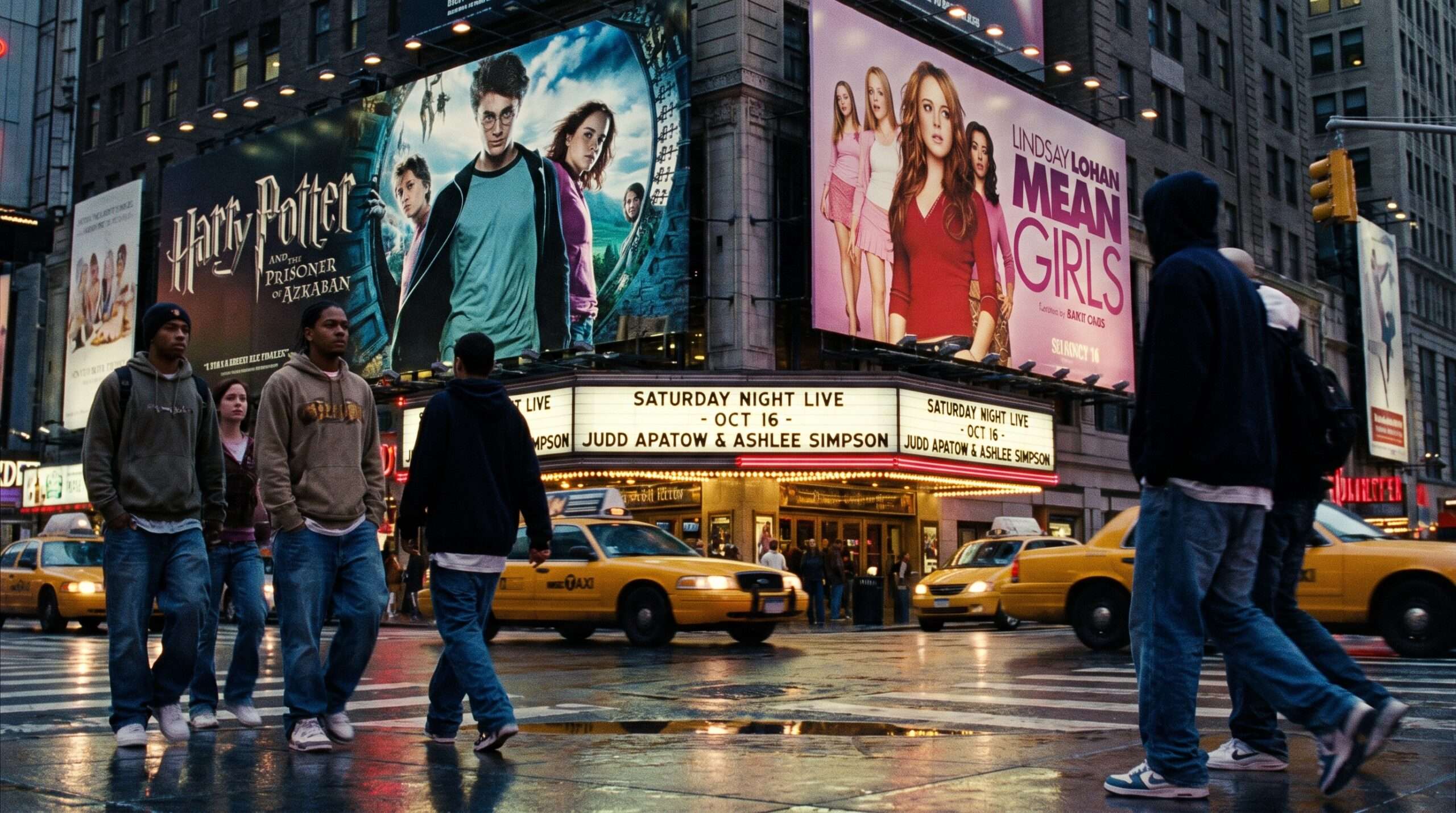
If you cast your mind back to the spring of 2004, two massive cultural phenomena were dominating the global entertainment landscape. In theaters, a young actress was cementing her status as a generational superstar with the release of the teen comedy Mean Girls. Simultaneously, the world was bracing for the theatrical release of Harry Potter and the Prisoner of Azkaban, a film that would take the beloved wizarding franchise into darker, more mature territory. When these two pop culture titans collided on live television on May 1, 2004, it created a moment that fans still talk about today. The appearance of Lindsay Lohan on SNL as Hermione Granger remains one of the most memorable, heavily circulated, and retroactively controversial comedy sketches in Saturday Night Live history.
More than two decades later, this specific SNL segment—officially titled “Hogwarts Academy” but widely known across the internet as the “Hermione Growth Spurt” sketch—continues to generate millions of views on YouTube and TikTok. For many, it is a hilarious time capsule of early 2000s humor and a testament to a legendary SNL cast. For others, viewing it through a modern lens raises questions about the era’s treatment of young female celebrities.
Whether you are here for a wave of nostalgia, curious about the behind-the-scenes trivia, or wondering how the sketch holds up under modern scrutiny, this comprehensive guide will take you back to the Gryffindor Common Room to explore the story behind the magic.
The Premise: What Happens in the “Hogwarts Academy” Sketch?
To understand why this sketch broke the internet before “breaking the internet” was even a concept, we have to look at its brilliant, perfectly escalated comedic structure. The sketch relies on a classic sitcom trope—the unexpected glow-up over summer vacation—and filters it through the magical, high-stakes world of J.K. Rowling’s universe.
 Setting the Scene
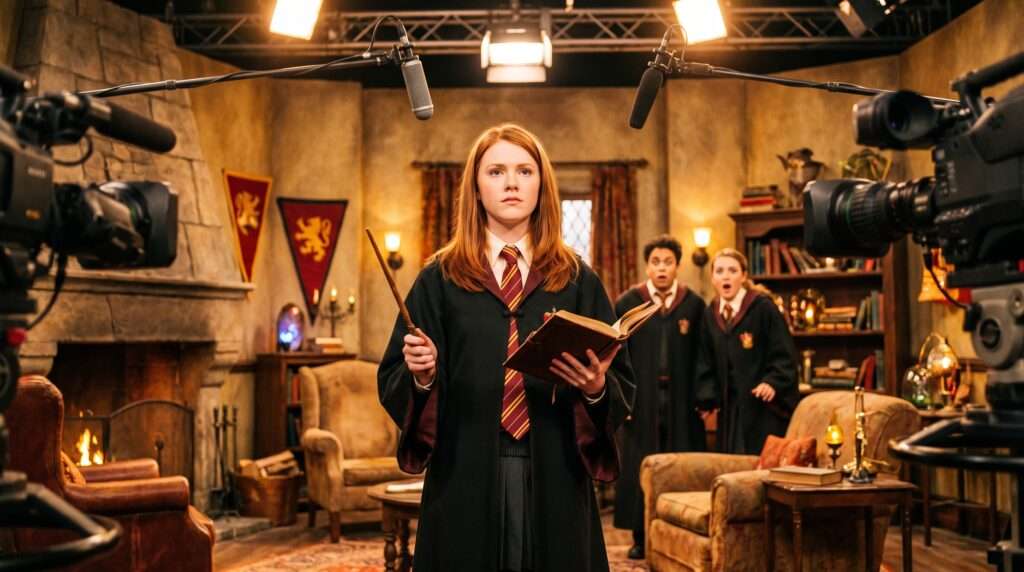
The sketch opens in a remarkably faithful recreation of the Gryffindor Common Room. A brooding, angsty Harry Potter and his loyal best friend Ron Weasley are deep in conversation. The dialogue immediately establishes the stakes: Voldemort is gathering power, darkness is encroaching on Hogwarts, and the boys must prepare for the fight of their lives. The tone is deadpan, mirroring the increasingly serious nature of the film franchise.
The Grand Reveal
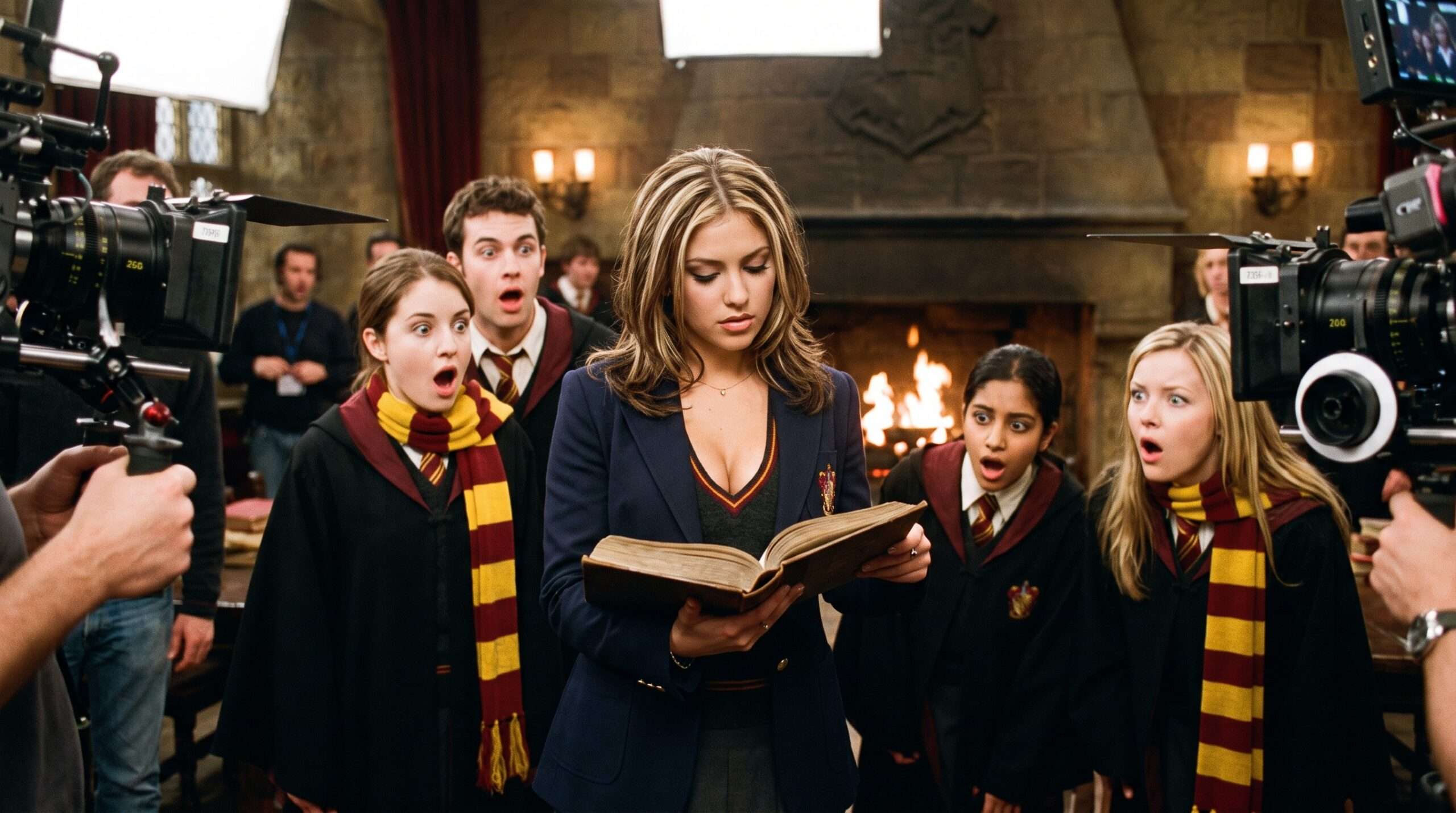
The tension is broken when Hermione Granger enters the room, returning from a holiday break. However, she has undergone a massive physical transformation. Gone are the frizzy hair, oversized robes, and awkward adolescent demeanor. Instead, Lindsay Lohan struts into the common room wearing a deeply plunging, heavily tailored version of the Hogwarts uniform, proudly showcasing a dramatic “growth spurt.”
The crux of the joke is immediately established: Hermione is completely oblivious to her newfound physical appeal, remaining hyper-focused on her studies, O.W.L. exams, and defeating dark wizards. Meanwhile, the boys are instantly derailed.
The Comedic Escalation
From this point forward, the sketch becomes a masterclass in escalating absurdity. Harry and Ron entirely abandon their fears of the Dark Lord, instead finding themselves hopelessly distracted by their best friend’s cleavage.
“Hermione, you’ve… changed,” Ron stammers, his eyes locked on her chest, completely abandoning his previous train of thought about dark magic.
As the sketch continues, a parade of famous Hogwarts characters enters the room, each reacting with identical, hormone-driven shock. Fred and George Weasley arrive and are instantly immobilized by the sight. Professor Severus Snape swoops in to deliver a menacing warning, only to lose his train of thought entirely, leaning in uncomfortably close.
The Climax
The sketch reaches its visual and comedic peak with the arrival of Rubeus Hagrid. Bursting through the portrait hole, the half-giant takes one look at the transformed teenage witch and famously drops the massive prop he is carrying, delivering a hilariously inappropriate and booming reaction that leaves the live studio audience in stitches. The contrast between the sacred, innocent world of Hogwarts and the crude reality of teenage puberty is fully realized.
The Cast: Who Brought the Magic to Life?
The success of the “Hogwarts Academy” sketch did not just rely on Lohan’s star power; it was anchored by an all-star roster of SNL cast members who were operating at the absolute peak of their comedic abilities during Season 29.
Lindsay Lohan as Hermione Granger
At the time of this episode, Lohan was arguably the most famous teenager on the planet. Fresh off Freaky Friday and hosting SNL to promote Mean Girls, she possessed an incredible knack for comedic timing. In this sketch, her greatest strength is playing the “straight man.” Lohan delivers lines about wand movements, spellbooks, and Arithmancy with absolute sincerity, completely ignoring the chaotic reactions of the men around her. Her deadpan delivery anchors the sketch, allowing the rest of the cast to spiral into absurdity.
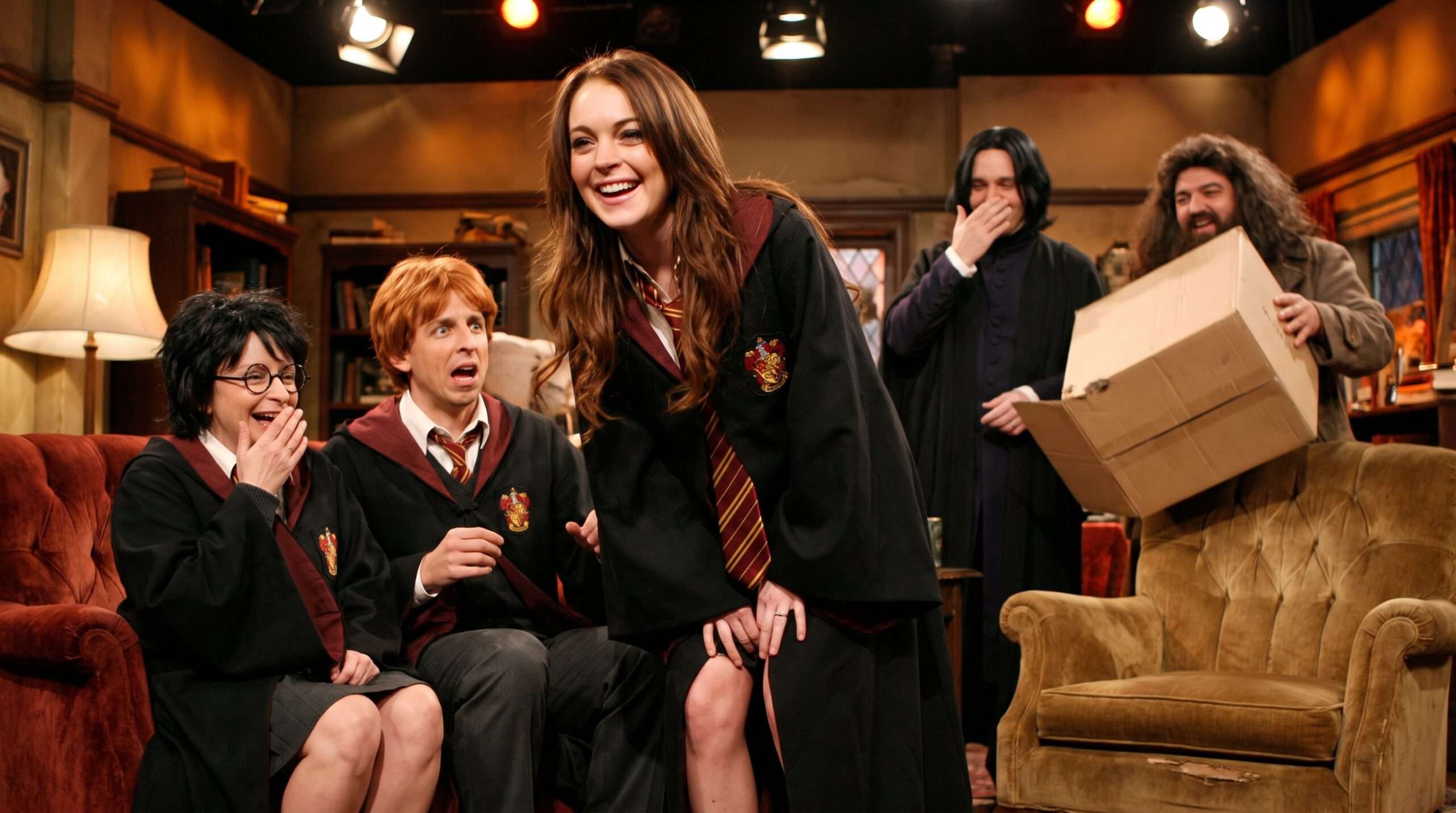 Rachel Dratch as Harry Potter
Long before Daniel Radcliffe hosted SNL in 2012, comedian Rachel Dratch was the show’s resident Boy Who Lived. Dratch’s portrayal of Harry Potter is legendary. Utilizing her petite stature, she donned the round glasses, the lightning-bolt scar, and an oversized Gryffindor sweater, adopting a low, breathy, hyper-serious voice. Dratch perfectly captured the brooding intensity of the cinematic Harry, making her sudden pivot to a distracted, hormone-addled teenager incredibly funny.
Seth Meyers as Ron Weasley
Before he became the polished host of “Weekend Update” and Late Night, Seth Meyers was a versatile sketch player. His take on Ron Weasley leaned heavily into Rupert Grint’s tendency to look constantly panicked. Meyers’ wide-eyed, stuttering reaction to Hermione’s transformation provided the perfect foil to Dratch’s intense Harry.
The Supporting Roster
-
Will Forte as Severus Snape: Forte’s interpretation of Snape bypassed Alan Rickman’s iconic drawl and instead presented the Potions Master as a deeply unsettling, whispering creep. His sudden, intense focus on Hermione is a masterclass in making the audience laugh while simultaneously cringing.
-
Chris Parnell & Jimmy Fallon as Fred and George Weasley: The duo briefly appears to add to the mounting chaos, with Fallon famously flashing his signature smirk as he struggles to maintain his composure.
-
Horatio Sanz as Rubeus Hagrid: Sanz brought an explosive, booming energy to the Hogwarts gamekeeper, delivering the punchline that essentially closed out the sketch.
Why the Sketch Became an Instant Pop Culture Legend
To understand why this specific sketch transcended the typical SNL news cycle, you have to look at the cultural zeitgeist of 2004.
First, the timing was immaculate. The real-life stars of the Harry Potter franchise—Daniel Radcliffe, Emma Watson, and Rupert Grint—were visibly growing up. The transition from the childlike innocence of The Sorcerer’s Stone to the moody, hormone-fueled teenage years of The Prisoner of Azkaban and The Goblet of Fire was a major topic of discussion in the media. SNL took this real-world observation and exaggerated it to its most illogical, comedic extreme.
Second, the sketch capitalized on the phenomenon of the “SNL Break.” During the early 2000s, cast members like Jimmy Fallon and Horatio Sanz were notorious for breaking character and laughing during live broadcasts. The sheer absurdity of the Hermione sketch—combined with the ridiculous costumes—pushed the cast to the edge. The live, chaotic energy of the actors desperately trying not to laugh at each other translated beautifully through the television screen, making audiences feel like they were in on a massive inside joke.
 The Controversy: How Lindsay Lohan’s Hermione Sketch Has Aged
While the sketch remains a beloved piece of pop culture history for many, it is impossible to discuss it today without acknowledging how societal standards and comedic sensibilities have evolved. When viewed through a modern lens, the “Hogwarts Academy” sketch has sparked considerable debate and retroactive controversy.
The Age Factor
The primary source of modern criticism revolves around Lindsay Lohan’s age. When this episode aired on May 1, 2004, Lohan was only 17 years old. The entire premise of the sketch relies on the hyper-sexualization of her body, putting a minor in a deeply revealing outfit for a joke centered entirely on female objectification.
In 2004, this type of humor was par for the course. The early 2000s media landscape was notoriously ruthless in its treatment of young female celebrities, routinely crossing boundaries that would be strictly enforced today. The fact that adult writers pitched a sketch forcing adult male comedians to openly gawk at a 17-year-old girl’s chest is something that modern audiences often find deeply uncomfortable.
The Shift in Early 2000s Comedy Standards
Comedy is a reflection of its time. The “Hermione Growth Spurt” sketch is a textbook example of Y2K-era frat-boy humor, where the physical attributes of young women were frequently used as punchlines. Today, audiences are far more critical of how power dynamics and age play into media representation. The #MeToo movement and subsequent re-evaluations of how tabloids treated stars like Lohan, Britney Spears, and Paris Hilton have changed how we consume this vintage media.
The Fan Consensus Today
Does the controversy mean the sketch is “canceled”? Not necessarily. The general consensus among modern pop culture critics and fans is a nuanced one. Most view it as a highly amusing, flawlessly acted piece of comedy that also serves as a glaring, slightly uncomfortable time capsule of a bygone era. It is possible to appreciate the comedic timing of Rachel Dratch and Seth Meyers while simultaneously recognizing that the industry failed to protect its young stars from exploitative situations.
Behind the Scenes: SNL Lore and Trivia
For hardcore Saturday Night Live aficionados, the Hermione sketch offers plenty of fascinating behind-the-scenes details that highlight the frantic, high-pressure environment of live television.
-
The Writer Behind the Magic: The sketch was penned by Joe Kelly, a prolific SNL writer who understood how to perfectly blend high-concept pop culture parody with low-brow visual gags.
-
The Cue Card Glances: Because SNL scripts are often rewritten up until the final seconds before air, actors rely heavily on cue cards. If you watch the sketch closely, you can see Lohan—despite holding a magical parchment scroll—frequently breaking eye contact to read her lines off-camera. This adds a layer of frantic, live-TV charm to her deadpan performance.
-
Dratch’s Potter Monopoly: Rachel Dratch was so popular in the role of Harry Potter that she reprised the character multiple times during her tenure. Her portrayal became the definitive SNL Potter until the show entered a new era and the actual film stars began to make appearances.
The Legacy of Harry Potter on Saturday Night Live
The Lindsay Lohan sketch did not just make a splash in 2004; it paved the way for a rich tradition of Harry Potter parodies on Saturday Night Live. The wizarding world’s earnest, high-stakes tone makes it the perfect target for SNL’s brand of grounded, cynical comedy.
Years later, in 2012, Daniel Radcliffe himself hosted the show and participated in a brilliant sketch where he played an older, washed-up Harry Potter still lingering around Hogwarts ten years after graduating, desperately clinging to his glory days.
Other notable mentions include Emma Stone playing a highly enthusiastic Hermione in a sketch about Hogwarts deleted scenes, and a hilarious 2020 skit featuring a gritty, adult reimagining of the wizarding world. Yet, despite the stellar parodies that followed, the 2004 “Hogwarts Academy” sketch remains the benchmark. It was the first time mainstream late-night comedy truly sank its teeth into the franchise, proving that Hogwarts could be just as funny as it was magical.
Frequently Asked Questions (FAQs)
What episode of SNL did Lindsay Lohan play Hermione?
Lindsay Lohan played Hermione Granger in Season 29, Episode 18 of Saturday Night Live. The episode originally aired live on May 1, 2004. Lohan was the guest host, and the musical guest was the R&B artist Usher.
Who played Harry Potter in the 2004 SNL sketch?
Harry Potter was famously played by SNL cast member and comedian Rachel Dratch. Her petite frame, combined with an oversized sweater and a breathy, intense vocal delivery, made her the show’s go-to actor for parodying the young wizard during the early 2000s.
How old was Lindsay Lohan in the SNL Hermione sketch?
Lindsay Lohan was just 17 years old when the sketch aired. She was born on July 2, 1986, and the live broadcast took place in May 2004, just a few months shy of her 18th birthday. This fact is the primary reason the sketch has garnered retroactive criticism regarding the sexualization of underage stars.
Where can I watch the Lindsay Lohan Hermione sketch?
The “Hogwarts Academy” sketch is widely available online. You can watch high-quality versions of the original broadcast on the official Saturday Night Live YouTube channel. It is also available to stream on Peacock, where the complete archives of SNL Season 29 are hosted, as well as on NBC’s official website.
The appearance of Lindsay Lohan on SNL as Hermione Granger was a perfect storm of pop culture timing. It captured a franchise in transition, a superstar at the peak of her early fame, and an SNL cast firing on all cylinders. While modern sensibilities have rightly prompted a re-evaluation of the sketch’s appropriateness given Lohan’s young age at the time, its impact on internet culture and comedy cannot be denied.
It stands as a testament to the chaotic, boundary-pushing, and often problematic nature of early 2000s television—a brilliant, cringeworthy, and undeniably hilarious cultural artifact that ensures we will never look at the Gryffindor Common Room the same way again.