
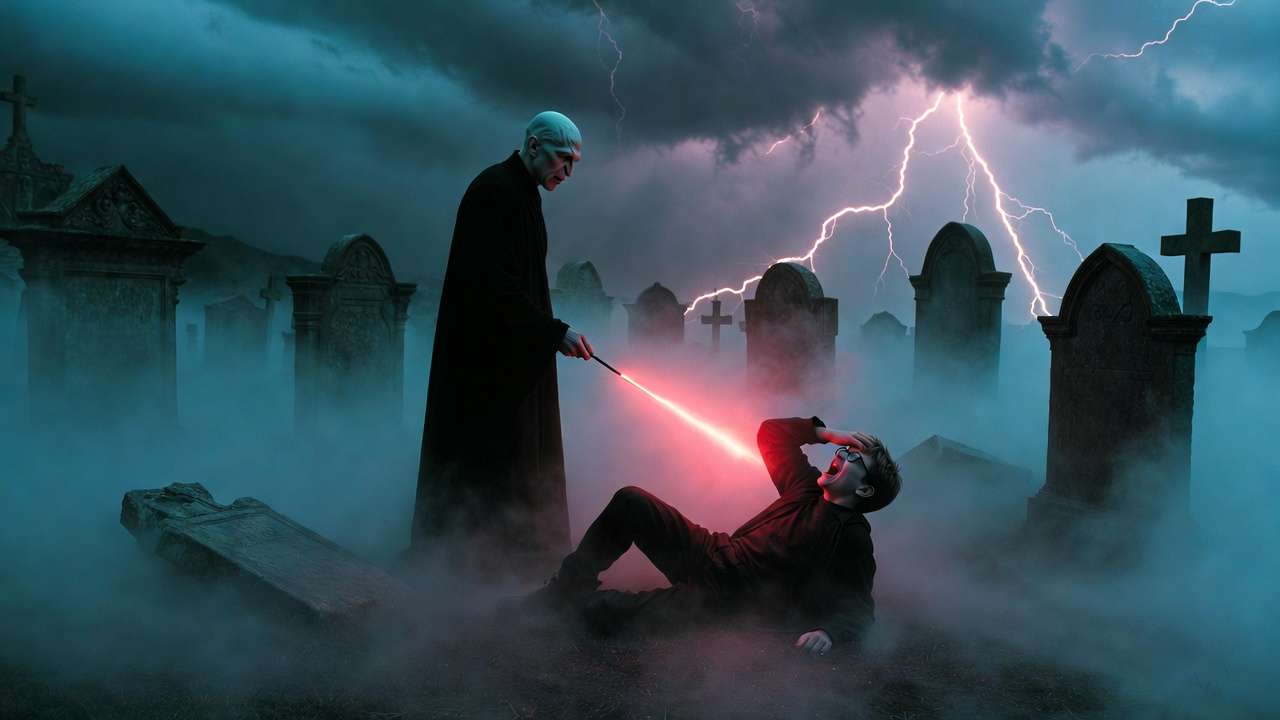
In the shadowed graveyard of Little Hangleton, Harry Potter writhed on the cold earth as Lord Voldemort raised his wand and hissed, “Crucio.” Agony exploded through Harry’s body—described in his own words as feeling like “a thousand white-hot knives, boring into his skin,” his bones on fire, his mind splintering under the torment. This moment from Harry Potter and the Goblet of Fire etched the Cruciatus Curse into the minds of readers as one of the most horrifying spells in the wizarding world. Yet the true shock comes later: Harry himself would utter the incantation “Crucio” not once, but in ways that reveal the series’ deepest moral complexities.
The Cruciatus Curse (Crucio) stands as one of the three Unforgivable Curses, alongside Avada Kedavra and Imperio. Its use on a human carries a mandatory life sentence in Azkaban, a law established in 1717 to curb the darkest abuses of magic. For fans searching “Crucio Harry Potter,” the curiosity often centers on its excruciating effects, the requirement for sadistic intent, and—most controversially—those rare instances when the Boy Who Lived crossed into using this forbidden Torture Curse. This article explores the full lore: its mechanics, infamous applications by Voldemort and his Death Eaters, the psychological demand for genuine malice, and Harry’s pivotal moments of casting it. By examining canon details from J.K. Rowling‘s books, we’ll uncover why these acts matter, how they reflect Harry’s growth amid war, and what they teach about the thin line between heroism and darkness.
Whether you’re revisiting the series, debating character morality, or seeking clarity on why righteous anger alone isn’t enough to wield Crucio effectively, this in-depth guide provides the comprehensive answers existing summaries often overlook.
What Is the Cruciatus Curse? A Complete Overview
The Cruciatus Curse, known simply by its incantation “Crucio” (derived from Latin “cruciare,” meaning “to torture”), is a Dark spell designed solely to inflict unbearable pain. Unlike many curses that cause physical damage, Crucio delivers pure, searing agony without leaving visible marks—making it ideal for torture and interrogation.
Classified as one of the three Unforgivable Curses since 1717, its use on any human being (wizard or Muggle) results in an automatic life sentence in Azkaban. This strict legislation reflects the wizarding world’s recognition that such magic crosses an ethical boundary no justification can erase under normal circumstances. During the First and Second Wizarding Wars, exceptions existed for Aurors in combat, and under Voldemort’s regime, the curses were legalized entirely—but these were temporary wartime measures.
How the Curse Works – The Requirement of Intent
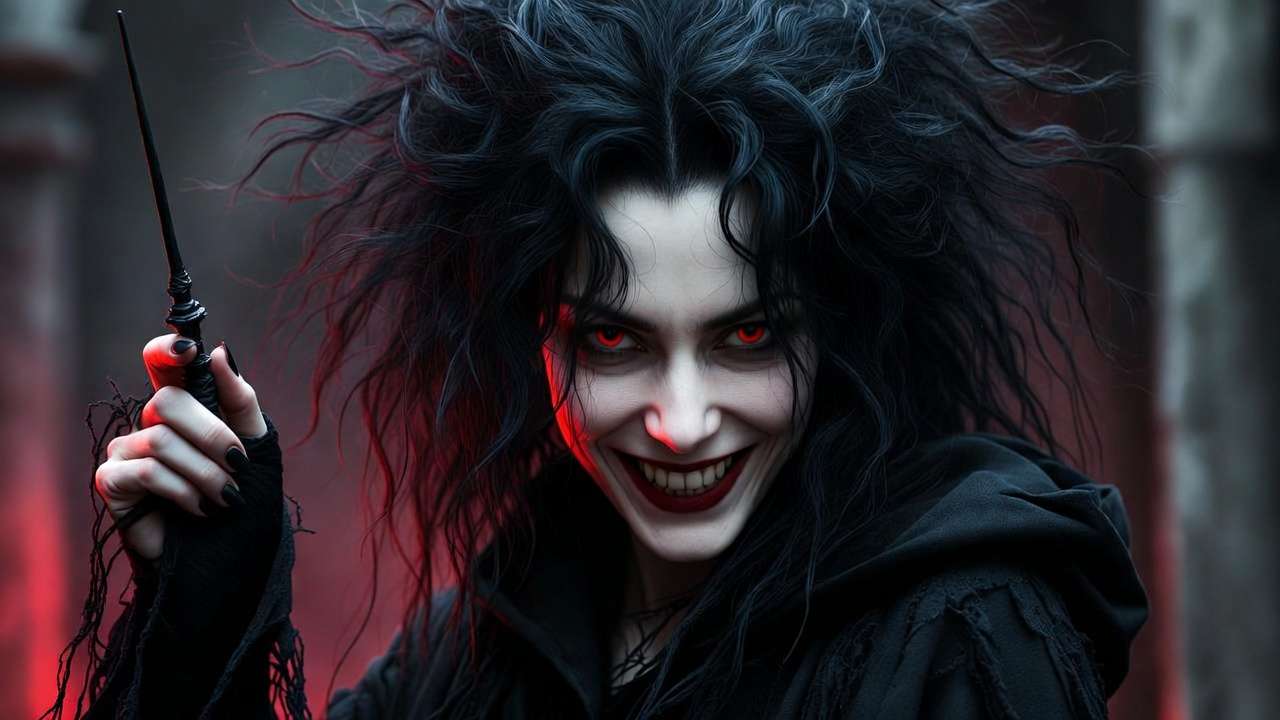
The most critical aspect of Crucio is not the wand movement or pronunciation, but the caster’s emotional state. As Bellatrix Lestrange explains in Harry Potter and the Order of the Phoenix, “You need to mean them, Potter! You need to really want to cause pain – to enjoy it – righteous anger won’t hurt me for long.”
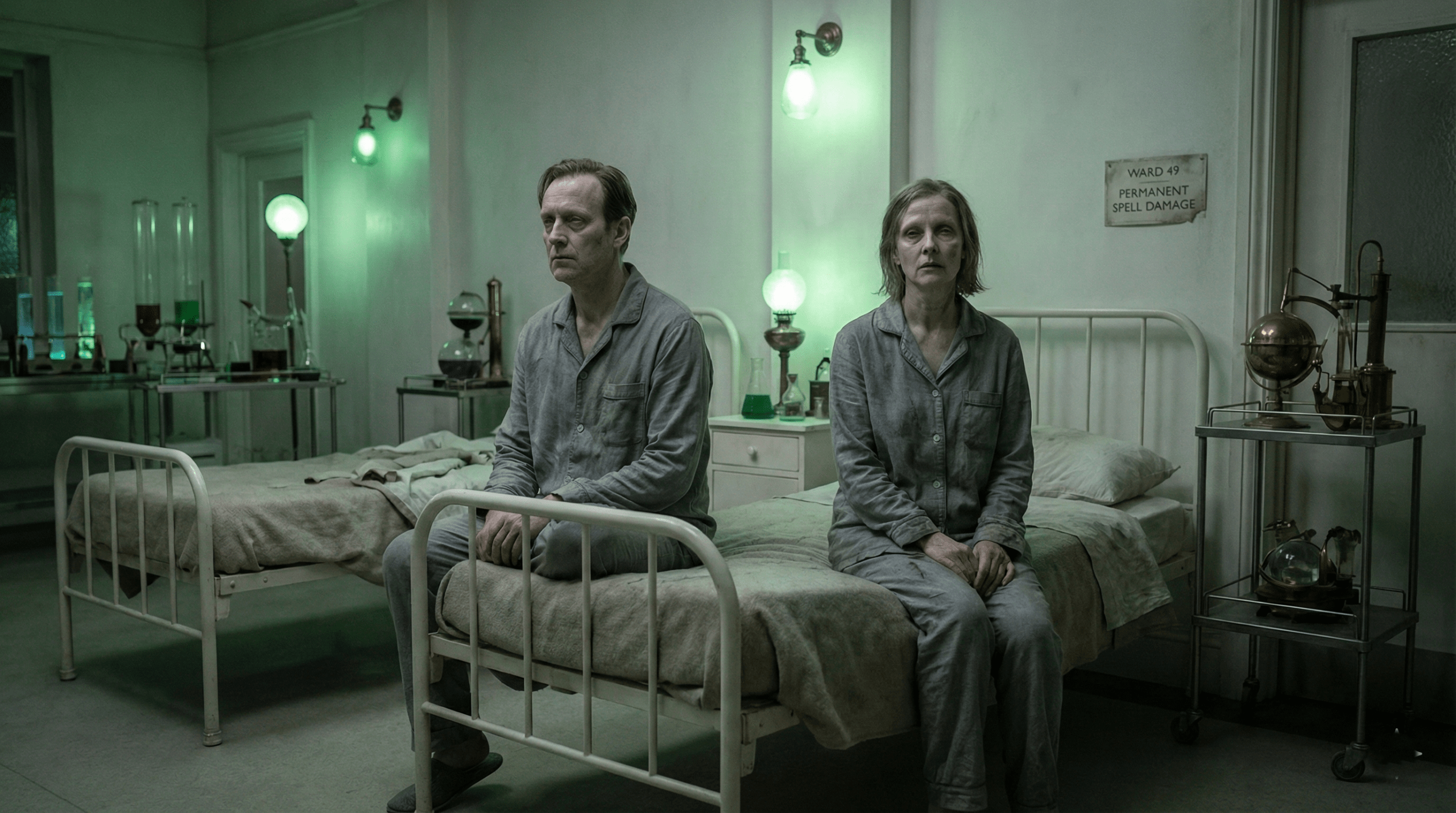
This intent requirement sets Unforgivable Curses apart from ordinary spells. The pain induced is described as all-consuming: victims often beg for death or unconsciousness to escape it. Prolonged exposure can drive the victim insane, as tragically seen with Alice and Frank Longbottom, Neville’s parents, who were tortured into permanent madness after refusing to reveal Voldemort’s location.
Physically, the curse attacks the nervous system with overwhelming signals of torment. Mentally, it shatters resistance through sheer horror. The curse’s power scales with the caster’s sadistic pleasure—making it a reflection of the user’s corruption.
 Historical Context and Origins
While exact origins remain shrouded in mystery (typical of many Dark Arts spells), Crucio likely emerged from ancient torture practices adapted into magic. Its classification as Unforgivable in 1717 came amid rising concerns over Dark wizards using it for coercion and control. By the time of Voldemort’s rise, it had become a signature tool of his followers, symbolizing terror and domination.
Famous Uses of Crucio in the Harry Potter Series
Voldemort wielded Crucio with chilling frequency. In the Little Hangleton graveyard, he tortured Harry to demonstrate superiority. He repeated it during the Ministry battle in Order of the Phoenix and attempted it again in the Forbidden Forest at the climax of Deathly Hallows—though Harry felt no pain then, due to the protective magic of sacrifice and Voldemort’s flawed understanding of mastery over the Elder Wand.
Bellatrix Lestrange, one of the curse’s most enthusiastic practitioners, used it to torture Hermione in Malfoy Manor and, most infamously, drove Neville’s parents insane. Other Death Eaters employed it during raids, at Hogwarts under the Carrows’ regime, and in interrogations.
Compared to Avada Kedavra (instant death) or Imperio (total control), Crucio stands out for its prolonged cruelty—allowing the caster to savor the victim’s suffering.
 The Dark Truth – Why Crucio Demands Sadism
Bellatrix’s lesson to Harry is pivotal: “Righteous anger won’t hurt me for long.” The curse requires not just anger, but enjoyment in inflicting pain. This sadistic element ties Crucio to the corrupting influence of Dark magic, similar to how creating Horcruxes damages the soul.
Casting it successfully risks moral erosion for the user. Even “good” characters who dabble in such spells confront their capacity for darkness—a theme Rowling weaves throughout the series.
 When Harry Used Crucio – The Key Moments Explained
Harry’s interactions with Crucio highlight his evolution from a boy driven by grief to a young man hardened by war.
The Failed Attempt on Bellatrix Lestrange (Order of the Phoenix)
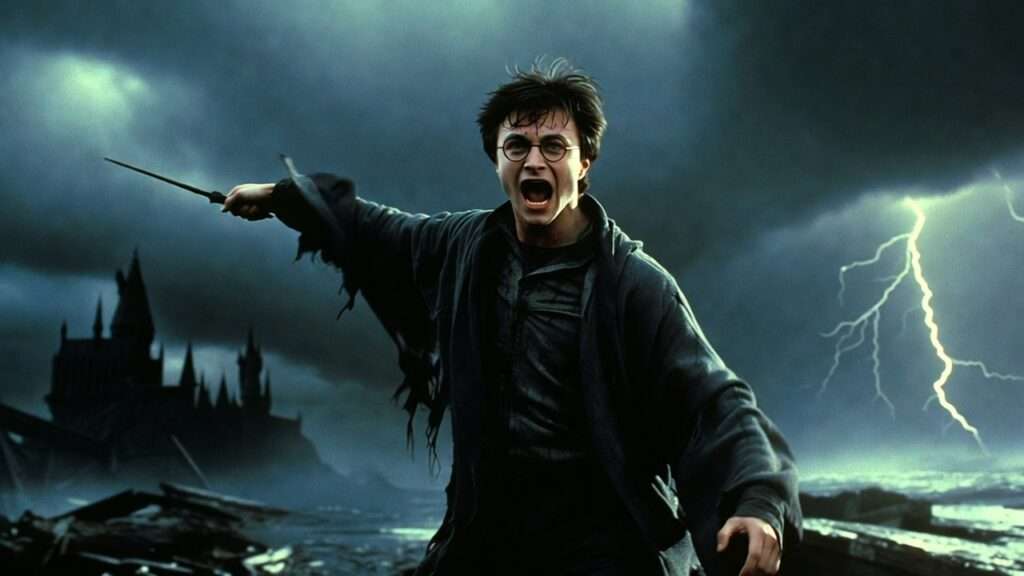
After Sirius Black’s death in the Department of Mysteries, Harry, consumed by hatred, emerges from behind a fountain and shouts “Crucio!” at Bellatrix. The spell knocks her down, but she recovers quickly, mocking him: “Never used an Unforgivable Curse before, have you, boy? You need to mean them… really want to cause pain – to enjoy it.”
The failure stems from Harry’s motive: righteous fury over Sirius’s murder, not sadistic pleasure. This moment underscores the curse’s psychological barrier and Harry’s fundamental goodness at that stage.
 The Successful Casting on Amycus Carrow (Deathly Hallows)
In the chaos of the Battle of Hogwarts, Amycus Carrow spits in Professor McGonagall’s face after she refuses to allow students to be used as shields. Harry, hidden under his Invisibility Cloak, reveals himself: “You shouldn’t have done that.” He then casts “Crucio!”—lifting Amycus off his feet, sending him writhing and howling in agony before he crashes into a bookcase, unconscious.
This time, it works. Harry’s war-weariness, protective rage for McGonagall, and the cumulative toll of violence allow a momentary flash of genuine desire to cause pain. He later reflects that he understands Bellatrix’s words now. McGonagall’s lack of reprimand in the heat of battle suggests tacit acceptance amid the greater evil.
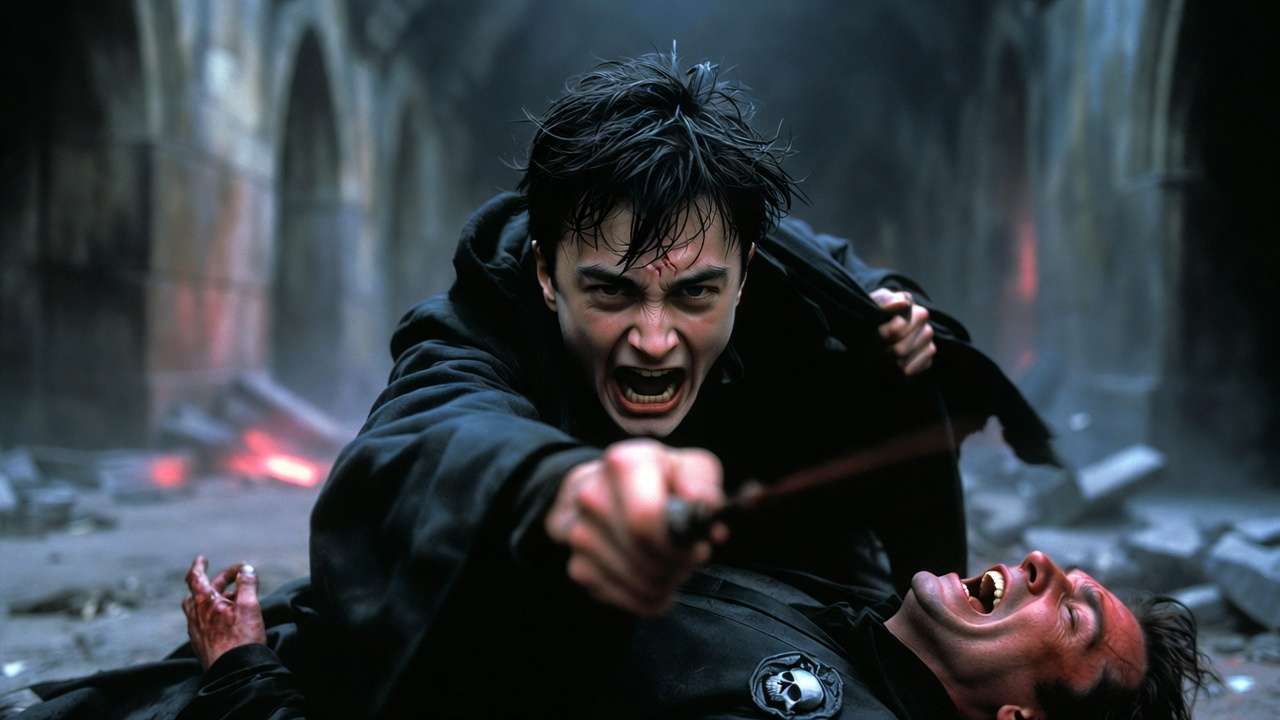 Did Harry Use It Any Other Times? Canon vs. Fan Theories
Canon confirms only these two attempts—one failed, one successful. No other instances appear in the books or supplementary materials. Fan theories and non-canon media sometimes speculate further, but Rowling’s text limits it to these pivotal scenes.
What Harry’s Use of Crucio Reveals About His Character
Harry is no saint. His capacity for anger surfaces repeatedly—Sectumsempra on Draco, the desire to harm Bellatrix. Crucio on Carrow shows a battle-hardened Harry willing to embrace darkness temporarily for justice and protection.
This moral gray area enriches the series: heroism isn’t purity but choosing light despite darkness within. It parallels Snape’s use of Dark magic for good ends and underscores war’s cost— even the hero must confront his shadow.
Defending Against the Cruciatus Curse – Is It Possible?
No perfect counter exists. Victims can dodge, use physical barriers, or rely on mental resilience (Occlumency). Shield Charms offer limited protection against Unforgivables. The best defense is avoidance or disarming the caster.
The curse’s terror lies in its realism—mirroring real-world torture’s psychological devastation, which amplifies its impact on readers.
Key Takeaways and Expert Insights
- Crucio requires sadistic intent, distinguishing it from anger-based spells.
- Harry’s failed and successful uses mark his growth from grief-driven boy to war-tempered wizard.
- The curse illustrates Dark magic’s corrupting power and the ethical lines war blurs.
As someone deeply immersed in the lore, I see Rowling using Crucio to probe intent, morality, and the cost of violence. It humanizes Harry without excusing darkness, reminding us that true strength lies in choosing love over hate.
FAQs
What does Crucio do in Harry Potter?
It inflicts excruciating, torturous pain, potentially causing insanity with prolonged use.
Did Harry ever successfully use the Cruciatus Curse?
Yes, once—on Amycus Carrow during the Battle of Hogwarts.
Why couldn’t Harry use Crucio on Bellatrix? His righteous anger lacked the required sadistic enjoyment.
Is the Cruciatus Curse used in Hogwarts Legacy or other media?
In Hogwarts Legacy (set before the books), players can learn and use it, but this is game mechanics, not canon to Harry’s story.
What happens if Crucio is used too long?
Victims risk permanent insanity, as with Neville’s parents.
The dark truth of Crucio Harry Potter is that even the series’ moral center can wield one of its darkest tools when pushed to extremes. Harry’s use doesn’t diminish his heroism—it deepens it, showing the real cost of standing against evil. In the end, Harry triumphs through love, sacrifice, and choice, not vengeance.
What do you think—did Harry’s Crucio on Carrow change your view of him? Share in the comments below, and let’s discuss this fascinating layer of the wizarding world.