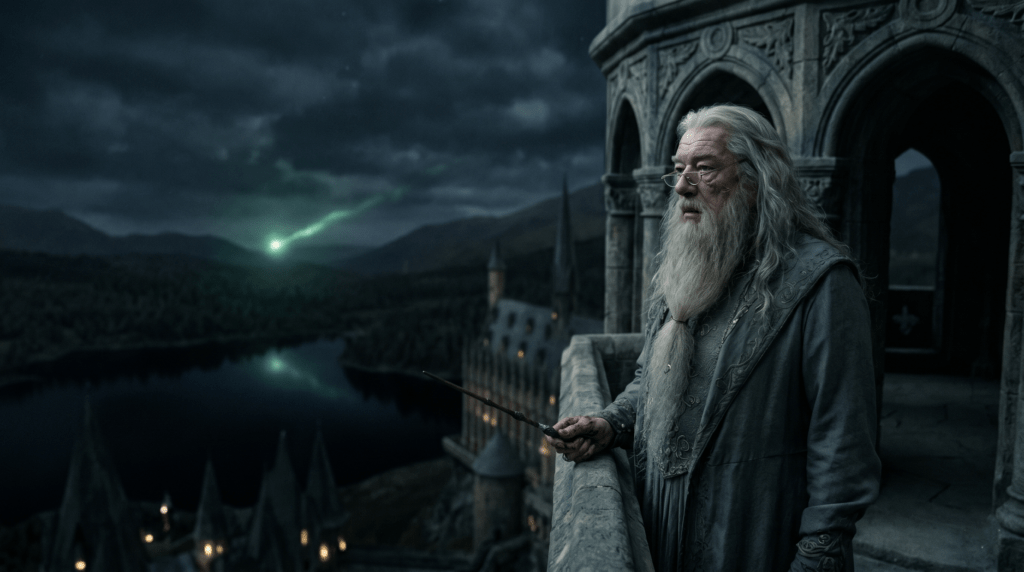
For millions of readers and viewers, the climax of the sixth installment of the beloved wizarding franchise remains one of the most shocking and emotionally devastating moments in modern fantasy. The fall of the greatest Headmaster Hogwarts had ever seen left audiences utterly stunned. If you are a newcomer to the series, dodging spoilers, or simply a fan seeking a deeper understanding of the lore, you are likely asking the pivotal question: does Dumbledore die in Harry Potter?
The short, heartbreaking answer is yes. Albus Dumbledore is killed.
However, stopping at a simple “yes” does a massive disservice to the intricate genius of J.K. Rowling’s narrative. Dumbledore’s death was not a failure in battle, a momentary lapse of judgment, or a tragic accident. It was the culmination of a meticulously calculated, highly secretive plan designed to ensure the ultimate defeat of Lord Voldemort. To truly understand the Headmaster’s fate, we must look past the green flash of the Killing Curse and unravel the grand strategy of a wizard who was playing wizard’s chess with the fate of the world.
The Short Answer: Does Dumbledore Die? (And When)
For those looking for immediate confirmation regarding exactly when this monumental event takes place, Albus Dumbledore’s life comes to an end near the conclusion of the sixth chapter of the story.
Which Book and Movie?
Dumbledore meets his end in Harry Potter and the Half-Blood Prince. In the novel, this deeply emotional event occurs in Chapter 27, fittingly titled “The Lightning-Struck Tower.” In the film adaptation of the same name, the scene serves as the harrowing climax of the movie, forever changing the tone of the series from a magical boarding school adventure into a dark, high-stakes war.
Quick Reference Fact Box:
-
Victim: Albus Percival Wulfric Brian Dumbledore
-
Date of Death: June 30, 1997
-
Cause of Death: The Killing Curse (Avada Kedavra)
-
Location: The Astronomy Tower, Hogwarts School of Witchcraft and Wizardry
-
Killer: Severus Snape
The Events of the Astronomy Tower: How Dumbledore Died
To understand the magnitude of Dumbledore’s death, we must examine the physical and psychological gauntlet he endured in his final hours. He did not arrive at the Astronomy Tower at full strength; he arrived as a man pushed to the absolute limits of human endurance.
Weakened by the Potion in the Cave
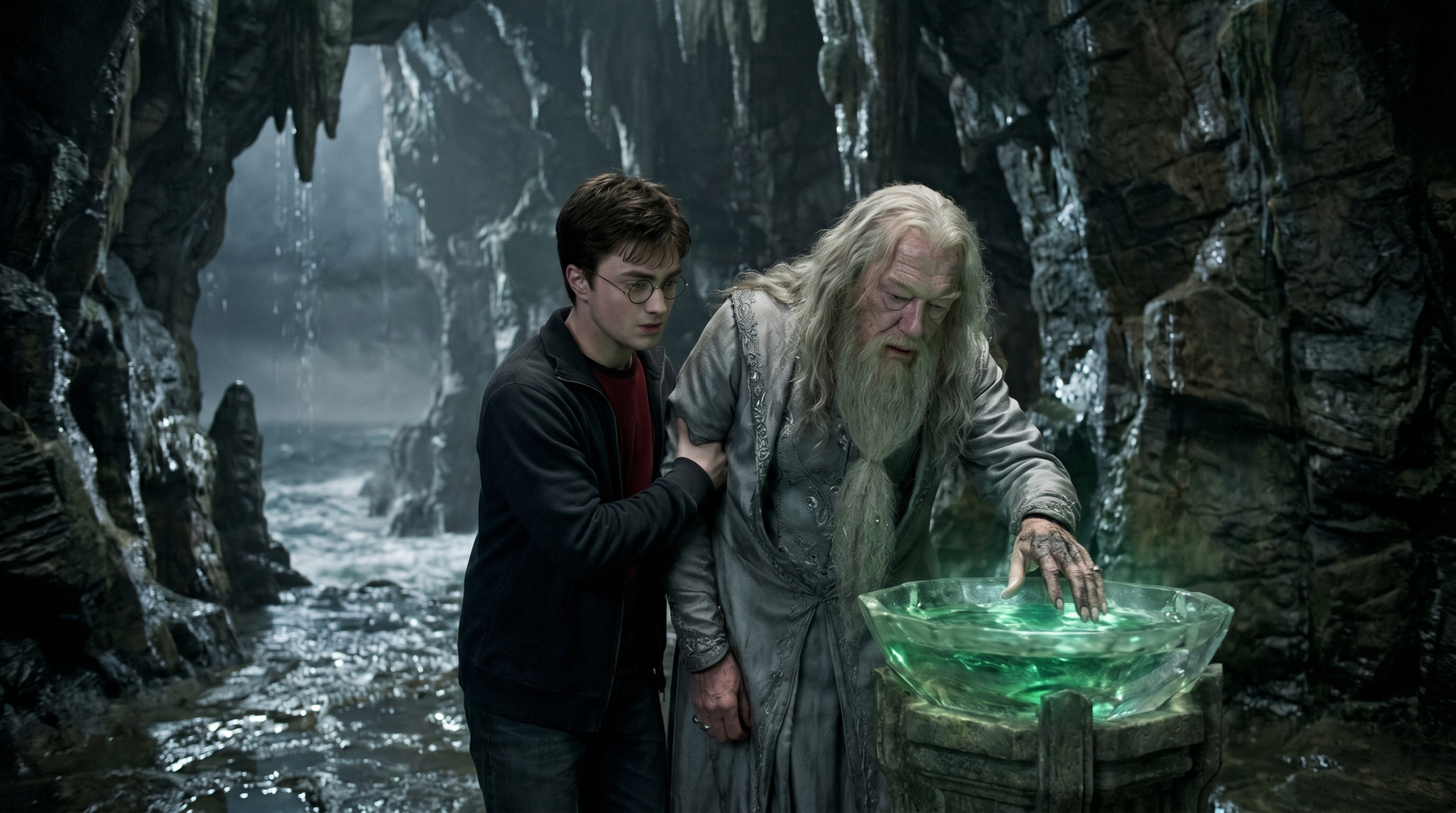
Hours before his death, Dumbledore, accompanied by Harry Potter, journeyed to a hidden seaside cave to retrieve a piece of Voldemort’s soul—Salazar Slytherin’s locket, a suspected Horcrux. To obtain the locket, Dumbledore had to drink the Drink of Despair, a torturous emerald-green potion designed by Voldemort to induce agonizing pain, terrifying hallucinations, and extreme dehydration.
Dumbledore intentionally subjected himself to this torture, forbidding Harry from drinking it and ordering the young wizard to force-feed him the potion no matter how much he begged to stop. By the time they escaped the cave, traversing a lake filled with reanimated corpses (Inferi), Dumbledore was physically decimated. His magical reserves were drastically depleted, and he was barely able to stand. This weakened state is crucial context; when the Dark Mark appeared over Hogwarts, Dumbledore was already a dying man pushing through sheer willpower.
 Draco Malfoy’s Failed Mission
Upon returning to Hogwarts and landing on the Astronomy Tower, Dumbledore immediately paralyzed Harry under his Invisibility Cloak to protect him from the unfolding ambush. Moments later, Draco Malfoy burst through the doors, disarming the weakened Headmaster.
Voldemort had tasked the young Slytherin with assassinating Dumbledore. It was meant to be an impossible mission, a punishment for Lucius Malfoy’s failures at the Department of Mysteries. Yet, even while disarmed and facing a wand pointed at his chest, Dumbledore remained in complete control of the psychological battlefield. He did not plead for his life. Instead, he stalled.
Dumbledore used deep empathy, speaking to Draco not as an enemy, but as a frightened boy out of his depth. He systematically dismantled Draco’s bravado, proving that the teenager lacked the cold-blooded nature of a true killer. Dumbledore offered Draco protection, lowering the boy’s wand with nothing but words of compassion.
Many fans love to explore alternate timelines—wondering, for instance, what if Peter Pettigrew never betrayed Lily and James Potter at Godric’s Hollow? But Albus Dumbledore did not have the luxury of living in “what ifs.” He had to orchestrate a victory in the grim reality he was handed, which meant making impossible choices in real-time on that tower.
The Execution by Severus Snape
The true climax arrived when the Death Eaters, including Fenrir Greyback and Bellatrix Lestrange (in the films), breached the tower, urging Draco to finish the job. Draco hesitated, his wand trembling. It was at this precise moment that Severus Snape arrived.
Snape took in the scene: the weakened Headmaster, the terrified boy, and the eager Death Eaters. Dumbledore looked at his Potions Master and uttered two of the most heavily debated words in the entire franchise: “Severus… please.”
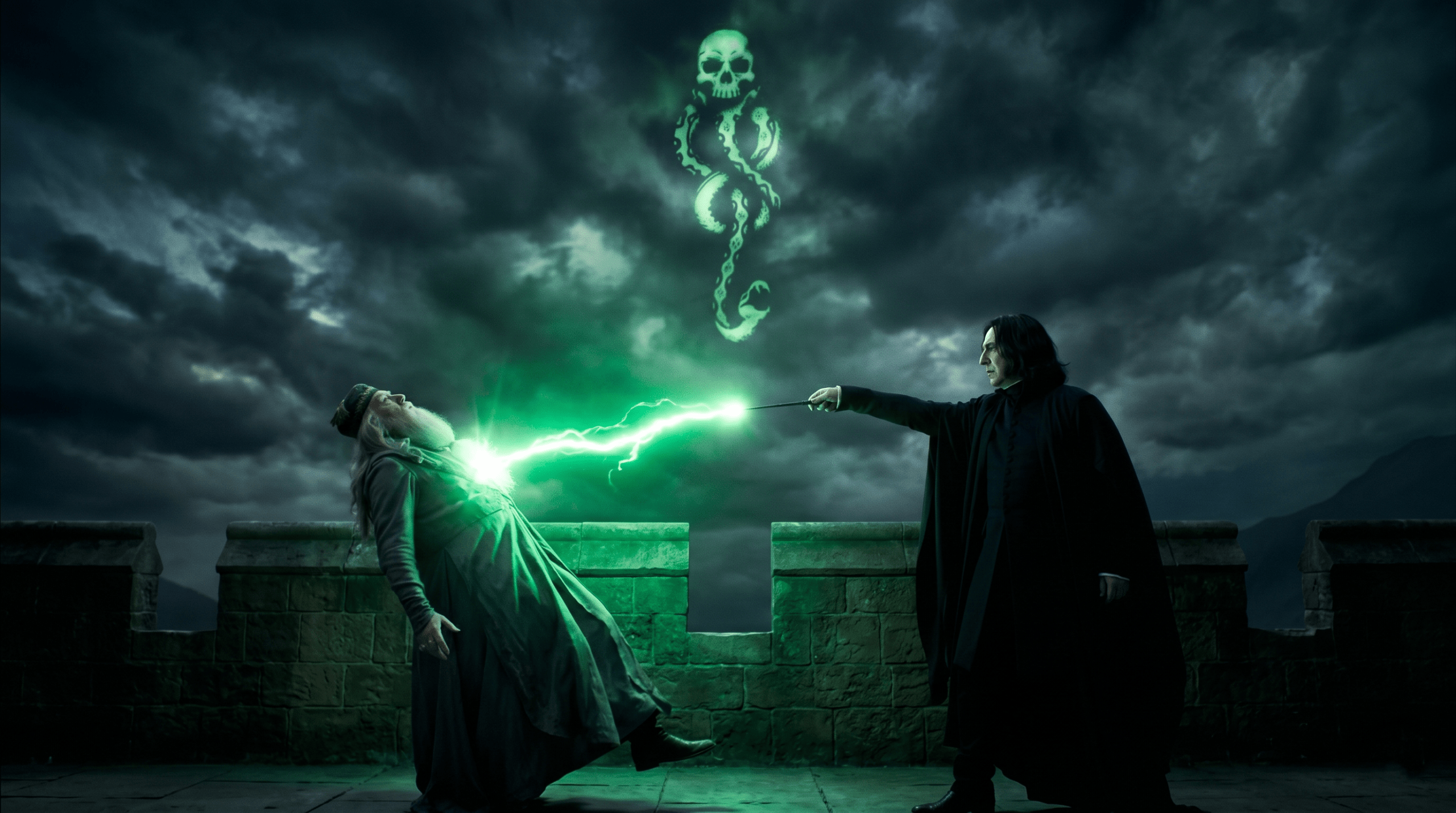
To the Death Eaters, and to Harry watching helplessly under his cloak, it sounded like the desperate plea of a defeated old man begging for mercy. In reality, it was a profound command. Dumbledore was begging Snape to keep their secret promise, to spare Draco’s soul, and to deliver the fatal blow. With a look of absolute revulsion and hatred—emotions directed at the act he was about to commit, not at the man standing before him—Snape raised his wand and cast Avada Kedavra. The spell struck Dumbledore in the chest, casting him over the battlements of the tower, and cementing the tragedy of the Half-Blood Prince.
 The Mastermind’s Secret Plan: Why Dumbledore Wanted to Die
When we ask, “does Dumbledore die in Harry Potter,” we must also ask why he allowed it to happen. For the greatest wizard of the age, a man who had famously defeated Gellert Grindelwald and was the only wizard Lord Voldemort ever feared, being cornered by a teenager and a handful of Death Eaters seems entirely avoidable.
The truth is, Albus Dumbledore’s death was a meticulously orchestrated suicide, disguised as an assassination. It was a multi-layered strategy designed to solve several catastrophic problems at once.
The Ticking Clock: The Curse of Marvolo Gaunt’s Ring
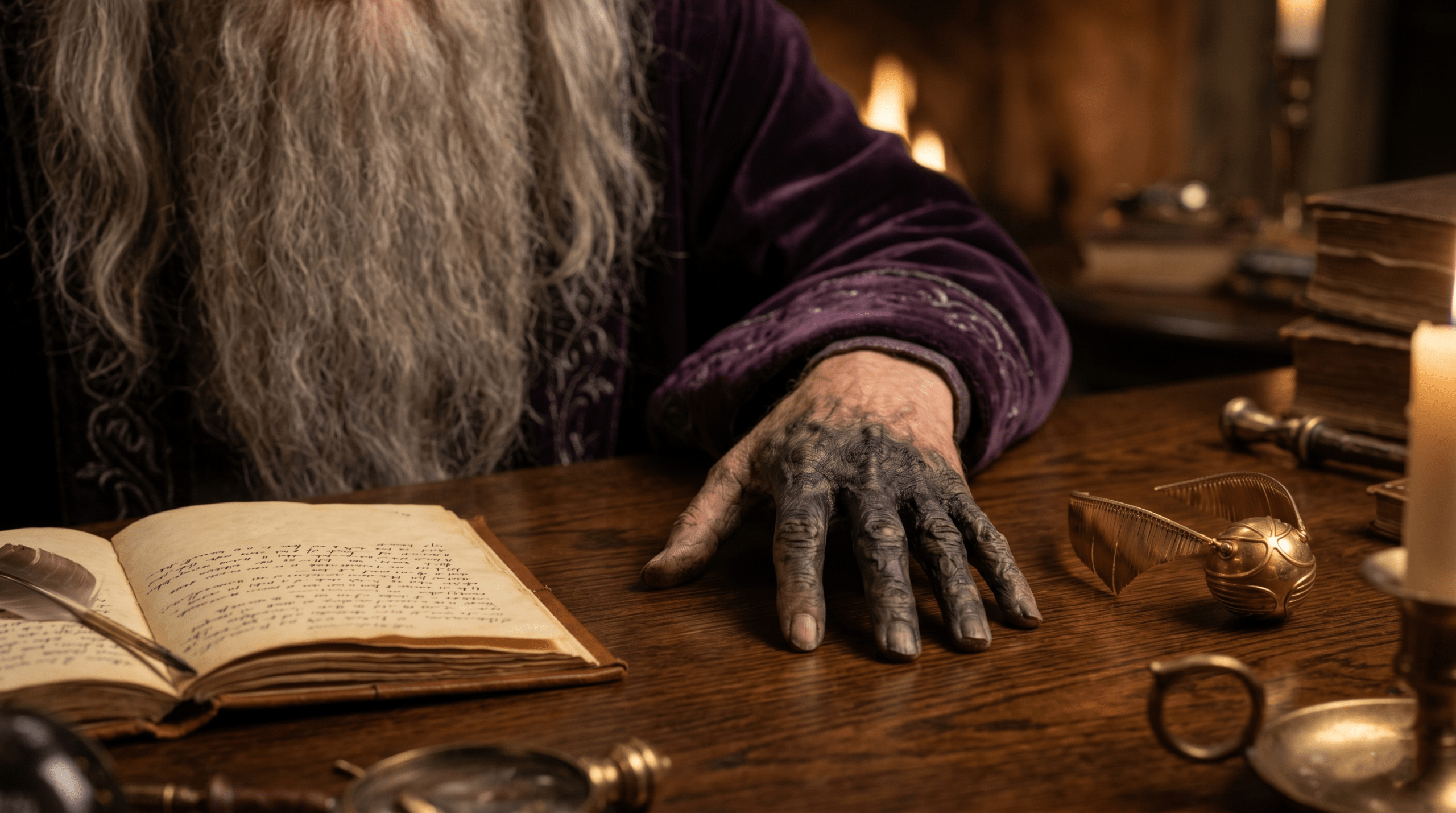
The foundation of Dumbledore’s secret plan was built on a tragic, fatal mistake. Prior to the start of Harry’s sixth year, Dumbledore tracked down Marvolo Gaunt’s ring, which Voldemort had turned into a Horcrux. However, Dumbledore recognized the stone set in the ring: it was the Resurrection Stone, one of the legendary Deathly Hallows.
Overwhelmed by a desperate, lifelong grief and the sudden temptation to apologize to his deceased parents and sister, Ariana, Dumbledore put the ring on. He forgot, for a fatal second, that Voldemort would have laced the Horcrux with a terrible curse.
The dark magic immediately began to destroy him. Severus Snape managed to temporarily trap the curse within Dumbledore’s blackened, deadened right hand, but the prognosis was grim. Snape explicitly told Dumbledore that the curse would eventually spread and kill him, leaving him with, at most, one year to live. Dumbledore was already dying; his plan simply dictated the terms of his execution.
 Sparing Draco Malfoy’s Soul
Lord Voldemort did not expect Draco Malfoy to succeed in killing Dumbledore. The dark lord assigned the task as a cruel punishment to the Malfoy family following Lucius Malfoy’s failure to secure the prophecy at the Department of Mysteries. Voldemort fully expected Draco to be caught, killed, or driven mad by the pressure.
Dumbledore, operating from a profound moral center, recognized this cruelty. In the wizarding world, murder is a supreme act of evil that physically rips the soul apart. Dumbledore refused to allow a sixteen-year-old boy’s soul to be mutilated on his account. By arranging for Snape to take over the task, Dumbledore actively protected Draco, ensuring the boy would not cross an unforgivable threshold.
Solidifying Snape as the Ultimate Double Agent
Severus Snape’s role in the Second Wizarding War was the most dangerous tightrope walk in the series. He needed to remain deep within Voldemort’s inner circle while secretly feeding information to Dumbledore and the Order of the Phoenix.
When Narcissa Malfoy (Draco’s mother) approached Snape and begged him to make an Unbreakable Vow to protect Draco and complete the task if Draco failed, it presented a unique opportunity. Dumbledore ordered Snape to fulfill that vow.
By killing Dumbledore, Snape achieved the impossible: he cemented himself as Voldemort’s most trusted and loyal servant. The dark lord never questioned Snape’s allegiance again. This absolute trust allowed Snape to be appointed Headmaster of Hogwarts the following year, where he secretly worked to protect the students from the brutal Carrow siblings, and ultimately maneuvered the Sword of Gryffindor into Harry’s hands.
Breaking the Power of the Elder Wand
Dumbledore’s final gambit involved the Elder Wand, the most powerful wand in existence, of which he was the master. The wand’s bloody history was defined by wizards murdering its previous owner to claim its power.
Dumbledore reasoned that if his death was pre-arranged—a consensual act of euthanasia agreed upon by himself and Snape—he would not be “defeated.” Therefore, the wand’s allegiance would not transfer to Snape, and the bloody lineage of the Elder Wand would finally be broken.
The tragic irony, however, is that Draco Malfoy disarming Dumbledore mere minutes before Snape cast the Killing Curse unintentionally transferred the wand’s allegiance to Draco—a twist that ultimately saved Harry’s life in the final battle.
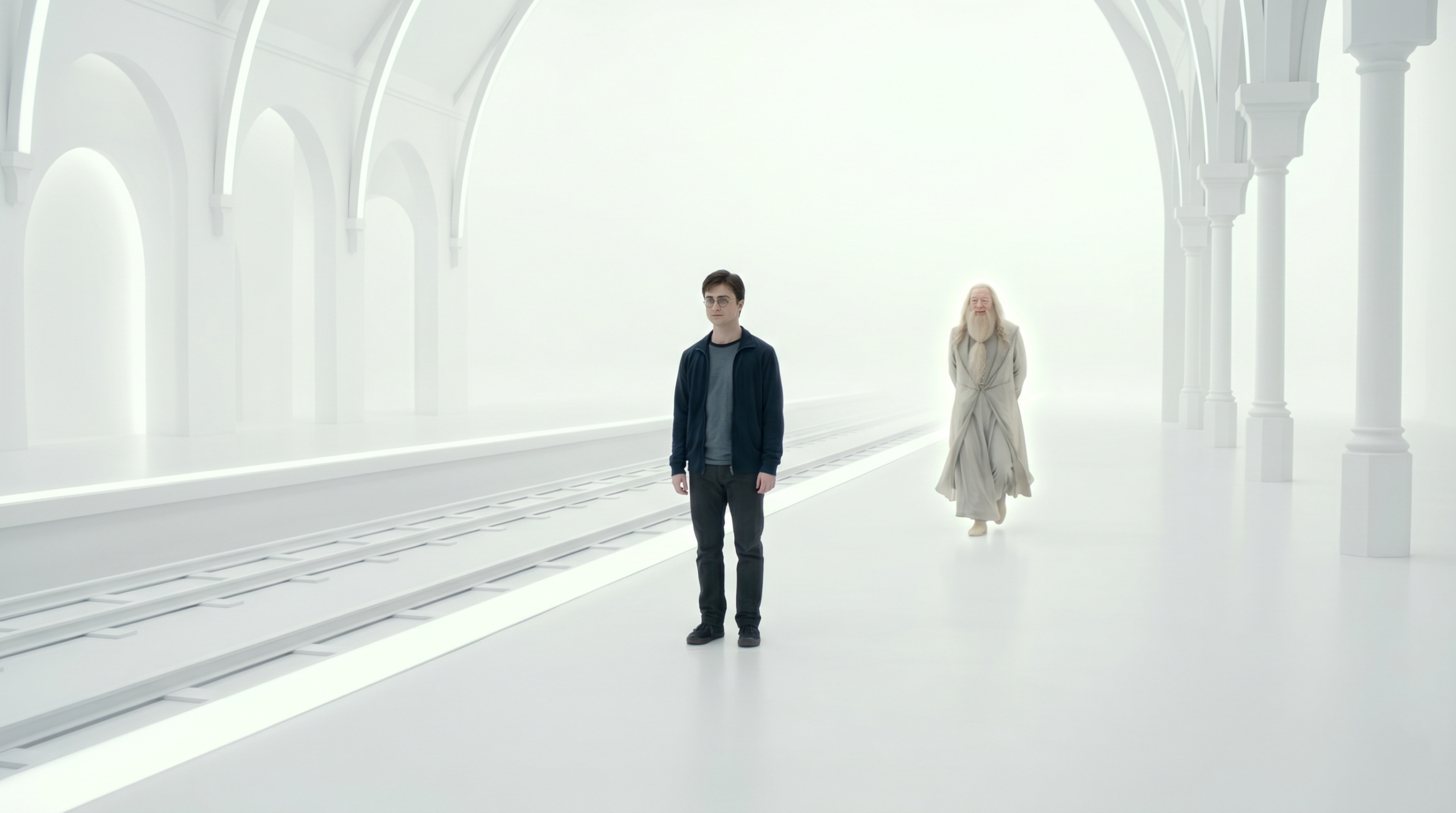
“Raising him like a pig for slaughter”: The King’s Cross Revelation
To fully analyze Dumbledore’s legacy, one cannot ignore the most controversial aspect of his master plan, famously summarized by Severus Snape’s horrified accusation: “You have kept him alive so that he can die at the right moment… You have been raising him like a pig for slaughter.”
The Big Picture: Harry’s Role in the Plan
Dumbledore knew for years that on the night Voldemort’s Killing Curse rebounded in Godric’s Hollow, a fragment of Voldemort’s soul latched onto the only living thing in the room: baby Harry. Harry Potter was an accidental Horcrux.
This meant that for Voldemort to be truly defeated, Harry had to die, and Voldemort had to be the one to do it. Dumbledore carried the weight of this agonizing knowledge for over a decade. He genuinely grew to love Harry, yet he systematically prepared the boy for his own sacrifice.
However, Dumbledore’s brilliance—and his hope—lay in a deep, obscure piece of magical theory. When Voldemort used Harry’s blood to resurrect himself in The Goblet of Fire, Voldemort unwittingly tethered Harry to life. As long as Voldemort lived with Lily Potter’s sacrificial blood in his veins, Harry could not truly be killed by him. Dumbledore orchestrated his own death to set the board for Harry to willingly walk to his demise, banking everything on the hope that Harry would survive the encounter. It was a masterclass in tactical foresight, showcasing why Dumbledore remains the most complex character in the series.
 The Legacy and Impact of Dumbledore’s Death
The immediate aftermath of the tragedy on the Astronomy Tower sent shockwaves through the magical and Muggle worlds alike.
The Fall of the Ministry and the Rise of Voldemort
Albus Dumbledore was the last great deterrent. His sheer magical prowess and unyielding presence at Hogwarts were the only things keeping Voldemort from staging a full-scale coup. Within mere months of his death, the Ministry of Magic fell completely under Death Eater control. The wizarding world was plunged into a totalitarian nightmare of blood-status registries, interrogations, and pure-blood supremacy.
How His Death Empowered the Golden Trio
From a narrative perspective, Dumbledore had to die so that Harry could live. As long as the omnipotent Headmaster was alive, Harry, Ron, and Hermione had a safety net. They were soldiers waiting for orders.
Dumbledore’s death forced the Golden Trio out of the nest. They were stripped of the protections of Hogwarts and forced into the wilderness to hunt the remaining Horcruxes on their own. Dumbledore left them just enough clues—The Tales of Beedle the Bard, the Deluminator, a Golden Snitch—to guide them, trusting that their resourcefulness and love would succeed where sheer magical power could not.
 Frequently Asked Questions (FAQs)
Did Snape really want to kill Dumbledore?
No. Severus Snape did not want to kill Albus Dumbledore. In the books, it is explicitly shown that the prospect took a massive psychological toll on Snape. He argued fiercely against it, asking Dumbledore what about his own soul. He committed the act out of profound loyalty to Dumbledore’s greater plan and to honor the Unbreakable Vow he made to Narcissa Malfoy.
Could Dumbledore have survived the ring’s curse?
Absolutely not. The curse placed on Marvolo Gaunt’s ring was a lethal form of dark magic crafted by Voldemort himself. While Snape’s exceptional potion-making and spellwork managed to contain the rot to Dumbledore’s hand temporarily, it was a fatal affliction. Dumbledore was guaranteed to suffer a slow, agonizing death within the year.
Why didn’t Fawkes the Phoenix heal Dumbledore?
Phoenix tears possess immense healing properties, capable of curing basilisk venom and severe wounds. However, Avada Kedavra—the Killing Curse—is unblockable and unhealable. It severs the soul from the body instantly. Furthermore, Dumbledore willingly accepted the curse; it was not a wound to be healed, but an execution to be endured.
So, does Dumbledore die in Harry Potter? Yes. But his death was far more than a tragic loss; it was the ultimate act of strategic defiance. By choosing the time, place, and executioner of his own demise, Albus Dumbledore neutralized a dark curse, saved Draco Malfoy’s soul, planted an invincible double agent in Voldemort’s ranks, and shattered the bloody lineage of the Elder Wand.
Dumbledore died not as a victim, but as a mastermind who orchestrated the salvation of the wizarding world from beyond the grave.
What do you think? Was Dumbledore right to keep his grand plan a secret from Harry, or was his manipulation of the boy too cruel to justify? Let us know your thoughts in the comments below!
If you enjoyed this deep dive into the lore, be sure to check out our upcoming skyscraper article exploring the mysterious movie-only character Bem, or browse our dedicated section on “What If” alternative Harry Potter timelines to see how the story might have changed!