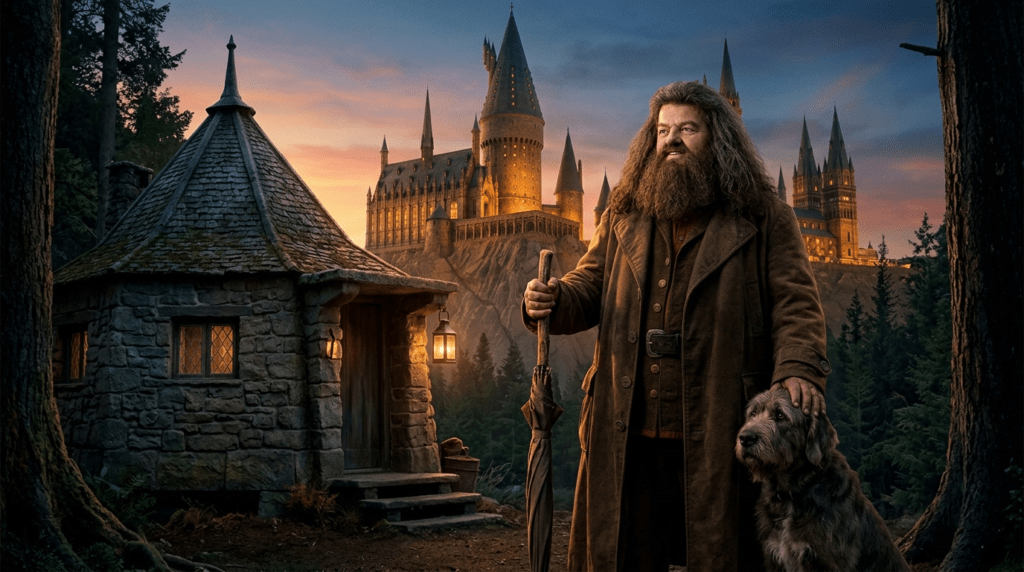
For many fans of the wizarding world, Rubeus Hagrid represents the beating heart of the story. From the moment he smashed down the door of the hut on the rock to hand a young boy a slightly squashed birthday cake, he became a symbol of safety, loyalty, and unconditional love. But as J.K. Rowling’s magical series darkened and the casualty list of beloved characters grew alarmingly long in The Deathly Hallows, fans worldwide found themselves desperately flipping pages with a single, terrified question in mind: does Hagrid die in Harry Potter?
The definitive answer is no. Rubeus Hagrid does not die. He survives the Second Wizarding War, outliving Lord Voldemort and seeing the dawn of a new, peaceful era at Hogwarts School of Witchcraft and Wizardry.
However, his journey to that peaceful era is fraught with near-death experiences, heartbreak, and monumental sacrifice. In this comprehensive guide, we will explore the beloved half-giant’s perilous path through the final chapters of the series, his defining moments in the Battle of Hogwarts, and the secret, behind-the-scenes reason why the author deliberately shielded him from the tragic fates that befell so many others.
The Short Answer: Does Hagrid Die in the Series?
If you are currently reading or re-watching the series and find your anxiety spiking during the darker chapters, you can breathe a sigh of relief. Rubeus Hagrid does not die in the Harry Potter books, nor does he perish in the cinematic adaptations.
Despite being a staunch, vocal supporter of Albus Dumbledore and an active member of the Order of the Phoenix, Hagrid manages to survive the deadliest conflicts of the Second Wizarding War. His survival is a testament not only to his immense physical resilience as a half-giant but also to the narrative necessity of his character. He is the alpha and the omega of Harry’s introduction to the magical world.
While the series features the tragic and calculated sacrifices of other major figures—much like the complex, secret plans that ultimately explain why Dumbledore dies in Harry Potter—Hagrid’s fate is one of steadfast endurance rather than martyrdom.
Close Calls: Hagrid’s Journey Through the Second Wizarding War
To truly appreciate Hagrid’s survival, we must examine just how close he came to losing his life. The final installment of the series strips away the safety of Hogwarts, plunging Hagrid onto the front lines of a brutal magical war.
The Battle of the Seven Potters
The true test of Hagrid’s mortality begins at the very start of Harry Potter and the Deathly Hallows. During the daring operation to move Harry from the vulnerable Dursley household to a protected safe house, Hagrid is entrusted with the most critical and dangerous task: transporting the real Harry Potter.
Riding the modified flying motorcycle that once belonged to Sirius Black, Hagrid and Harry are ambushed by a swarm of Death Eaters in what becomes known as the Battle of the Seven Potters. The sequence is a harrowing aerial dogfight that pushes the Gamekeeper to his absolute limits. At the climax of the pursuit, when Lord Voldemort himself joins the fray, the situation becomes desperate.
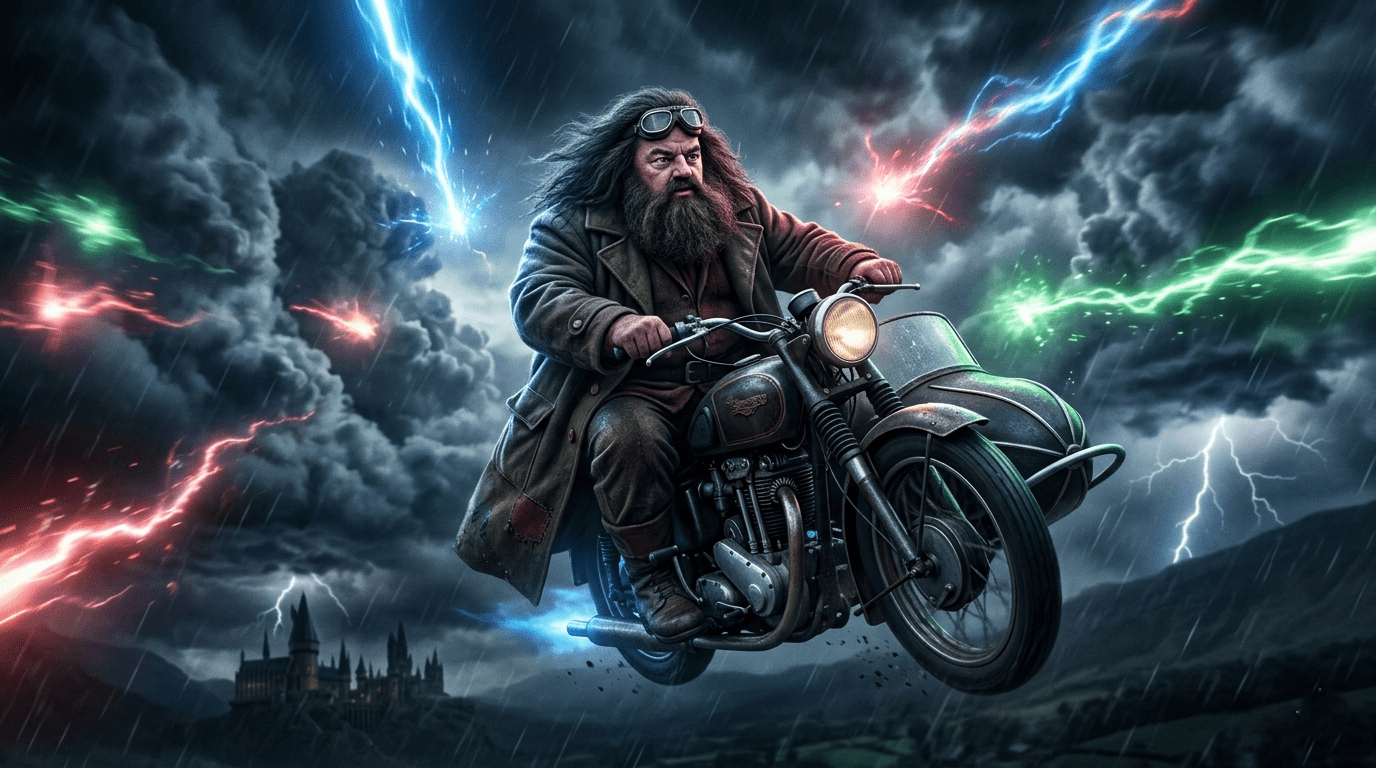 In a moment of supreme, reckless bravery that had readers convinced his end had come, Hagrid leaps from the plunging motorcycle to physically tackle a Death Eater in mid-air, attempting to clear a path for Harry. This sequence highlights Hagrid’s core character trait: his willingness to sacrifice himself without a second thought for those he loves. He plunges toward the earth, seemingly to his doom, only to survive the catastrophic fall thanks to his half-giant physiology and a fair bit of luck. He crash-lands violently in the muddy pond of the Tonks family home—battered and bleeding, but miraculously alive.
On the Run: A Fugitive in the Mountains
Hagrid’s survival of the aerial ambush is only the beginning of his tribulations. Following the fall of the Ministry of Magic and the Death Eaters’ takeover of Hogwarts under the rule of Headmaster Severus Snape, Hagrid’s position at the school becomes incredibly precarious.
Never one to hide his allegiances, Hagrid continues to teach Care of Magical Creatures but openly defies the oppressive new regime. He famously hosts clandestine “Support Harry Potter” parties in his cabin, a treasonous act under Voldemort’s rule. His blatant defiance eventually makes him a prime target for the Carrows, the vicious Death Eaters stationed at the school.
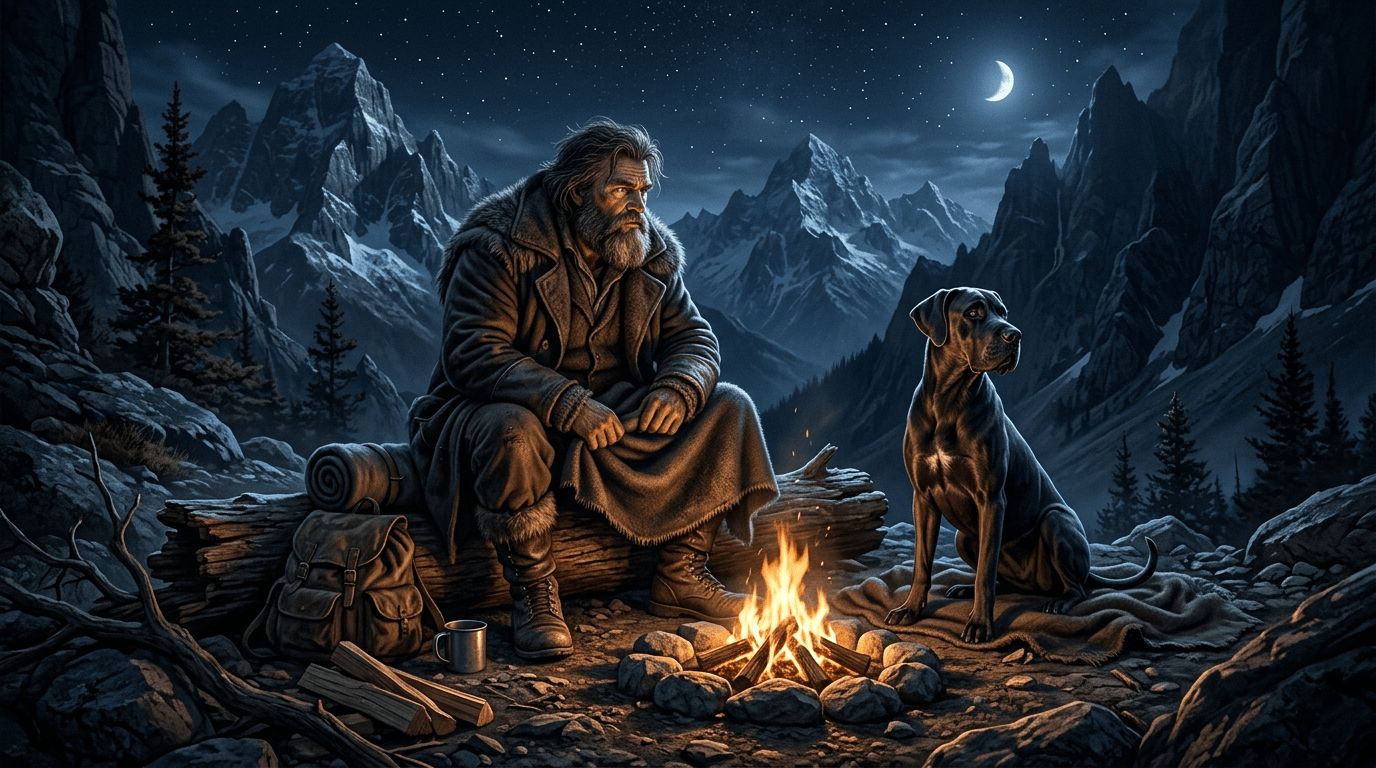 When Ministry officials attempt to arrest him on the Hogwarts grounds, Hagrid relies on his formidable strength to fight off his attackers. He is forced to flee into the surrounding mountains, leaving his beloved hut behind and living as a fugitive in the wilderness. Accompanied only by his cowardly but loyal boarhound, Fang, and utilizing the deep survival skills he honed over decades in the Forbidden Forest, Hagrid manages to evade capture for months. This period of isolation is a dark, uncertain time, leaving his fate ambiguous to Harry, Ron, Hermione, and the reader until the final battle calls him home.
The Battle of Hogwarts: Hagrid’s Greatest Test
The Battle of Hogwarts is the crucible in which the fates of countless characters are decided. When Voldemort’s forces lay siege to the castle, Hagrid emerges from his mountain exile, rushing back to defend the only true home he has ever known.
Captured by the Acromantulas
However, his arrival is immediately met with disaster. In a tragic twist of fate, Hagrid is swarmed and captured by a colony of Acromantulas—the very species he once nurtured and protected in the form of his beloved, albeit terrifying, pet spider, Aragog.
The giant spiders, driven mad by the chaos of the battle and no longer bound by Aragog’s previous command to spare Hagrid’s life, carry him off into the dark depths of the Forbidden Forest. For a significant portion of the battle, Hagrid’s status remains totally unknown, leaving readers to fear that he might have been devoured by the creatures he so fiercely defended. His capture strips Hagrid of his agency during the castle’s defense, repositioning him as a hostage deep within the enemy encampment, setting the stage for one of the most emotionally devastating scenes in modern fantasy literature.
The Emotional Climax: Carrying “Dead” Harry
When Harry voluntarily walks into the Forbidden Forest to face Lord Voldemort and sacrifice himself, he discovers Hagrid bound to a tree, a captive of the Death Eaters. The psychological torture inflicted upon Hagrid in this moment is immense. He is forced to watch, helpless, as Voldemort casts the Killing Curse at the boy he has viewed as a surrogate son since the night James and Lily Potter were murdered.
What follows is one of the most iconic, heart-wrenching, and thematically resonant scenes in the entire Harry Potter series. Believing Harry to be dead, a triumphant Voldemort cruelly orders a weeping, devastated Hagrid to carry Harry’s lifeless body back to the castle to display before the remaining defenders of Hogwarts.
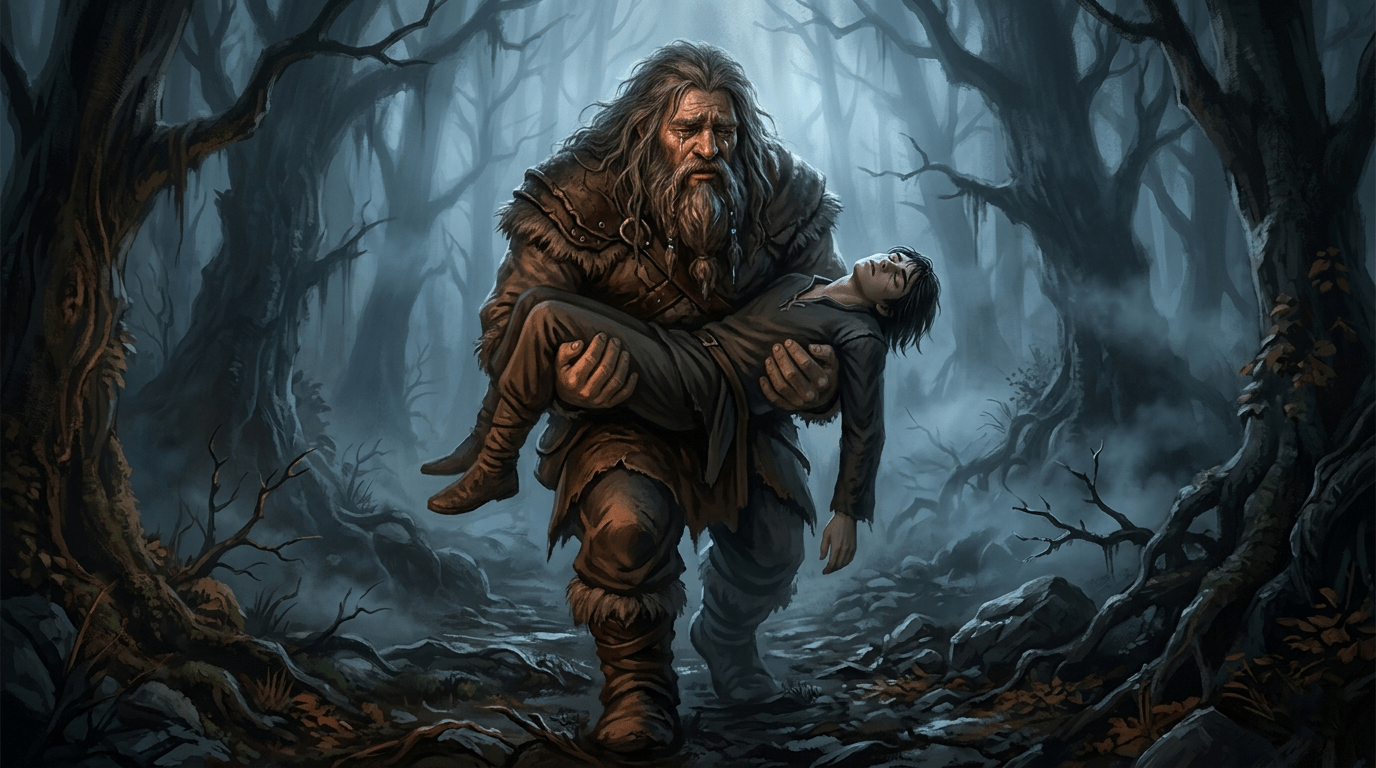 This tragic procession is not merely a plot point; it is a profound narrative mirror. In Harry Potter and the Sorcerer’s Stone, it is Hagrid who carries a baby Harry out of the ruins of Godric’s Hollow, delivering him to the Dursleys and introducing him to the wizarding world. Bringing the story full circle, it is Hagrid who carries him at what appears to be the end of his journey. When the battle resumes in the Great Hall, Hagrid is front and center, his grief transforming into roaring fury. He is the one who violently throws the Death Eater Walden Macnair across the room, contributing heavily to the final victory.
The Author’s Secret: Why J.K. Rowling Spared Hagrid
While fans spent years theorizing about which characters would survive the final book—often exploring alternate scenarios like what if Neville Longbottom was the Chosen One, or what if Harry was sorted into a different house—Hagrid’s fate was actually sealed from the very beginning.
In a revealing post-series interview, J.K. Rowling disclosed a fascinating piece of creator intent that serves as the ultimate behind-the-scenes secret for his survival. She admitted that during the writing process of The Deathly Hallows, she strongly considered killing off several beloved characters. Remus Lupin, Nymphadora Tonks, and Sirius Black all met tragic ends. However, Hagrid possessed a unique, invisible “shield” that protected him from her authorial executioner’s block.
That shield was the mental image of Hagrid carrying Harry out of the Forbidden Forest.
Rowling explained that within the first year of conceptualizing the Harry Potter universe, she had already visualized the specific scene of a grieving Hagrid emerging from the dark woods carrying a supposedly dead Harry. Because this poignant, full-circle image was so foundational to her vision of the story’s climax, she knew she could not kill Hagrid off in any of the preceding books or chapters. His survival was an absolute structural necessity for the narrative’s emotional resolution.
What Happens to Hagrid After the War? (Extended Lore)
For those looking beyond the final pages of The Deathly Hallows, the expanded lore of the Wizarding World provides a comforting look into Hagrid’s life after the fall of Lord Voldemort. His post-war existence is peaceful, fulfilling, and exactly what the gentle giant deserves.
Continuing at Hogwarts
Unlike some characters who left the school to pursue careers in the Ministry of Magic, Hagrid’s heart remained tethered to the Hogwarts grounds. Following the war, with Minerva McGonagall stepping into the role of Headmistress, Hagrid returned to his dual duties as Gamekeeper and Professor of Care of Magical Creatures. The school, rebuilt and free from dark influence, allowed him to continue sharing his love for misunderstood beasts with new generations of students.
 His Relationship with Madame Olympe Maxime
A lingering question for many fans was the romantic fate between Hagrid and Madame Olympe Maxime, the elegant half-giant Headmistress of the Beauxbatons Academy of Magic. The two shared a deep connection and braved dangerous missions together, including their journey to the giant colonies in the mountains.
However, canon lore reveals that the two did not get married. Rowling later clarified that while they remained incredibly fond of one another, they were ultimately too fundamentally different to sustain a long-term romantic relationship. Madame Maxime was refined, sophisticated, and slightly embarrassed by her giant heritage, whereas Hagrid was rugged, unpolished, and fiercely unapologetic about who he was. Despite going their separate ways romantically, their profound mutual respect endured.
Welcoming the Next Generation
In the epilogue of the series, set nineteen years after the Battle of Hogwarts, Hagrid’s legacy of warmth and hospitality continues. Harry and Ginny Potter’s middle son, Albus Severus Potter, is seen departing for his first year at Hogwarts. Harry explicitly reminds his son that Hagrid has invited him down to his hut for tea on his very first Friday—a beautiful echo of the same invitation Hagrid extended to Harry in his first week at school. Hagrid remains the welcoming anchor for the Potter family, bridging the gap between the past and the future.
Book vs. Movie Differences Regarding Hagrid’s Ending
While both mediums confirm his survival, there are slight tonal differences in how Hagrid’s final moments are depicted in the source material versus the cinematic adaptation.
In the Deathly Hallows novel, the battle inside the Great Hall is absolute chaos, and Hagrid is depicted as a raging force of nature. His grief over Harry’s “death” manifests as pure combat prowess, smashing through Death Eaters like Macnair to protect the students.
In Harry Potter and the Deathly Hallows: Part 2, the film takes a slightly softer, more subdued approach to his conclusion. After the dust settles and Voldemort is defeated, a battered but beaming Hagrid is seen in the courtyard. He shares a silent, deeply emotional hug with Harry. It is a quiet moment of profound relief between the two, emphasizing their unbreakable bond without the need for dialogue.
 Frequently Asked Questions (FAQs)
To further clarify some of the lingering mysteries surrounding the Gamekeeper’s fate and life, here are answers to the most common questions fans ask:
Does Fang the dog die in Harry Potter?
No, Fang survives the series. Despite his immense cowardice, the boarhound bravely remains by Hagrid’s side. He is present during the Battle of Hogwarts and, though terrified by the explosions and shattered vases, he survives the conflict and continues to live with Hagrid in his hut.
How old is Hagrid at the end of Harry Potter?
Rubeus Hagrid was born on December 6, 1928. The Battle of Hogwarts takes place in May 1998. This means Hagrid was nearly 70 years old during the final battle, a testament to the extended lifespan and durability granted by his half-giant blood.
Does Hagrid ever get a new wand?
Hagrid’s original oak wand was snapped by the Ministry of Magic when he was falsely expelled in his third year. However, he kept the pieces concealed inside his iconic pink umbrella. While never explicitly confirmed in the text, it is highly theorized and implied that Dumbledore used the Elder Wand to secretly repair Hagrid’s wand, allowing him to perform basic magic. Following the war, he is legally permitted to use magic again.
So, does Hagrid die in Harry Potter? Thankfully, the answer is a resounding no.
In a narrative defined by profound loss, tragic heroes, and complex, secret plans—much like the intricate orchestrations surrounding Dumbledore’s ultimate fate—Hagrid stands out as a beacon of unwavering survival. He is spared not by accident, but because his survival was structurally essential to the emotional core of the series. He carried Harry into the magical world, he carried him out of the forest, and he lived to watch a new generation of witches and wizards find their home at Hogwarts.
Rubeus Hagrid remains exactly where he belongs: on the grounds of Hogwarts, a loyal protector of the vulnerable, and the enduring, beating heart of the wizarding world.