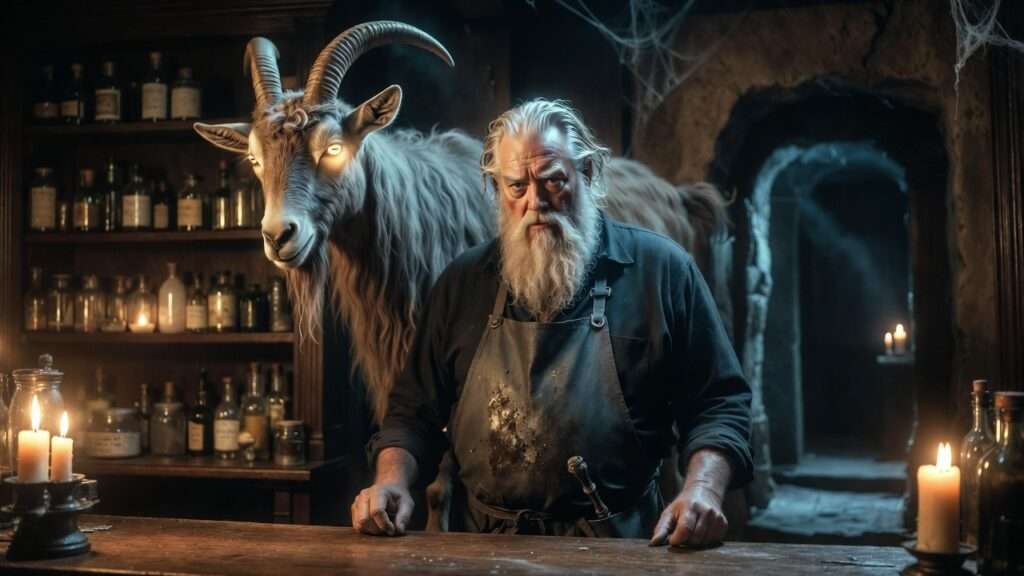
Imagine spending your entire life standing in the towering shadow of the most celebrated wizard of the modern age—your own brother—while secretly carrying the scars of unimaginable family tragedy, personal betrayal, and the quiet, unglamorous acts of courage that ultimately helped save the entire wizarding world. That is the hidden reality of Harry Potter Aberforth Dumbledore, the man most casual fans remember only as the gruff, goat-obsessed barman of the Hog’s Head Inn.
For decades, Aberforth has been reduced to comic relief or a footnote in Albus Dumbledore’s legendary biography. Readers laugh at the goat-related scandal that cost him his place on the Hogwarts staff, roll their eyes at his perpetual grumpiness, and move on—never realizing that without Aberforth’s stubborn loyalty, sharp instincts, and willingness to act when others hesitated, Harry Potter might never have survived to see the final battle at Hogwarts.
This comprehensive guide pulls Aberforth out of the background where he has lingered for far too long. We will explore his tragic early life, the devastating family secrets that fractured the Dumbledore household forever, his complicated relationship with Albus, his crucial (and often invisible) contributions during both Wizarding Wars, and the deeper lessons his story offers about sacrifice, forgiveness, and the true meaning of heroism.
As someone who has studied the Harry Potter series for over two decades—re-reading the books annually, analyzing J.K. Rowling’s supplemental writings on Pottermore/Wizarding World, cross-referencing film adaptations, stage plays, and official interviews—this article draws directly from canon sources to present the fullest, most nuanced portrait of Aberforth Dumbledore available. Whether you’re a longtime fan revisiting the series or someone who has only recently discovered the wizarding world through the films or Fantastic Beasts, you are about to see one of the most underrated characters in a completely new light.
Aberforth wasn’t merely Albus’s lesser-known sibling. He was the practical counterweight to Albus’s idealism, the protector who stayed behind when others sought glory, and—most importantly—the man whose decisions directly enabled Harry Potter’s survival at several critical junctures. Let’s finally give him the recognition he has always deserved.
Who Is Aberforth Dumbledore? Basic Profile and Overview
Early Life and Family Background
Aberforth Dumbledore was born around 1884 or 1885, making him roughly a year younger than his brilliant older brother Albus (born 1881). The Dumbledore family appeared outwardly respectable: Percival Dumbledore, a respected wizard of good standing, had married the Muggle-born Kendra, and the couple had three children—Albus, Aberforth, and the youngest, Ariana.
That façade shattered when Ariana was six years old. Three Muggle boys attacked her after witnessing accidental displays of magic. The trauma was so severe that Ariana became an Obscurial—her suppressed magic turned inward, manifesting as destructive, uncontrollable outbursts. In a desperate attempt to protect his daughter, Percival tracked down and attacked the boys, using magic in front of Muggles. He was sentenced to Azkaban, where he later died. The family relocated to Godric’s Hollow to escape scandal, but the damage was irreversible.
Kendra, determined to keep Ariana’s condition hidden, isolated the family. Albus, the prodigy destined for greatness, was increasingly absent—first at Hogwarts, then pursuing his own ambitions. It fell largely to young Aberforth to become Ariana’s primary caregiver. He fed her, calmed her during episodes, and shielded her from the outside world. This role shaped Aberforth’s character: practical, fiercely protective, and deeply suspicious of anyone who prioritized ideals over people.
Tragedy struck again in the summer of 1899. Kendra died—accidentally killed by Ariana during one of her outbursts. The teenage brothers were left to care for their increasingly unstable sister while grappling with grief, guilt, and the weight of family secrets.
Personality and Traits
Where Albus was charismatic, eloquent, and visionary, Aberforth was blunt, pragmatic, and deeply cynical. He had little patience for grand speeches or moral philosophizing. He preferred action—preferably the kind that involved a well-aimed hex or a quiet favor done without fanfare.
Aberforth’s most famous (and infamous) quirk is his affection for goats. Canon never fully explains the origin of this attachment, but it became the source of enduring mockery after an incident involving “inappropriate charms on a goat” led to his removal from Hogwarts (likely during or shortly after his school years). Whether the story was exaggerated or entirely fabricated by Rita Skeeter-types remains unclear, but Aberforth never bothered to defend himself publicly. His silence only fueled the rumors.
Beneath the gruff exterior and the goat jokes lay a man of fierce loyalty and moral clarity. Aberforth judged people by their actions, not their reputations. He was willing to forgive genuine remorse (as he eventually did with Albus), but he never forgot betrayal.
Physical Description and Wand
Physically, Aberforth bore a strong resemblance to Albus—long silver hair and beard, piercing eyes—but he carried himself differently: more solidly built, less ethereal. In the films, he is portrayed with a certain rough-edged warmth that contrasts Albus’s otherworldly grace.
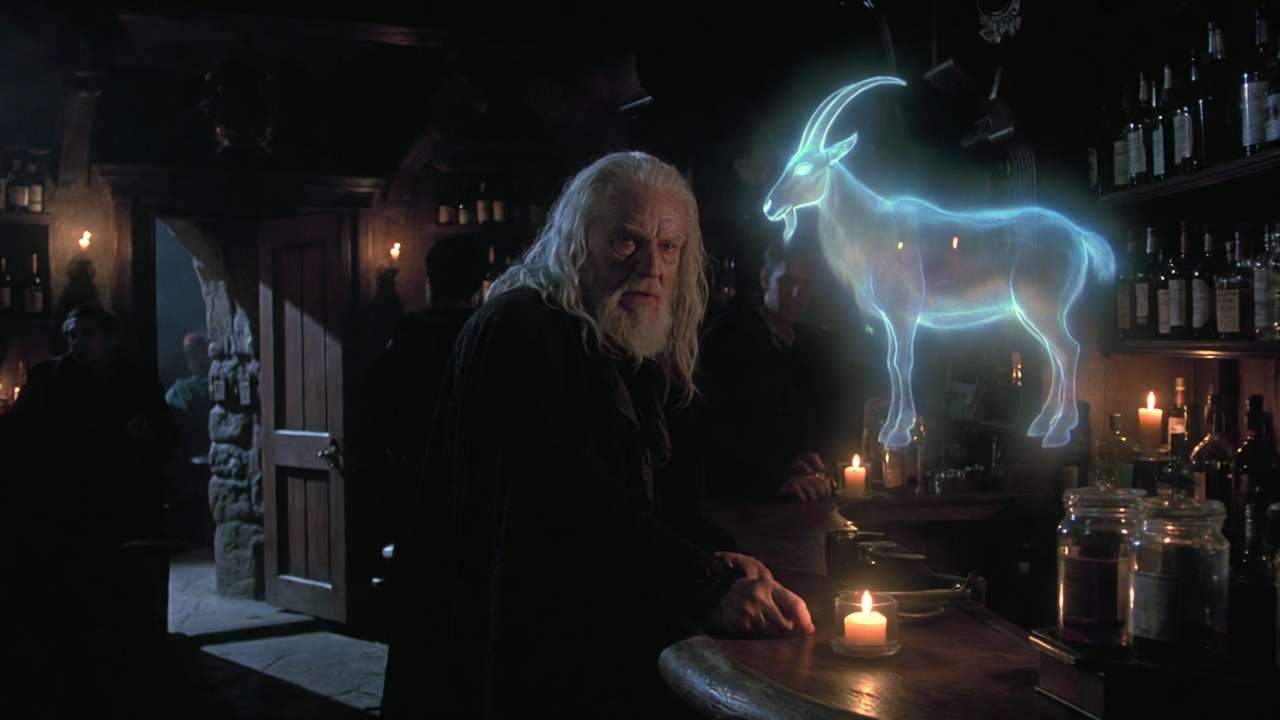
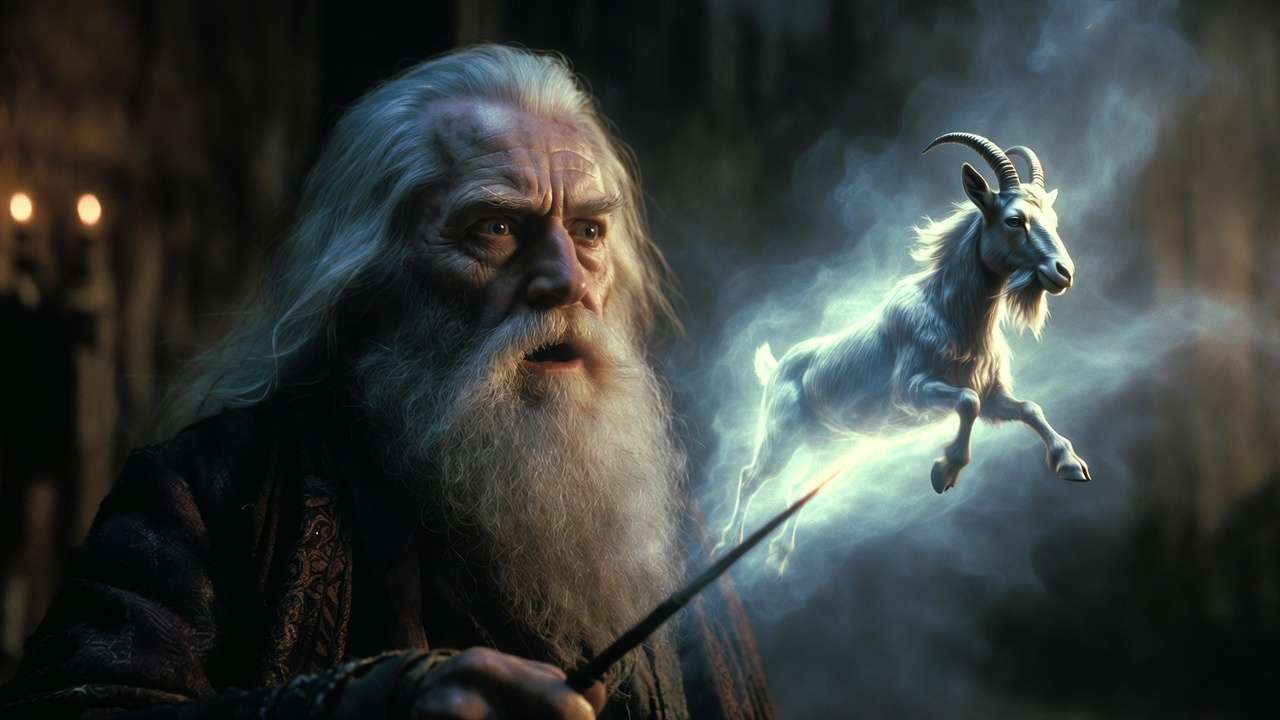
His wand is never explicitly described in the books, but he was capable of producing a corporeal Patronus in the shape of a goat—a detail that perfectly encapsulates his stubborn individuality. While Albus’s Patronus remains unknown in canon (though widely theorized to be a phoenix), Aberforth’s choice of animal was both literal and symbolic: goats are resilient, sure-footed, and famously stubborn—qualities Aberforth embodied throughout his life.
Quick Comparison: Aberforth vs. Albus Dumbledore – Key Differences
- Approach to Magic — Albus: Theoretical brilliance, inventive spells, strategic mastery Aberforth: Practical dueling, straightforward power, no-nonsense application
- Personality — Albus: Charismatic, enigmatic, morally complex Aberforth: Blunt, loyal, openly cynical
- Family Role — Albus: The prodigy who left to chase greatness Aberforth: The caretaker who stayed behind
- Public Perception — Albus: Beloved legend Aberforth: Grumpy publican and occasional joke
- Patronus — Albus: Unknown (possibly phoenix symbolism) Aberforth: Goat
This contrast is no accident. J.K. Rowling deliberately created two brothers who represented opposing sides of the same coin—idealism versus realism, ambition versus duty, brilliance versus grounded decency.
The Tragic Dumbledore Family Secrets
No character in the Harry Potter series is more defined by family tragedy than Aberforth Dumbledore. While Albus’s public persona became one of wisdom, kindness, and carefully curated mystery, Aberforth carried the raw, unfiltered pain of the Dumbledore household’s collapse. Understanding Aberforth requires first understanding the chain of events that left permanent scars on all three siblings—and especially on the middle brother who tried, and ultimately failed, to hold everything together.
Ariana Dumbledore’s Story – The Heart of Aberforth’s Pain
Ariana Dumbledore was six years old when three Muggle boys attacked her in a field near their home. They had seen her performing small, uncontrolled bursts of magic—levitating small objects, making flowers bloom out of season—and in their fear and cruelty, they assaulted her so brutally that she never fully recovered. From that day forward, Ariana’s magic became twisted and dangerous. She could no longer control it, and whenever she felt strong emotion, the power inside her erupted uncontrollably. She had become what the wizarding world calls an Obscurial: a wizard or witch whose magic, forcibly suppressed, turns inward and manifests as a destructive force known as an Obscurus.
In an era when being an Obscurial was considered shameful and dangerous (and almost always fatal by adolescence), Kendra Dumbledore made the heartbreaking decision to keep Ariana hidden from the world. The family moved to Godric’s Hollow, claimed Ariana was ill, and rarely allowed visitors. Albus, already showing prodigious talent, was away at Hogwarts for most of the year. That left Aberforth—still a child himself—as the one who spent the most time with Ariana day to day.
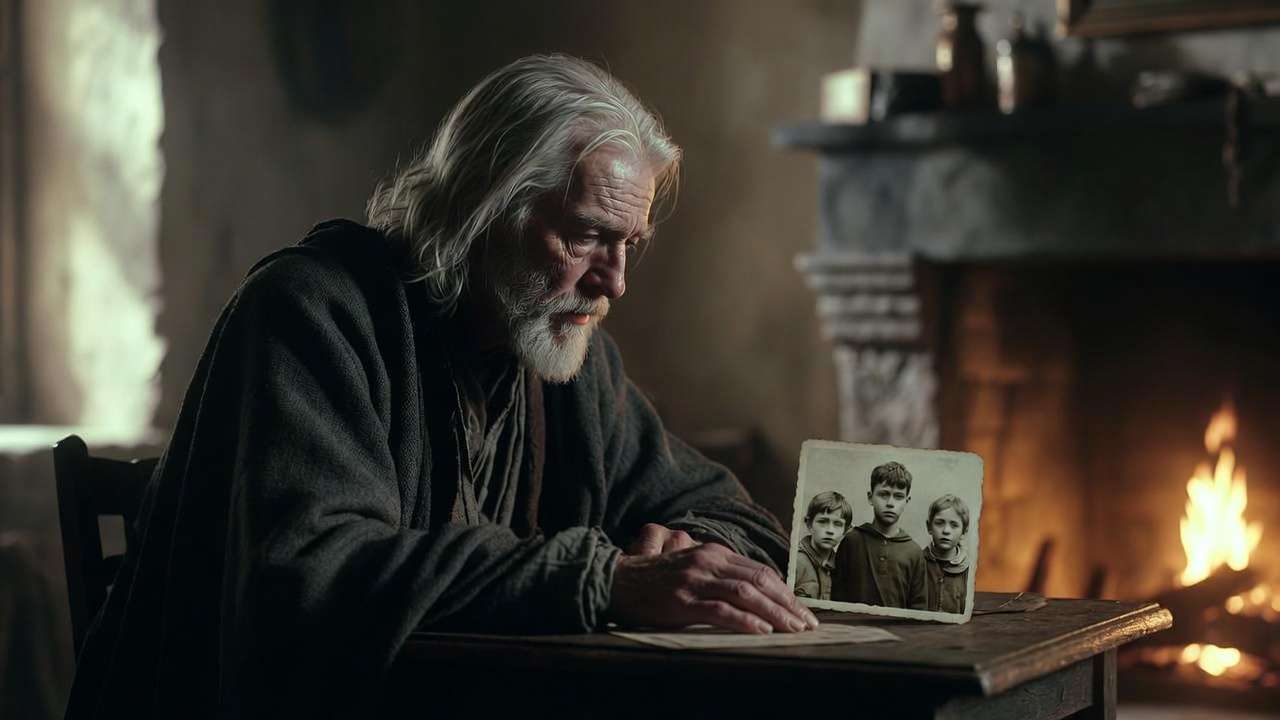
Aberforth fed her, talked to her during her lucid moments, sat with her through violent episodes, and tried to reassure her that she wasn’t a monster. He was the sibling she trusted most, the one she called for when the darkness inside her threatened to overwhelm her. Years later, even as a grown man hardened by grief, Aberforth would speak of Ariana with a tenderness that he rarely showed anyone else.
When Kendra was accidentally killed by one of Ariana’s uncontrolled outbursts, the remaining family members—Albus (now 18), Aberforth (17), and Ariana (14)—were left to cope alone. The guilt was crushing. Aberforth blamed himself for not being able to protect his sister better. Albus, meanwhile, was already entangled in his dangerous summer romance and intellectual partnership with Gellert Grindelwald, a charismatic young wizard whose vision of wizard supremacy appealed to Albus’s ambition and desire to right the wrongs done to his family.
The Rift with Albus
The summer of 1899 marked the breaking point. Grindelwald had come to Godric’s Hollow, ostensibly to stay with his great-aunt Bathilda Bagshot, but really to continue influencing Albus. The two young men dreamed of reshaping the wizarding world—for the “greater good,” as they called it—though their definitions of that phrase quickly diverged.
Aberforth, ever the pragmatist, saw Grindelwald for what he was: dangerous, manipulative, and willing to sacrifice innocents (including Ariana) for his ideology. He confronted the pair repeatedly, warning Albus that Grindelwald was using him. Albus, torn between love for his sister, loyalty to his brother, and the intoxicating promise of power and reform, refused to listen.
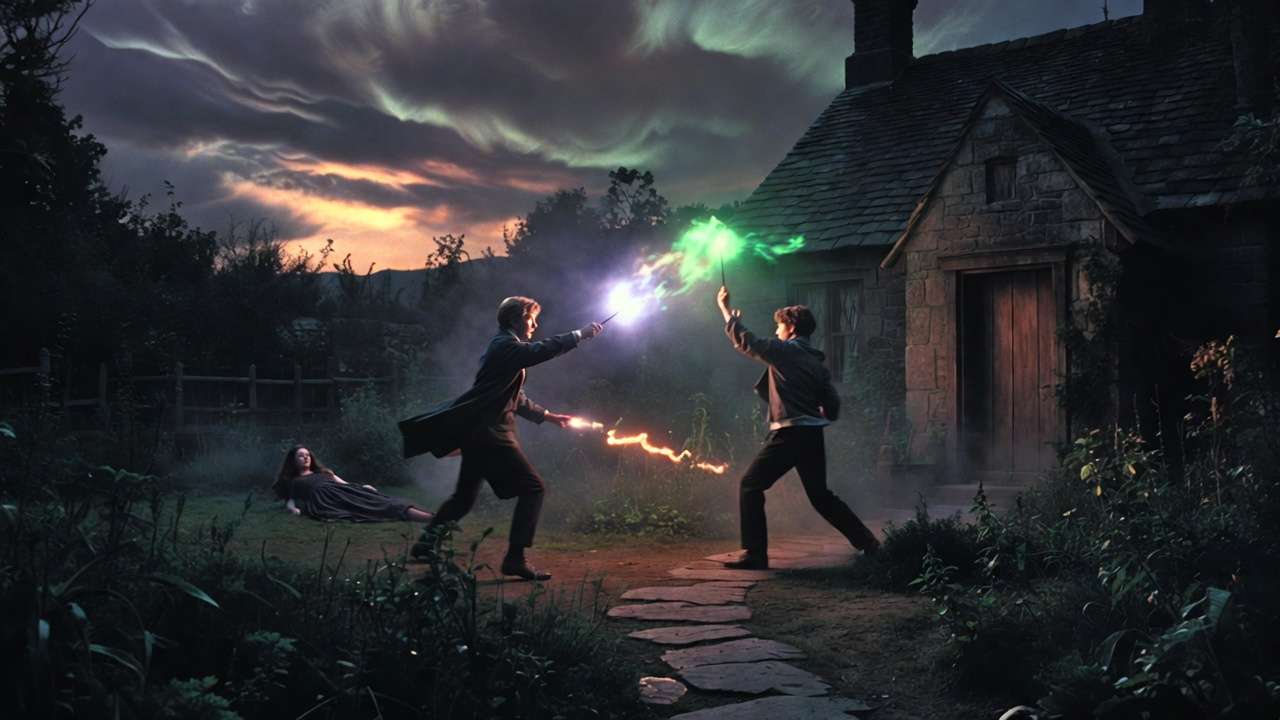
The tension exploded into a three-way duel in the garden behind the Dumbledore home. Albus and Grindelwald against Aberforth. In the chaos of flying curses, one of the three spells struck Ariana. She died instantly. To this day, it remains unknown whose curse actually killed her—Albus’s, Grindelwald’s, or even Aberforth’s in the heat of the moment. The ambiguity only deepened the guilt and recrimination.
At Ariana’s funeral, Aberforth confronted Albus publicly, breaking his nose with a single punch and vowing never to forgive him for choosing ambition over family. From that day forward, the brothers were estranged for decades. Aberforth blamed Albus not only for bringing Grindelwald into their lives but for abandoning Ariana when she needed him most.
 Later Revelations and Redemption
It was not until May 1998—nearly a century later—that some measure of understanding was reached. During one of the darkest nights of the Second Wizarding War, Harry Potter, hiding in the Hog’s Head, confronted Aberforth about his bitterness toward Albus. In a rare moment of vulnerability, Aberforth revealed the full story of Ariana’s death and the long-held resentment that followed.
Yet even then, Aberforth did not absolve Albus entirely. He admitted that he had eventually come to see that Albus had spent the rest of his life trying to atone—through defeating Grindelwald, protecting Harry, and fighting Voldemort. Aberforth’s forgiveness was grudging, incomplete, and entirely human. It was not a Hollywood reconciliation; it was the quiet acknowledgment that love and pain can coexist.
The Fantastic Beasts films introduced another layer to the Dumbledore family tragedy with the revelation that Credence Barebone (Aurelius Dumbledore) may be Aberforth’s long-lost son, born from a relationship in his younger years. While this plot point remains controversial among fans and has not been fully confirmed or resolved in mainline canon as of the latest Wizarding World updates, it adds yet another dimension of personal loss and secrecy to Aberforth’s life—another child he could not protect, another wound he carried alone.
Aberforth’s Role in the Wizarding Wars – The Unsung Hero
While Albus Dumbledore became the public face of resistance against dark magic—first against Grindelwald, later against Voldemort—Aberforth operated in the shadows, performing the kind of quiet, practical work that rarely earns headlines but frequently decides outcomes. His contributions were never about glory; they were about results. And when examined closely, they prove essential to the eventual defeat of Voldemort.
First Wizarding War and the Order of the Phoenix
Aberforth joined the original Order of the Phoenix in the 1970s despite his longstanding estrangement from Albus. This decision alone speaks volumes. He did not forgive Albus easily, yet he recognized the existential threat Voldemort posed. Joining meant working alongside the very brother he still blamed for Ariana’s death, swallowing decades of resentment for the greater cause.
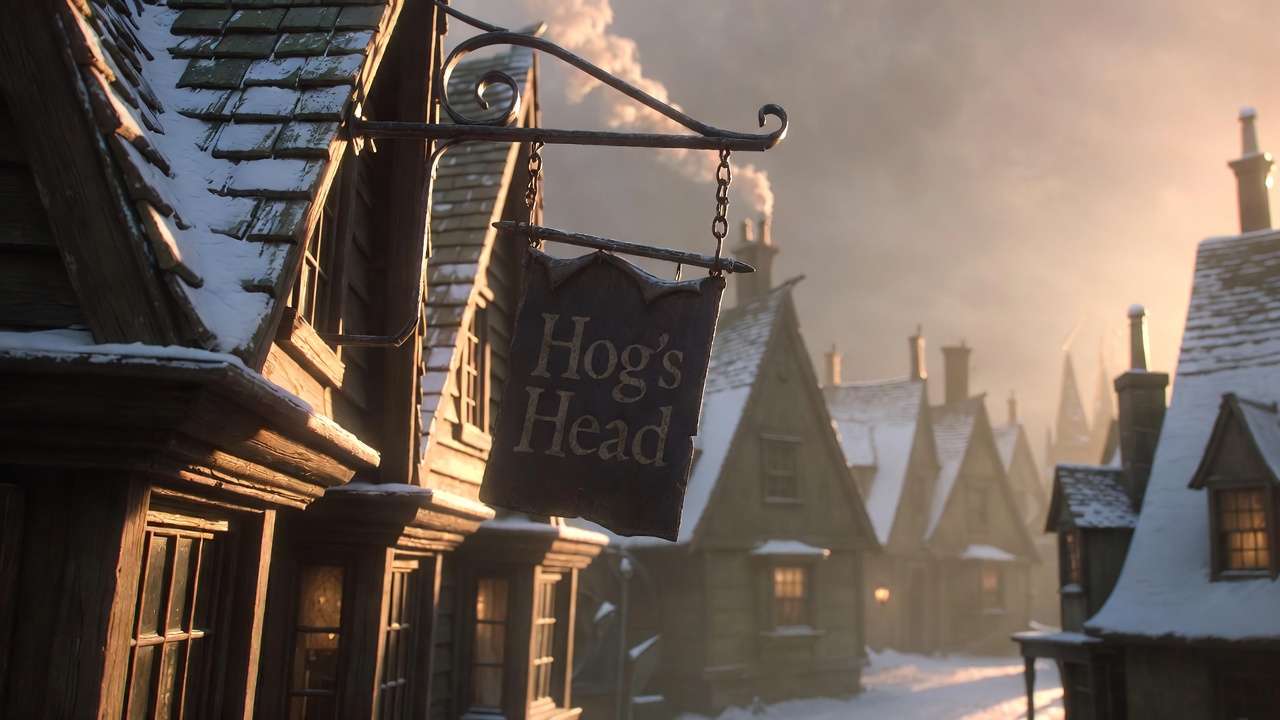
The Hog’s Head Inn—Aberforth’s pub in Hogsmeade—became one of the most discreet meeting places and intelligence hubs for the Order. Its reputation for rough clientele and unsavory atmosphere served as perfect camouflage. People who wanted to talk without being overheard went to the Hog’s Head, not the Three Broomsticks. Aberforth listened, remembered, and passed on what mattered without ever asking for credit.
One of the most significant moments tied to Aberforth during this period occurred in the Hog’s Head in the late spring of 1980. Sybill Trelawney, applying for the Divination post at Hogwarts, delivered the prophecy about the one with the power to vanquish the Dark Lord. Severus Snape, then a young Death Eater, overheard the first part of the prophecy and reported it to Voldemort. What is less frequently discussed is that Aberforth was almost certainly present in the pub that night—either behind the bar or in the shadows. He would have recognized the significance of what he overheard, yet he never spoke of it publicly. His silence protected the fragile secrecy surrounding the prophecy while still allowing Albus to act on the information Snape carried away.
Second Wizarding War – Pivotal Moments
Aberforth’s most decisive contributions came during the darkest days of the Second Wizarding War, especially in 1997–1998.
The Prophecy and Ongoing Surveillance
Even after the first war ended, Aberforth kept the Hog’s Head as an ear to the ground. When the Order reformed, the pub once again became a safe haven for sensitive conversations. He fed information to Albus and later to the reconstituted Order without fanfare.
Rescuing Harry, Ron, and Hermione
One of Aberforth’s most heroic acts occurred in March 1998. After Harry, Ron, and Hermione were captured and taken to Malfoy Manor, Dobby the house-elf appeared to rescue them—on Aberforth’s direct orders. Aberforth had been tipped off (likely through Aberforth’s network of contacts in Hogsmeade and beyond) and immediately sent Dobby to the Manor. Without that intervention, the trio would almost certainly have been handed over to Voldemort.
Later, when the three escaped to Shell Cottage, they used the two-way mirror Sirius had given Harry to contact help. On the other end was Aberforth. He berated Harry for risking everything but still provided critical aid—arranging for the goblin Griphook to meet them and helping plan the break-in at Gringotts. His gruff manner never hid his willingness to act.
Sheltering the Trio in Hogsmeade
Perhaps the single most crucial moment of Aberforth’s involvement came in May 1998. Harry, Ron, and Hermione had just arrived in Hogsmeade seeking a way into Hogwarts. Death Eaters were swarming the village. The trio was cornered—until Aberforth opened the back door of the Hog’s Head and pulled them inside.
In the tense conversation that followed (detailed in Harry Potter and the Deathly Hallows, Chapter 28), Aberforth initially refused to help. He was tired of sacrificing for other people’s wars, tired of Albus’s grand plans costing lives. Yet when Harry revealed his mission—to find and destroy Voldemort’s Horcruxes—Aberforth’s attitude shifted. He saw in Harry the same selfless determination he had once admired (and resented) in his brother.
Aberforth then revealed the hidden passage from the Hog’s Head to Hogwarts—one he had used for years to smuggle supplies and people. That passage allowed Harry, Ron, and Hermione to enter the castle undetected, setting the stage for the final battle. Without Aberforth’s reluctant cooperation at that exact moment, Harry might never have reached the Room of Requirement or confronted Voldemort in the Great Hall.
 Supporting Dumbledore’s Army
Throughout the 1997–1998 school year, when Hogwarts was under Death Eater control, Aberforth smuggled food and supplies through the passage to the Room of Requirement, where Neville Longbottom and the reformed Dumbledore’s Army were hiding and resisting. Students later recalled packages of sandwiches, pumpkin juice, and butterbeer appearing “as if by magic.” That magic had a name: Aberforth Dumbledore.
Battle of Hogwarts
During the final battle, Aberforth fought actively—wand in hand—alongside students, teachers, and Order members. He survived the war, returning to the Hog’s Head afterward to continue running his pub in a now-peaceful world.
Why is he so underrated? Because his heroism never came with speeches, titles, or public acclaim. He simply did what needed doing—quietly, stubbornly, and effectively.
Aberforth’s Magic, Skills, and Legacy
Aberforth Dumbledore was never going to win any “Most Brilliant Wizard of the Century” awards—that title was always going to belong to Albus. But brilliance in the abstract sense was never what Aberforth valued. He was a practical, battle-tested wizard whose skill set was perfectly suited to survival, protection, and getting things done when elegant theory failed.
Magical Abilities
Despite his lower public profile, Aberforth was a formidable wizard by any objective measure.
- Duelling Prowess : Aberforth preferred direct, no-nonsense combat over elaborate spellwork. He was fast, accurate, and ruthless when necessary. During the Battle of Hogwarts, he fought actively against Death Eaters and survived—a feat that required both power and tactical awareness. His willingness to throw himself into physical confrontations (remember breaking Albus’s nose at Ariana’s funeral) carried over into magical duels: he didn’t hesitate.
- Patronus Charm : Producing a corporeal Patronus is advanced magic that requires a powerful, happy memory. Aberforth’s Patronus took the form of a goat—a detail both endearing and symbolic. Goats are hardy, independent, sure-footed on treacherous ground, and notoriously stubborn. The animal perfectly mirrored Aberforth’s personality: unyielding, protective of his territory, and willing to headbutt obstacles out of the way.
- Advanced Charms and Practical Magic : Aberforth demonstrated considerable skill with protective and concealment charms. He maintained a secret passage between the Hog’s Head and Hogwarts for years without detection by Ministry officials, Death Eaters, or even most of the staff at the school. He also used Disillusionment Charms and other misdirection spells effectively (such as sending his goat Patronus to mislead pursuers during the trio’s escape from Malfoy Manor).
- Animal Affinity and Care : His famous fondness for goats went beyond mere quirk. Aberforth showed genuine talent for caring for magical creatures—something that likely helped him bond with Dobby and other house-elves over the years. He understood loyalty in non-human beings in a way many wizards never bothered to learn.
 In short, if Albus represented the pinnacle of inventive, theoretical wizardry, Aberforth represented the grounded, street-smart application of magic in real crises. One brother dreamed the grand plans; the other made sure those plans didn’t collapse under their own weight.
Post-War Life
After Voldemort’s defeat in 1998, Aberforth returned to the life he had always preferred: quiet anonymity behind the bar of the Hog’s Head. The pub remained as dingy and unwelcoming as ever—by design. He had no interest in fame, Order of Merlin medals, or interviews. He simply resumed serving firewhisky to the same collection of oddballs, misfits, and Hogsmeade locals who had always frequented the place.
There are no canonical details about his later years, but it’s reasonable to assume he lived out his days in relative peace, perhaps occasionally exchanging a grudging nod with former students who remembered the sandwiches that appeared in the Room of Requirement during their darkest hour. He never sought reconciliation in the public eye, nor did he need to. His actions had already spoken louder than any speech ever could.
Symbolic Legacy
Aberforth Dumbledore stands as one of the purest embodiments of unsung heroism in the entire Harry Potter series. He reminds readers that not every hero wears shining robes or delivers stirring monologues. Some heroes simply open a back door at the right moment, send a house-elf into danger, or keep a secret passage stocked with food when the world is falling apart.
He also humanizes Albus in retrospect. The flawless, all-knowing Dumbledore of the early books becomes far more complex—and far more tragic—when seen through Aberforth’s eyes. The brothers’ relationship illustrates that even the greatest wizards are flawed, that family wounds can last a lifetime, and that forgiveness is often partial, painful, and incomplete.
In a franchise filled with chosen ones, prodigies, and martyrs, Aberforth represents something quieter and perhaps more relatable: the person who stays behind, does the dirty work, bears the grudges, and still chooses to help when it counts most.
Why Aberforth Matters – Lessons for Harry Potter Fans
In a series overflowing with larger-than-life heroes—Harry’s courage, Hermione’s brilliance, Ron’s loyalty, Dumbledore’s wisdom, Snape’s tragic redemption—Aberforth stands apart precisely because he refuses to be larger than life. He is deliberately ordinary in the most extraordinary ways, and that is exactly why his character resonates so deeply once you look past the surface gruffness.
The Cost of Greatness
Albus Dumbledore’s pursuit of the “greater good” came at an enormous personal price: the loss of his sister, the fracture of his family, decades of guilt, and the necessity of making morally gray choices that haunted him until his death. Aberforth serves as the living reminder of that cost. He is the voice that asks: Was it worth it? Who paid the highest price? And what happens to the people left behind when visionaries chase destiny?
Fans often debate whether Albus was a hero or a flawed manipulator. Aberforth’s perspective—raw, unfiltered, and unforgiving for so long—gives us the other side of that debate. He forces readers to confront the collateral damage of greatness. Not every sacrifice is noble; some are simply heartbreaking.
Quiet Courage Over Spotlight Glory
The Harry Potter books repeatedly celebrate those who act without seeking recognition: Dobby, Kreacher, Neville Longbottom, the house-elves who fought at Hogwarts, the students who defied the Carrows. Aberforth belongs firmly in that category. He never wanted to be a legend. He wanted to keep his sister safe, run his pub, and be left alone. Yet when the moment came, he chose to act—again and again—without fanfare.
This makes him one of the purest examples of everyday heroism in the series. You don’t need a lightning scar or an invisibility cloak to change the course of history. Sometimes all it takes is opening a door, sending help in secret, or refusing to abandon people even when you’re exhausted and angry.
Forgiveness, Family, and Human Imperfection
The Dumbledore brothers’ relationship is one of the most emotionally complex in the entire canon. It is not neatly resolved with hugs and apologies. Aberforth never fully lets go of his anger, yet he helps Harry anyway. He acknowledges that Albus spent a lifetime trying to make amends, even if the damage could never be undone. That messy, realistic portrayal of family estrangement and partial reconciliation feels profoundly true to life.
For many readers, Aberforth becomes a mirror for their own complicated family dynamics—love mixed with resentment, loyalty despite betrayal, the struggle to forgive someone who has hurt you deeply. His story reminds us that healing is rarely complete, and that’s okay. What matters is continuing to choose decency even when it hurts.
 A Counterbalance to Idealism
Albus’s famous line, “It is our choices, Harry, that show what we truly are, far more than our abilities,” gains extra weight when viewed through Aberforth’s life. Aberforth chose family over ambition, duty over glory, protection over power—every single time. His choices were less glamorous, but no less meaningful. He proves that the quiet, stubborn refusal to abandon what’s right can be just as powerful as any grand strategy.
In the end, Aberforth matters because he represents the people who make heroic stories possible without ever stepping into the spotlight. Without him, there is no final stand at Hogwarts. Without him, Harry might never have had the chance to finish what he started. He is proof that the wizarding world—and our own—was saved not just by the chosen one, but by the overlooked brother who refused to give up.
Frequently Asked Questions (FAQs)
Who is Aberforth Dumbledore in Harry Potter?
Aberforth Dumbledore is Albus Dumbledore’s younger brother, a powerful but reclusive wizard best known as the owner of the Hog’s Head pub in Hogsmeade. He plays a crucial, behind-the-scenes role in both Wizarding Wars and is one of the most underrated characters in the series.
What is Aberforth Dumbledore’s relationship to Albus?
Aberforth is Albus’s only surviving sibling. Their relationship was deeply strained for most of their lives due to the tragic death of their sister Ariana during a three-way duel involving Albus, Aberforth, and Gellert Grindelwald. They reconciled to a limited extent late in life, largely through shared opposition to Voldemort.
Why did Aberforth hate Albus Dumbledore?
Aberforth blamed Albus for bringing Grindelwald into their lives, prioritizing ambition over family, and indirectly contributing to Ariana’s death. The resentment lasted nearly a century, though Aberforth eventually acknowledged Albus’s lifelong efforts at atonement.
What happened to Aberforth after the Battle of Hogwarts?
Canon does not provide explicit details, but Aberforth survived the battle and presumably returned to running the Hog’s Head pub in the years that followed, living the quiet, low-profile life he always preferred.
Is Aberforth in the Fantastic Beasts movies?
Aberforth appears briefly (played by Ciarán Hinds) in Fantastic Beasts: The Secrets of Dumbledore (2022), where he interacts with his possible son Credence/Aurelius and shows a softer, more protective side. His role ties into the larger Dumbledore family tragedy.
What is the deal with Aberforth and goats?
Aberforth’s affection for goats became a running joke after an incident involving “inappropriate charms on a goat” that reportedly got him in trouble during his Hogwarts years. He also conjures a goat Patronus, and goats symbolically align with his stubborn, resilient personality.
Aberforth Dumbledore never asked to be remembered. He never sought the spotlight, never craved the titles or the legends. Yet when history demanded action, he answered—gruffly, reluctantly, and with absolute effectiveness.
Re-reading Harry Potter and the Deathly Hallows, especially Chapter 28 (“The Missing Mirror”), with fresh eyes reveals just how pivotal Aberforth was. The moment he opens that back door in Hogsmeade is one of the quietest yet most decisive turning points in the entire series. Without that single act of grudging kindness, the story ends very differently.
Aberforth reminds us that heroism isn’t always loud or photogenic. Sometimes it looks like a sour-faced barman with a goat Patronus, a hidden passage, and a heart that—despite everything—still chooses to help.
In a world that celebrates the chosen ones, let’s take a moment to honor the overlooked ones. Aberforth Dumbledore: brother, caretaker, survivor, and—when it mattered most—the unsung hero who helped save the wizarding world.
Thank you for reading this deep dive. If Aberforth has a special place in your heart—or if this article shifted how you see him—drop a comment below. Who’s your favorite underrated Harry Potter character?