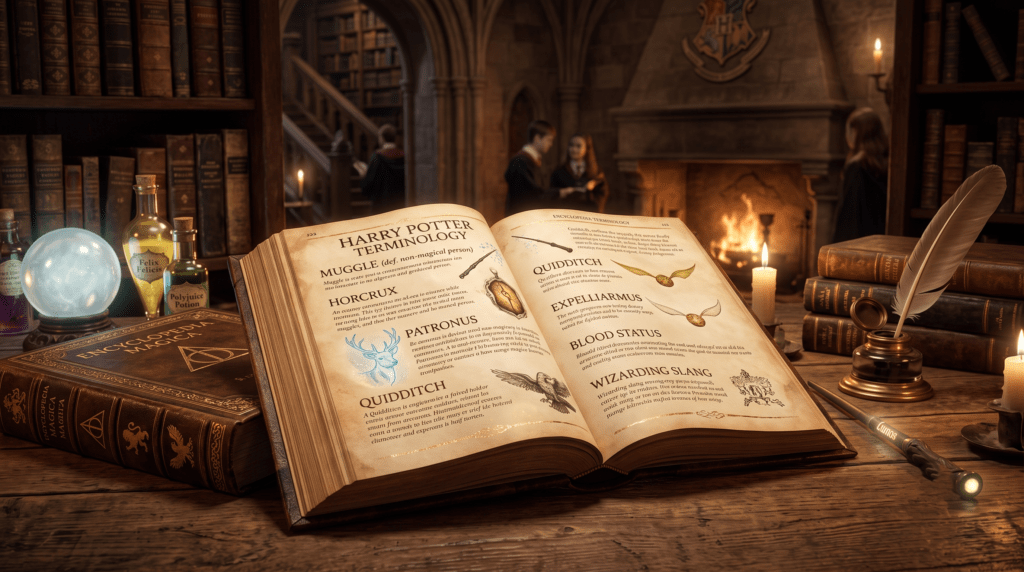
Don’t know your Horcrux from your Hufflepuff? Whether you are receiving your Hogwarts letter for the very first time, preparing for an intense trivia night, or returning for a nostalgic reread, the Wizarding World has a language entirely its own. Navigating the sheer volume of unique words, complex spells, and intricate magical concepts can be overwhelming. That is precisely why mastering Harry Potter Terminology is essential for fully immersing yourself in this beloved universe.
As a lifelong literature analyst and veteran member of the Harry Potter community, I have spent years deconstructing the lore, etymology, and hidden meanings embedded in the text. This comprehensive, definitive guide is designed to break down the origins, context, and proper usage of every magical word and phrase you need to know, so you can navigate the fandom like a true pure-blood wizard.
Why Understanding Harry Potter Terminology Matters
When authors build a secondary world, they must convince the reader that this universe exists parallel to our own. Unique terminology is the foundation of that immersion.
Building an Immersive World
The terminology in Harry Potter is not just a collection of random, made-up words. It represents a fully functioning society with its own politics, prejudices, educational systems, and daily routines. When characters discuss “Floo Powder” or the “Daily Prophet,” they do so with casual familiarity. Understanding these terms allows you to step out of the Muggle world and fully appreciate the intricate socio-political structures of the magical community.
The Linguistic Roots of Magic
Many spells, creatures, and terms in the Harry Potter universe are deeply rooted in classical Latin, French, Greek mythology, and British folklore. This gives the magical lexicon a sense of ancient history and academic weight. Recognizing these linguistic roots enriches the reading experience, revealing clever wordplay and foreshadowing that casual readers might completely miss.
Navigating the Fandom
The Harry Potter fandom (often referred to as “Potterheads”) relies heavily on this specialized jargon. Whether you are reading fanfiction, discussing character motivations on forums, or debating theories, knowing the difference between a hex and a curse, or understanding the cultural weight of the word “Mudblood,” is crucial for meaningful participation.
The Core Glossary: Blood Status and Heritage
The societal structure of the Wizarding World—and the central conflict of the entire series—is heavily dictated by ancestry and blood status. Understanding these terms is vital to grasping the systemic prejudices that Lord Voldemort manipulates to gain power.
Muggle
A Muggle is a person who lacks any sort of magical ability and was not born into a magical family. This term is so culturally significant that it was officially added to the Oxford English Dictionary in 2003, defined as “a person who is not conversant with a particular activity or skill.” In the books, the Dursleys are the prime example of Muggles.
Squib
While often confused with a Muggle, a Squib is someone who is born to at least one magical parent but possesses no magical ability themselves. Squibs are rare and often face intense stigma and marginalization within magical society.
Important Note: Unlike Muggles, Squibs are fully aware of the Wizarding World and can see magical elements hidden from Muggle eyes, such as Dementors or Hogwarts castle. Familiar Squibs include Hogwarts caretaker Argus Filch and Harry’s neighbor, Arabella Figg.
Pure-Blood, Half-Blood, and Muggle-Born
These terms define a witch or wizard’s heritage and dictate their social standing among wizarding elitists:
-
Pure-Blood: Witches and wizards with exclusively magical ancestry (no Muggles in their family tree). Examples include the Malfoys and the Weasleys. Many pure-blood families champion blood supremacy.
-
Half-Blood: A witch or wizard with both magical and Muggle ancestry. Ironically, both Harry Potter and Lord Voldemort are half-bloods.
-
Muggle-Born: A witch or wizard born to two Muggle parents. Hermione Granger is the most prominent example. They are often targets of prejudice from pure-blood supremacists.
Mudblood & Blood Traitor
These are the derogatory slurs of the magical world.
-
Mudblood: A highly offensive and foul term for a Muggle-born, implying their blood is dirty or tainted.
-
Blood Traitor: A derogatory term used by pure-blood elitists to describe pure-bloods who associate with Muggles, Muggle-borns, or advocate for equal rights. The Weasley family is proudly labeled as blood traitors by families like the Malfoys.
Magical Objects and Artifacts
Physical items in the Wizarding World are imbued with rich history and complex enchantments. Here are the most critical artifacts that drive the plot forward.
Horcrux
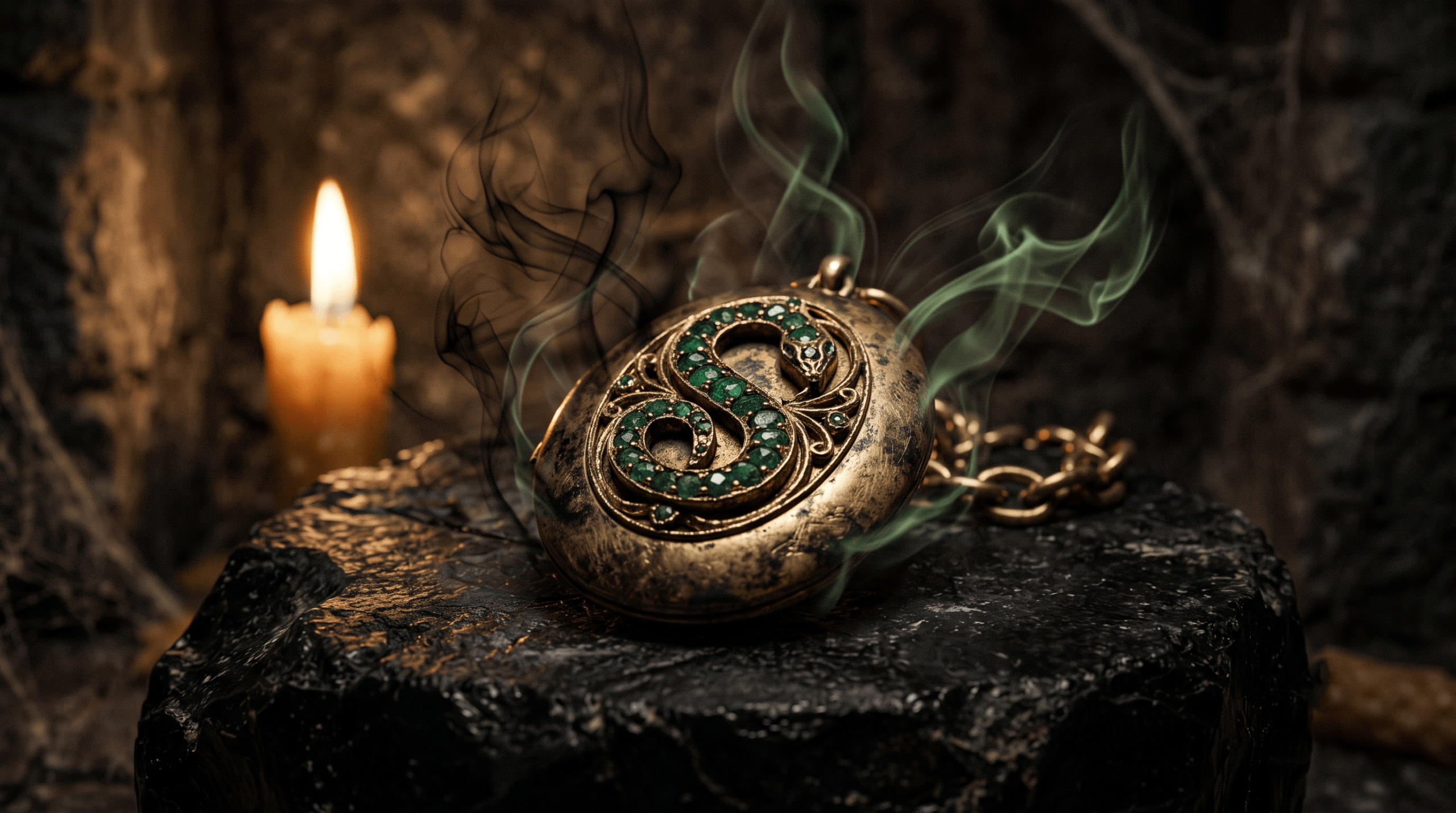
A Horcrux is the darkest of all magical objects. It is a receptacle in which a Dark wizard has hidden a fragment of their soul for the purpose of attaining immortality. Creating a Horcrux requires committing the ultimate act of evil—murder—which rips the soul apart, followed by a horrific, unspecified spell. Lord Voldemort created seven, tying him to life as long as they remained intact.
 Portkey
A Portkey is an object enchanted to instantly transport anyone touching it to a specific location. They are strictly regulated by the Ministry of Magic. To avoid Muggle detection, Portkeys are intentionally disguised as worthless trash—such as an old boot, a rusty tin can, or a punctured football.
The Deathly Hallows
The Deathly Hallows are three legendary magical objects created by Death himself, according to The Tale of the Three Brothers. Together, they supposedly make the possessor the “Master of Death.”
-
The Elder Wand: An unbeatable wand with a bloody history of passing from owner to owner through murder or defeat.
-
The Resurrection Stone: A stone that can bring “echoes” of the deceased back to the living world, though they belong neither to the living nor the dead.
-
The Cloak of Invisibility: A flawless, enduring cloak that renders the wearer completely invisible and never fades with time.
Everyday Magical Items
-
Pensieve: A wide, shallow stone basin used to store and review memories.
-
Remembrall: A glass sphere containing smoke that turns red when the owner has forgotten something (though it doesn’t tell them what they forgot).
-
Sneakoscope: A spinning glass top that lights up and whistles when someone untrustworthy is nearby.
-
Time-Turner: An hourglass on a necklace used for time travel, famously used by Hermione Granger in her third year to attend overlapping classes.
Spells, Charms, and Curses: The Language of Magic
Not all magic is created equal. The Wizarding World meticulously categorizes spellwork based on its intent, effect, and legality.
The Unforgivable Curses
These are three specific Dark Arts spells that are strictly illegal. Using any of them on a human being carries an automatic life sentence in Azkaban prison.
-
The Killing Curse (Avada Kedavra): Manifests as a flash of blinding green light and causes instantaneous, painless death. There is no counter-curse.
-
The Cruciatus Curse (Crucio): Inflicts excruciating, agonizing physical pain upon the victim. It was notoriously used by Bellatrix Lestrange on Neville Longbottom’s parents.
-
The Imperius Curse (Imperio): Places the victim under the complete mental and physical control of the caster.
Charms vs. Jinxes vs. Hexes
Understanding the distinction between these magical categories is a mark of true lore mastery:
-
Charm: A spell that adds certain properties to an object or individual (e.g., Wingardium Leviosa to make things fly, or Lumos for light). They are generally positive or neutral.
-
Jinx: A minor spell intended to cause irritation or minor distress, often used jokingly or defensively (e.g., the Impediment Jinx).
-
Hex: Slightly darker and more potent than a jinx, a hex aims to cause moderate, reversible suffering (e.g., the Bat-Bogey Hex).
-
Curse: Reserved for the darkest magic, designed to cause lasting harm, damage, or death.
The Patronus Charm (Expecto Patronum)
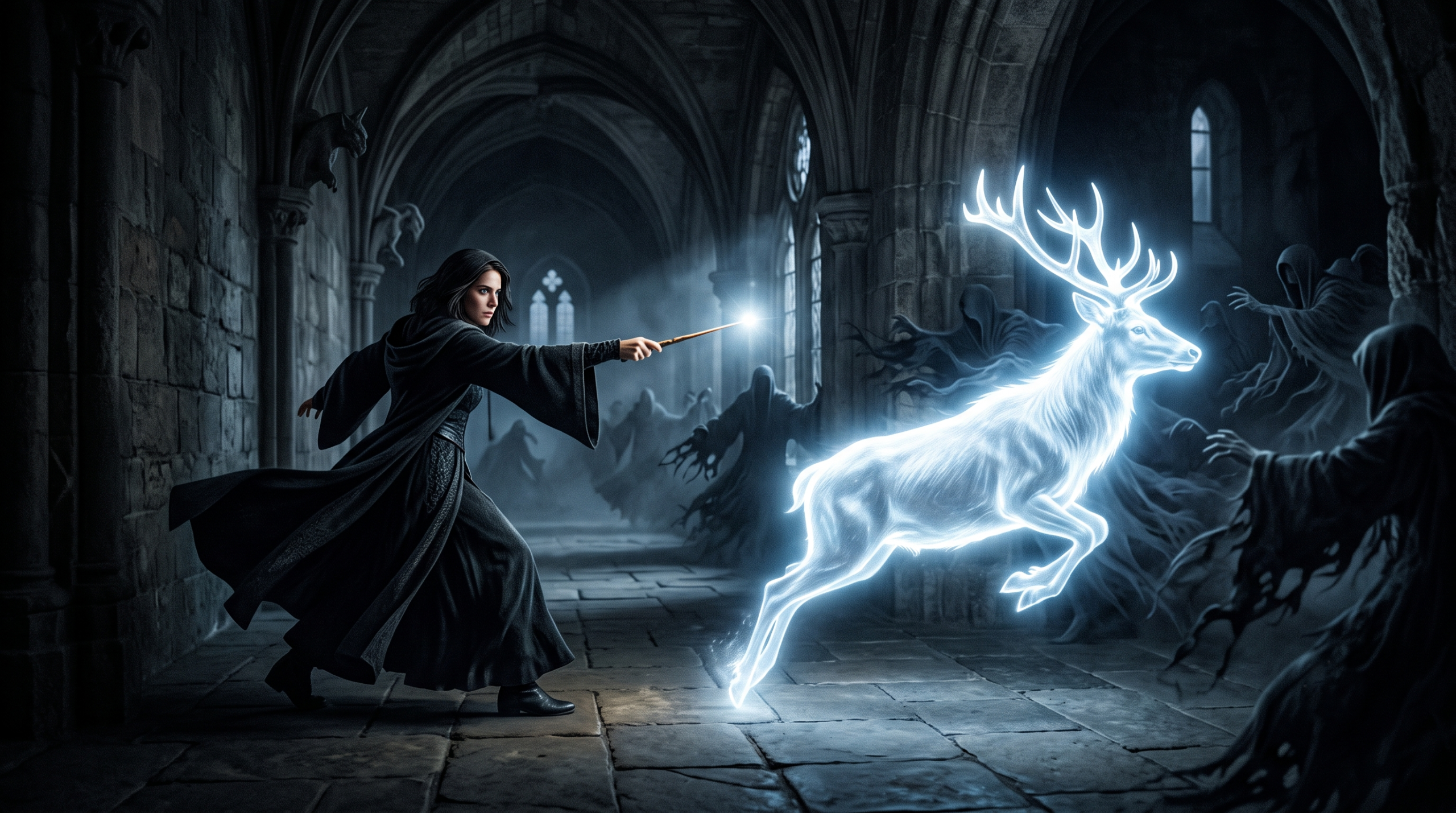
The Patronus Charm is a highly advanced defensive spell used primarily to repel Dementors. It requires the caster to focus on a single, intensely happy memory.
-
Incorporeal Patronus: A shapeless wisp of silver light.
-
Corporeal Patronus: A fully formed, glowing silver animal that reflects the caster’s innermost personality or emotional attachments (e.g., Harry’s stag, Hermione’s otter, Snape’s doe).
 Apparition and Disapparate
Apparition (appearing) and Disapparating (disappearing) refer to the magical method of teleportation. It requires a license from the Ministry of Magic (obtainable at age 17) and immense concentration—remember the three D’s: Destination, Determination, and Deliberation. A botched attempt can result in Splinching, a gruesome accident where body parts are left behind at the starting location.
Magical Creatures and Beings
The classification of non-human entities is a heavily debated topic in magical law, managed by the Department for the Regulation and Control of Magical Creatures.
Animagus vs. Metamorphmagus
These terms deal with human transfiguration, but their origins are fundamentally different:
-
Animagus: A witch or wizard who explicitly chooses to learn how to transform into a specific animal at will. It is an arduous, dangerous process that takes years and must be registered with the Ministry. Examples include Sirius Black (a dog) and Minerva McGonagall (a cat).
-
Metamorphmagus: A witch or wizard who is born with the innate, genetic ability to change their physical appearance at will, without wands or potions. Nymphadora Tonks is a prime example.
Dark Creatures
-
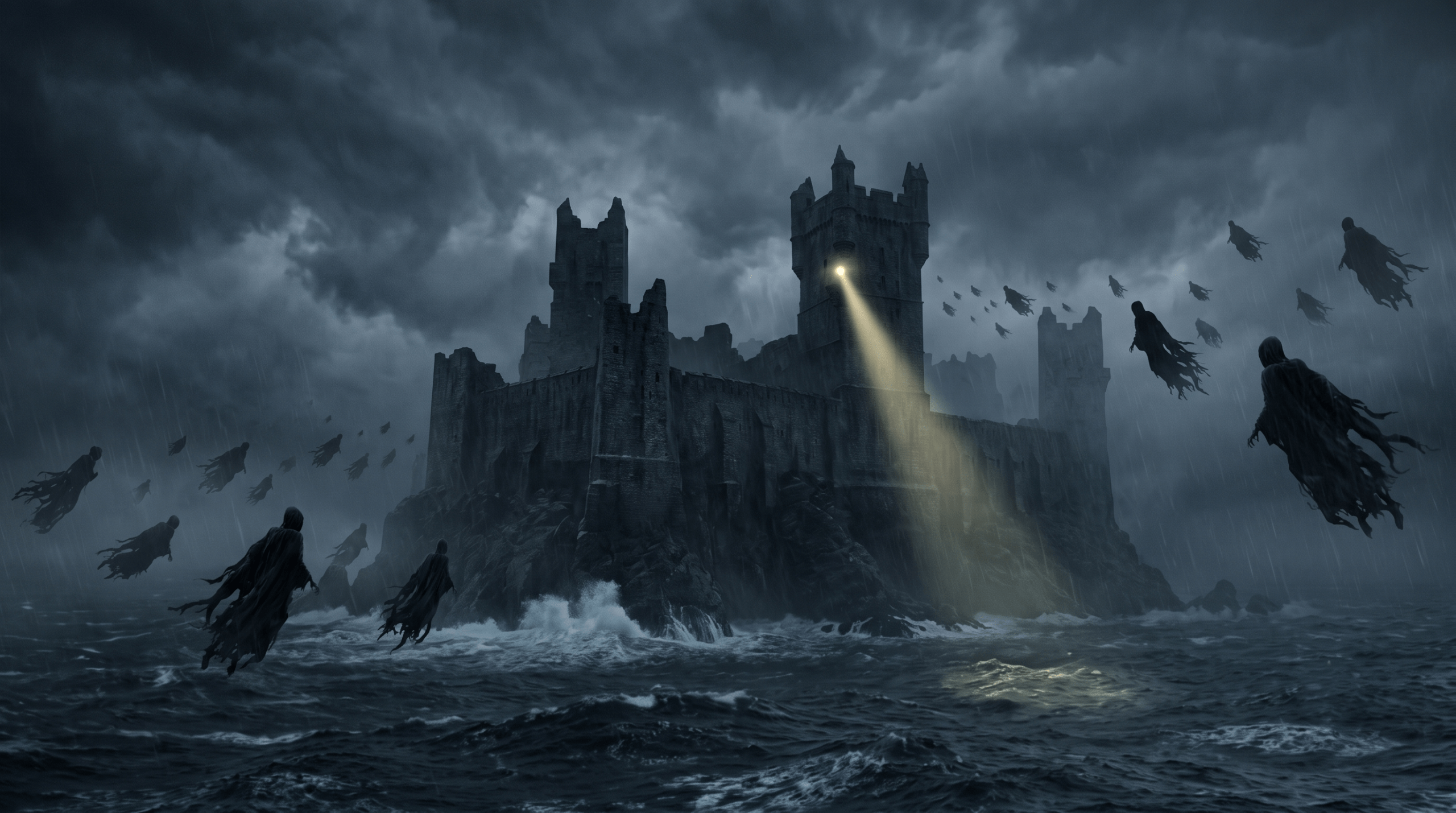
Dementors: Blind, soul-sucking fiends that guard Azkaban prison. They feed on human happiness, causing their victims to relive their worst memories. They are a literal metaphor for severe clinical depression.
-
Boggarts: Amortality shape-shifters that hide in dark, enclosed spaces (like wardrobes). They instantly take the form of whatever the person looking at them fears the most. They are defeated using the Riddikulus charm, which forces the Boggart into an amusing shape.
 Magical Beings
The term “Being” is a legal status for creatures intelligent enough to understand magical laws.
-
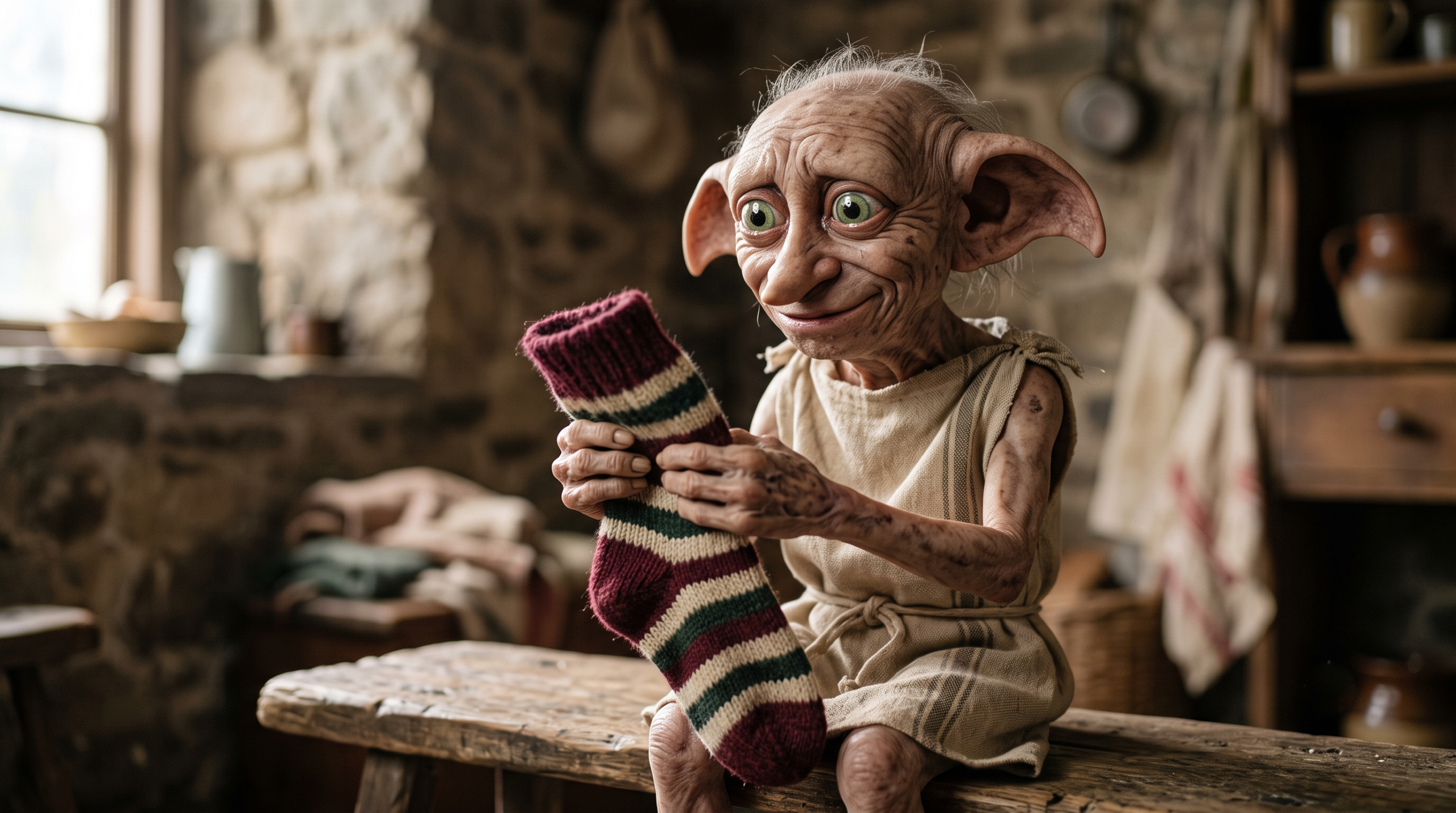
House-elves: Immensely powerful magical creatures bound to serve wizarding families for life. They can only be freed if their master explicitly gifts them a piece of clothing.
-
Goblins: Highly intelligent, fiercely proud beings who manage the wizarding economy and run Gringotts Wizarding Bank. They possess their own brand of wandless magic and are master metalsmiths.
-
Centaurs: Half-human, half-horse creatures who live in the Forbidden Forest. They are deeply philosophical, skilled in archery, and gifted at reading the stars for prophecy.
 Hogwarts Specifics: Education and Daily Life
Hogwarts School of Witchcraft and Wizardry has its own specific vocabulary that governs student life.
The Four Houses
Upon arrival, the magical Sorting Hat places students into one of four houses based on their inner traits:
-
Gryffindor: Values bravery, daring, nerve, and chivalry. (Colors: Red and Gold).
-
Slytherin: Values ambition, cunning, leadership, and resourcefulness. (Colors: Green and Silver).
-
Ravenclaw: Values intelligence, learning, wisdom, and wit. (Colors: Blue and Bronze).
-
Hufflepuff: Values hard work, patience, justice, and loyalty. (Colors: Yellow and Black).
O.W.L.s and N.E.W.T.s
These are the high-stakes standardized tests students must take to secure future careers.
-
O.W.L.s (Ordinary Wizarding Levels): Taken at the end of the fifth year. They determine which classes a student can continue taking. (A magical equivalent to real-world UK GCSEs).
-
N.E.W.T.s (Nastily Exhausting Wizarding Tests): Taken at the end of the seventh year. These are rigorous exams required for specialized careers like Aurors or Healers. (The equivalent of UK A-Levels).
Quidditch Terminology
Quidditch is the premier sport of the Wizarding World, played on flying broomsticks.
-
The Balls: The Quaffle (used for scoring points), two Bludgers (heavy iron balls enchanted to attack players), and the Golden Snitch (a tiny, lightning-fast winged ball).
-
The Players: Three Chasers (who score with the Quaffle), one Keeper (who defends the goal hoops), two Beaters (who protect the team from Bludgers using bats), and one Seeker (who must catch the Snitch to end the game and earn 150 points).
 British Slang vs. Magical Jargon: Decoding the Differences
For international readers, especially those in the United States, reading the series can sometimes feel like translating a foreign language. J.K. Rowling heavily utilizes colloquial British English alongside her magical terms, which can blur the lines for non-UK Potterheads.
| Term | Category | What It Actually Means |
| Floo Powder | Magical Jargon | A glittering powder used for teleportation through wizarding fireplaces. |
| Trainers | British Slang | Sneakers or athletic running shoes. |
| Omnioculars | Magical Jargon | Magical brass binoculars with replay and slow-motion features. |
| Prat / Git | British Slang | Mild insults describing an annoying, foolish, or arrogant person. |
| Howler | Magical Jargon | A magical letter in a red envelope that screams its message at the recipient. |
| Snogging | British Slang | Kissing or making out. |
| Bogey | British Slang | Dried nasal mucus (boogers); famously referenced in the “Bat-Bogey Hex.” |
Expert Insights: The Real-World Etymology Behind the Magic
To truly understand Harry Potter terminology and establish yourself as an authority, you must look at the real-world linguistics that J.K. Rowling—who studied Classics at Exeter University—wove into the narrative.
Latin Translations and Spells
Almost every spell is a bastardization of Latin.
-
Lumos: From the Latin lumen, meaning “light.”
-
Expelliarmus: A combination of expellere (to drive out) and arma (weapon or arms).
-
Crucio: Literally translates to “I torture” in Latin.
Mythological Naming Conventions
Character names are rarely accidental; they often act as subtle spoilers for their character arcs.
-
Remus Lupin: “Remus” refers to the mythical founder of Rome who was raised by a wolf. “Lupin” stems from lupinus, meaning wolf-like. His name literally translates to “Wolf Wolf-like,” spoiling his werewolf identity long before the reveal in Prisoner of Azkaban.
-
Sirius Black: Sirius is known astronomically as the “Dog Star,” the brightest star in the Canis Major constellation. This perfectly foreshadows his Animagus form of a massive black dog.
-
Severus Snape: “Severus” is Latin for harsh, strict, or severe, perfectly encapsulating his teaching style.
Frequently Asked Questions (FAQs) About Harry Potter Terminology
To help cement your knowledge, here are some of the most common questions fans ask regarding the lore.
What does “Muggle” mean in everyday language today?
While it originated in Harry Potter, “Muggle” is now used in modern vernacular (and recognized by dictionaries) to describe someone who lacks a particular skill or is an outsider to a specific hobby. For example, in the geocaching community, non-players are frequently referred to as Muggles.
Is the word “Always” considered Harry Potter terminology?
Yes. While it is a common English word, within the context of the fandom, “Always” is the ultimate term of enduring love and loyalty. It refers to Severus Snape’s response to Dumbledore when asked if he still loved Lily Potter after all these years.
What is the difference between a Wizard and a Sorcerer in Harry Potter?
In the Harry Potter universe, “wizard” is the standard term for a magic-user. “Sorcerer” is an antiquated term, rarely used except in titles (e.g., The Sorcerer’s Stone) or to describe exceptionally powerful, ancient magic users.
How do you pronounce Voldemort correctly?
According to J.K. Rowling, the ‘t’ at the end of Voldemort is meant to be silent, reflecting its French origins (vol de mort, meaning “flight of death”). However, due to the global impact of the film adaptations where actors pronounced the hard ‘t’, both pronunciations are generally accepted in the fandom today.
Understanding Harry Potter Terminology is much more than simply memorizing a glossary; it is the key to unlocking the deepest, most rewarding layers of the Wizarding World. From the socio-political implications of blood status to the tragic, mythological foreshadowing hidden within character names, the language of Harry Potter is rich, intentional, and deeply immersive.
Whether you are preparing to dominate a local trivia night, trying to decode the British slang on your first read-through, or simply revisiting Hogwarts for a dose of nostalgia, mastering these terms ensures you will never feel like a Muggle again. Keep this guide handy, practice your wand pronunciation (it’s Levi-O-sa, not Levio-SAH), and step confidently into the magical community.