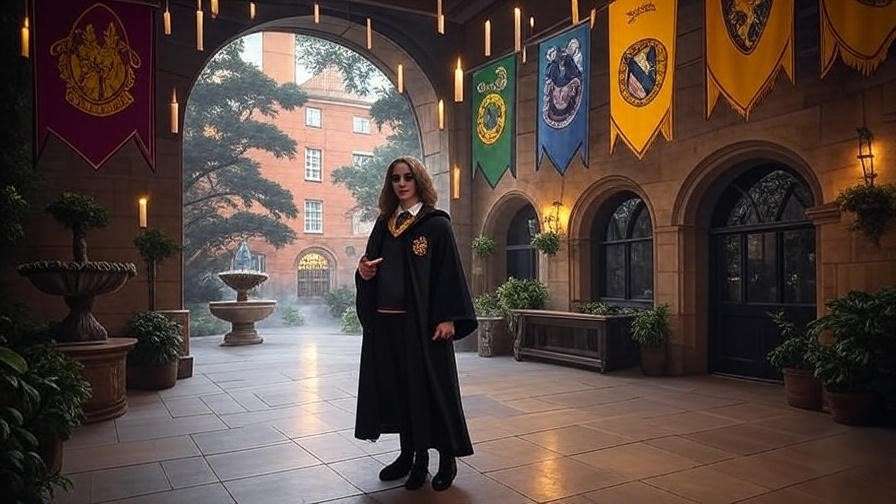
When most fans dive into the American wizarding world, their minds instantly drift to the towering Woolworth Building in 1920s New York, as seen in Fantastic Beasts, or the majestic Ilvermorny School of Witchcraft and Wizardry perched upon Mount Greylock. However, there is a hidden, explosive chapter in J.K. Rowling’s expanded lore that remains largely unexplored by the mainstream fandom. If you are searching for the true roots of Baltimore in Harry Potter, you must step back into the chaotic, revolutionary era of the 1770s.
For a brief but incredibly consequential period, the beating heart of American magic was located in Baltimore, Maryland.
Piecing together the fragmented History of Magic in North America published on Pottermore (now Wizarding World), this article serves as your definitive guide to Baltimore’s forgotten role in wizarding history. We will uncover the eccentric Magical President who brought the government to Maryland, the No-Maj war that forced them out, and the cascading events that forever changed the relationship between American wizards and the non-magical world.
The Hidden Lore of Baltimore in Harry Potter
To understand why the Magical Congress of the United States of America (MACUSA) ended up in Maryland, we must first understand the precarious state of the American wizarding community in the 18th century. Unlike the British Ministry of Magic, which had firmly established itself deep beneath Whitehall in London, early MACUSA was a nomadic government.
American witches and wizards were scattered, deeply distrustful of non-magical people (known as No-Majs) due to the lingering trauma of the Salem Witch Trials, and terrified of exposing their existence. Because of the strict adherence to the International Statute of Wizarding Secrecy, early MACUSA avoided constructing permanent, grandiose magical structures.
 Why MACUSA Chose Maryland in the 1770s
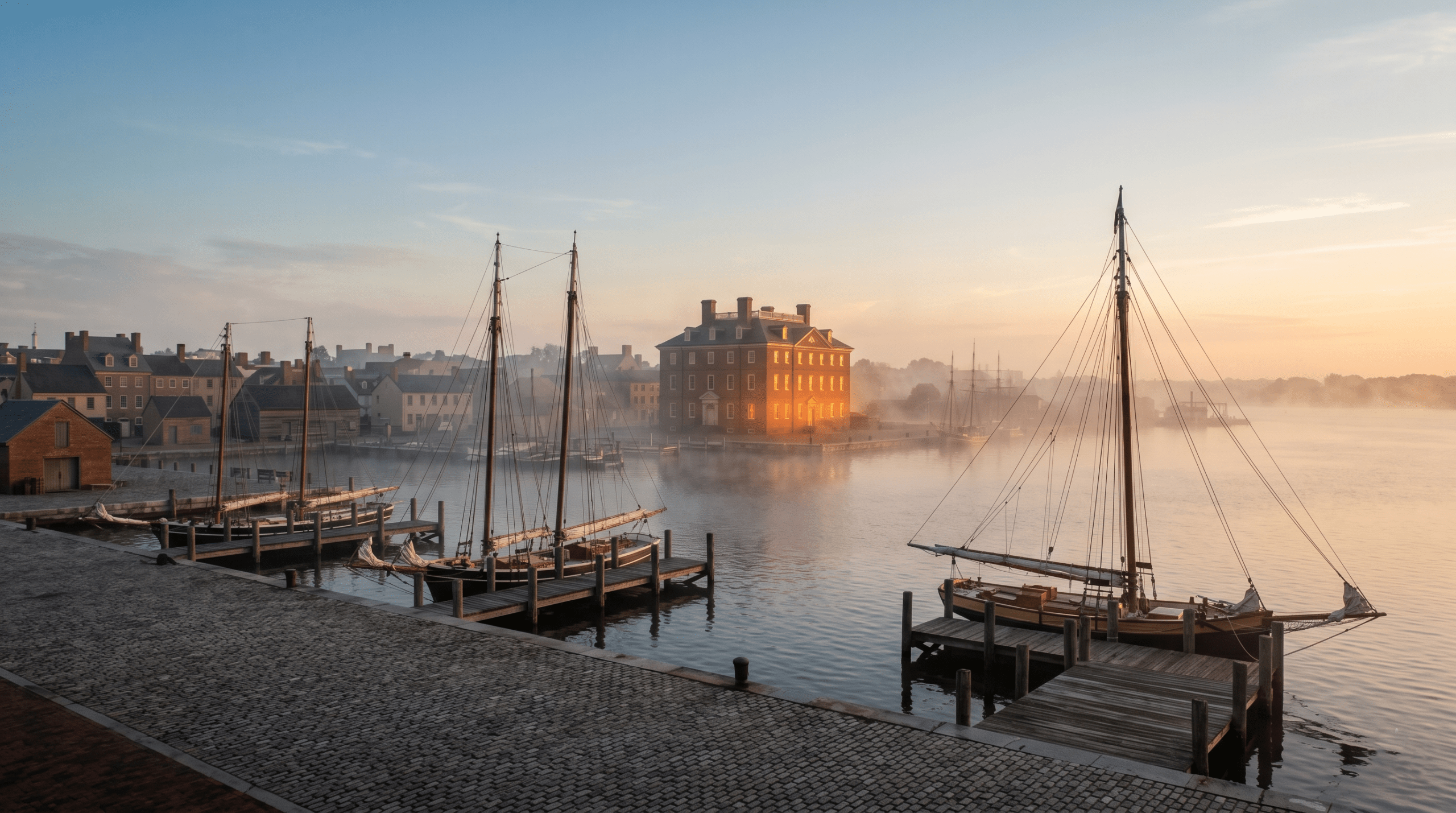
Before arriving in Baltimore, MACUSA was headquartered in Williamsburg, Virginia, under the leadership of President Thornton Harkaway. Harkaway, however, was a controversial figure with a dangerous fondness for breeding Crups—magical dogs that possess a deeply ingrained hostility toward non-magical people.
The situation in Williamsburg culminated in disaster when Harkaway’s pack of Crups escaped and savagely attacked several local No-Majs. This egregious breach of the Statute of Secrecy resulted in Harkaway stepping down in disgrace. MACUSA found itself in desperate need of a new headquarters—one that was safe, strategic, discreet, and far removed from the fallout in Virginia.
Lore Expert Note: The nomadic nature of MACUSA during this era highlights the fundamental difference between British and American magical history. While British wizards lived in relative harmony with Muggles in shared villages like Godric’s Hollow, American wizards lived in constant fear of discovery, moving their entire governing body to avoid detection by Scourers (corrupt magical mercenaries) and No-Majs alike.
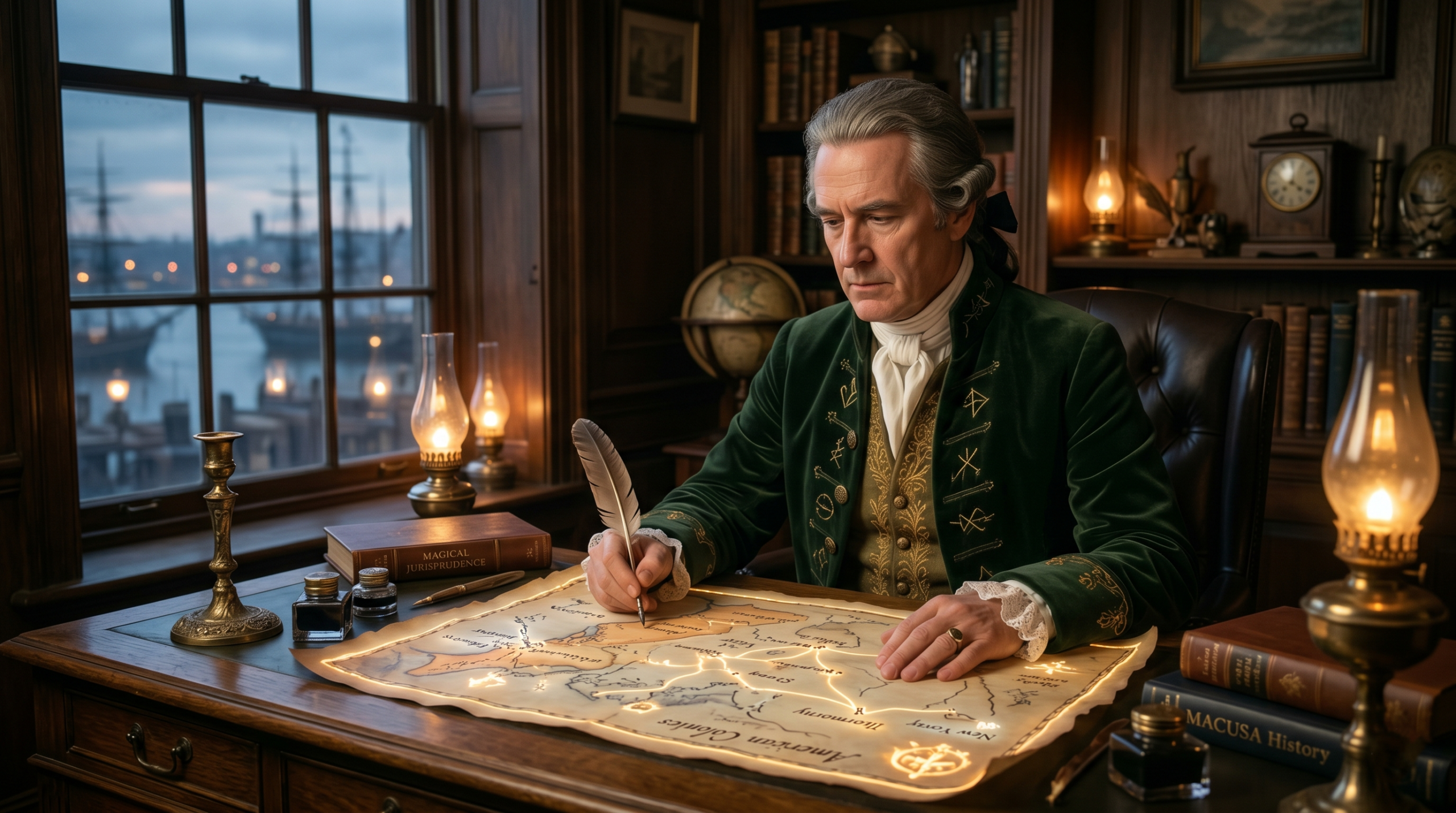
President Able Fleming: The Wizard of Baltimore
Following the Williamsburg catastrophe, the American wizarding community elected a new leader to restore order and maintain secrecy: President Able Fleming.
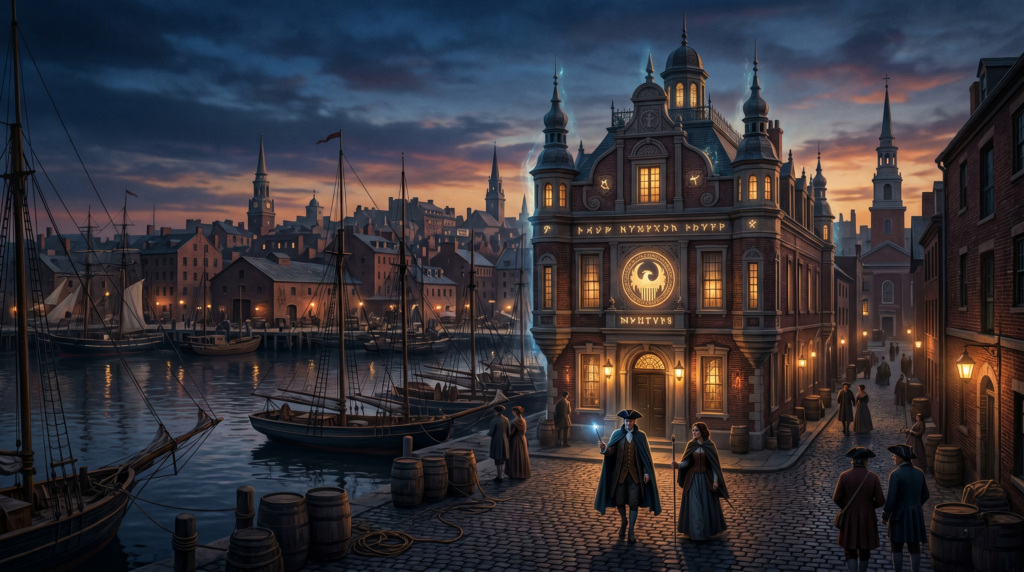
It was Fleming who decisively moved MACUSA’s headquarters to Baltimore. The reasoning was entirely practical: Baltimore was Fleming’s hometown. By relocating the magical government to his own base of operations, Fleming could centralize his authority and keep a close, watchful eye on the proceedings of the Congress.
During Fleming’s tenure, Baltimore served as the epicenter of American magical law enforcement and political strategy. Wizards and witches from across the original thirteen colonies discreetly traveled to Maryland to debate magical laws, manage the distribution of wands (which, in America, required strict permits), and monitor the growing political unrest brewing within the No-Maj population. For a brief, shining moment, Baltimore was the wizarding capital of the New World.
 The Revolutionary War: When Muggle and Magical Worlds Collided
While President Able Fleming successfully stabilized MACUSA in Baltimore, he could not control the forces of real-world history unfolding around him. The mid-1770s brought unprecedented turmoil to the American colonies. The No-Maj population was rebelling against the British Crown, and the Revolutionary War was officially underway.
This is where J.K. Rowling’s Wizarding World lore brilliantly intersects with real-world American history.
 The Arrival of the Continental Congress (1776)
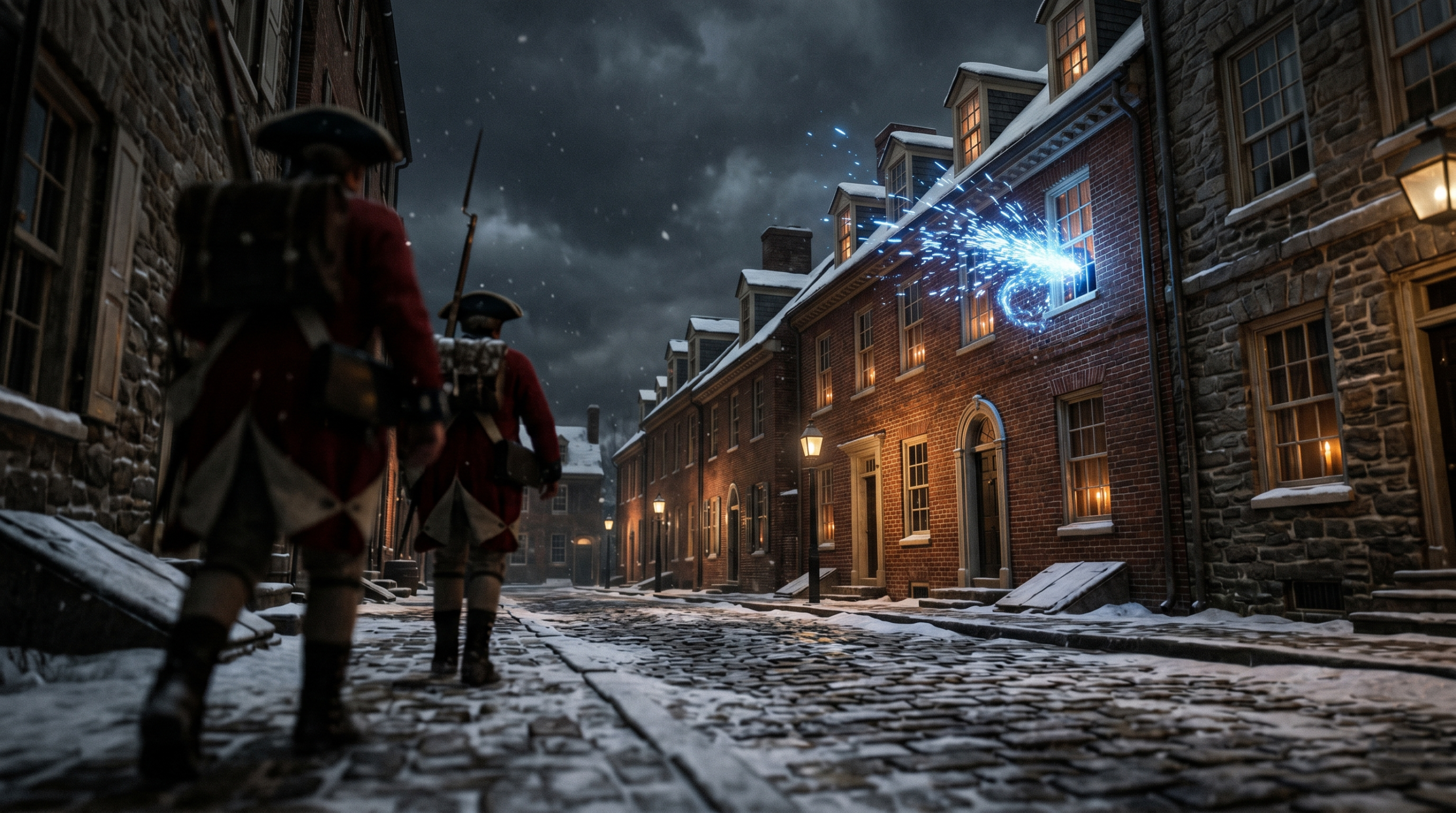
In the winter of 1776, the No-Maj American revolution faced a dire crisis. British forces were advancing rapidly on Philadelphia, the seat of the Continental Congress. Fearing capture and execution for treason, the Founding Fathers and the No-Maj government fled Philadelphia and urgently relocated to the safest, most strategic nearby port city: Baltimore. They convened at the Henry Fite House, turning Baltimore into the temporary capital of the newly declared United States.
For the No-Majs, this was a brilliant tactical retreat. For MACUSA, it was an absolute nightmare.
Suddenly, the most important, highly guarded, and heavily scrutinized No-Majs in the country were operating in MACUSA’s direct vicinity. The city was swarming with revolutionary soldiers, spies, and political figures.
The Evacuation to Washington
The sheer panic this caused within MACUSA cannot be overstated. Having the No-Maj Continental Congress operating in their backyard posed a catastrophic threat to the International Statute of Secrecy. One stray spell, one poorly concealed magical creature, or one intercepted owl could expose the entire North American magical community to a No-Maj society that was already heavily armed and exceedingly paranoid.
President Able Fleming was left with no choice. Just as MACUSA had finally settled into its Baltimore headquarters, the wizarding government was forced into a hasty, covert evacuation. They packed up their archives, concealed their magical artifacts, and fled Maryland, relocating to Washington—a move that would eventually define the future of American magical governance.
The departure from Baltimore was not just a change of address; it was a deeply traumatic event for American wizards. It solidified their belief that the No-Maj world was inherently unstable, violent, and highly disruptive to magical life.
The “Country or Kind” Debate: Baltimore’s Lasting Legacy
The abrupt departure from Maryland was far more than a geographical shift; it was the psychological catalyst for the greatest existential crisis in the history of American magical governance. By being uprooted from their homes and forced to flee an encroaching No-Maj war, the North American wizards were pushed to a breaking point.
The Fallout of Leaving Maryland
By 1777, the American Revolutionary War was raging, and MACUSA’s new headquarters in Washington was proving just as precarious as their abandoned post in Baltimore. The magical community was bitterly fractured. Should American witches and wizards step out of the shadows to fight alongside their No-Maj neighbors for independence from Great Britain? Or should they strictly protect their own kind and remain entirely neutral in a muggle war?
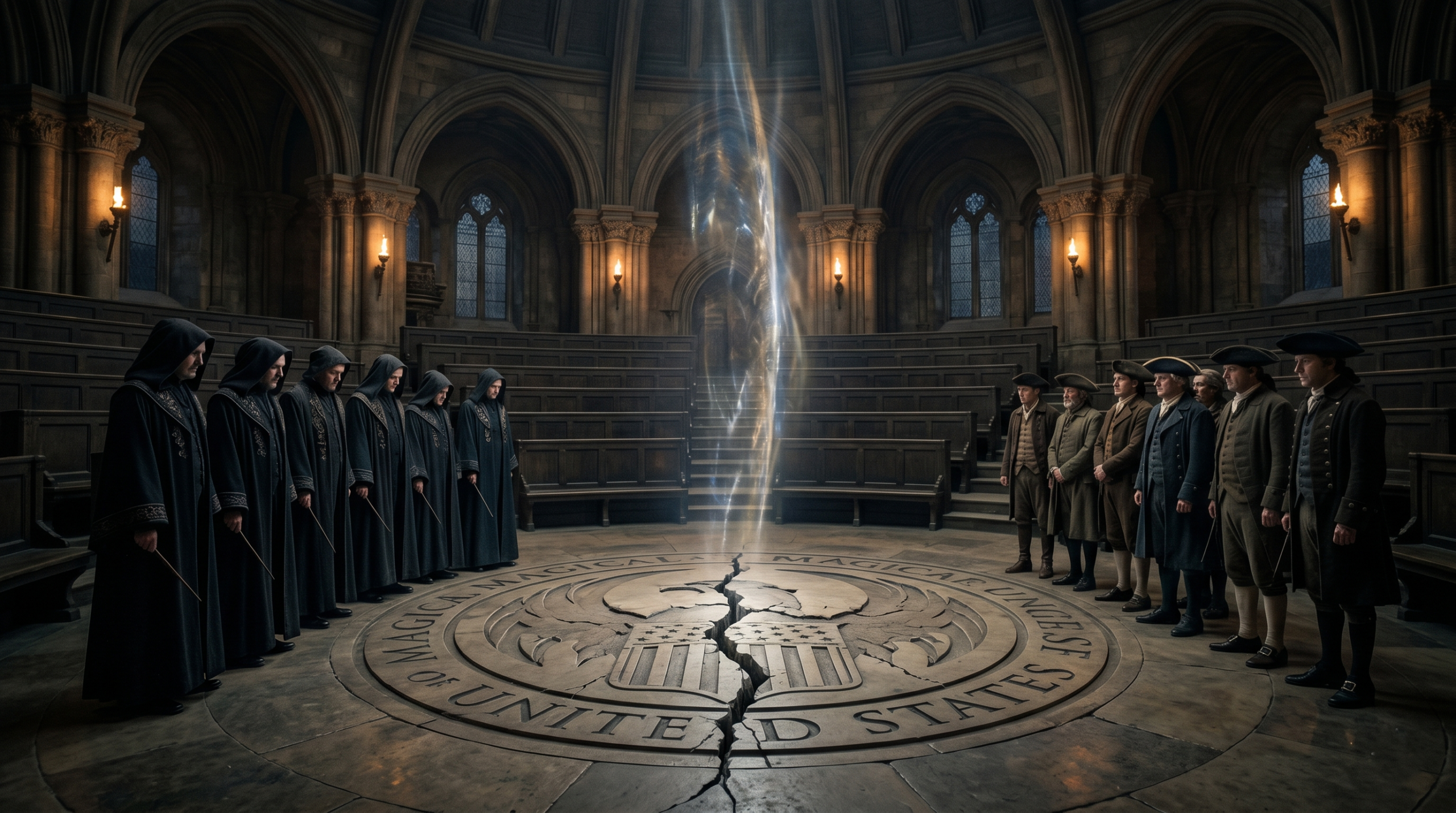
This tension culminated in the legendary 1777 “Country or Kind” debate, presided over by MACUSA’s new leader, President Elizabeth McGilliguddy.
 Laying the Groundwork for Rappaport’s Law
During this fierce debate, the “Baltimore Era” served as a primary talking point for the isolationist faction. Witches and wizards argued that the Continental Congress’s sudden arrival in Baltimore proved that No-Majs were unpredictable, chaotic, and inherently dangerous to magical safety. If a wizarding government couldn’t safely exist in an established city like Baltimore without being disrupted by No-Maj politics, how could the two worlds ever coexist?
While President McGilliguddy ultimately decided that MACUSA would not officially intervene in the Revolutionary War (though many American wizards covertly protected their No-Maj neighbors), the lingering trauma of the Baltimore evacuation deeply scarred the community.
This deep-seated paranoia directly paved the way for the infamous Rappaport’s Law enacted in 1790. This draconian legislation enforced absolute, total segregation between the magical and No-Maj communities in North America—a strict cultural division that defined the Fantastic Beasts era and lasted well into the 1960s. The seeds of this extreme isolationism were planted the day MACUSA was forced to flee Maryland.
What If MACUSA Had Stayed in Baltimore? (Alternate Timeline)
For hardcore fans of J.K. Rowling’s expanded universe, the “Baltimore Era” presents one of the most fascinating “What If” scenarios in wizarding history. If President Able Fleming had found a way to conceal MACUSA from the Continental Congress instead of fleeing, the entire trajectory of American magical history would have been radically different.
A Wizarding Hub on the Chesapeake Bay
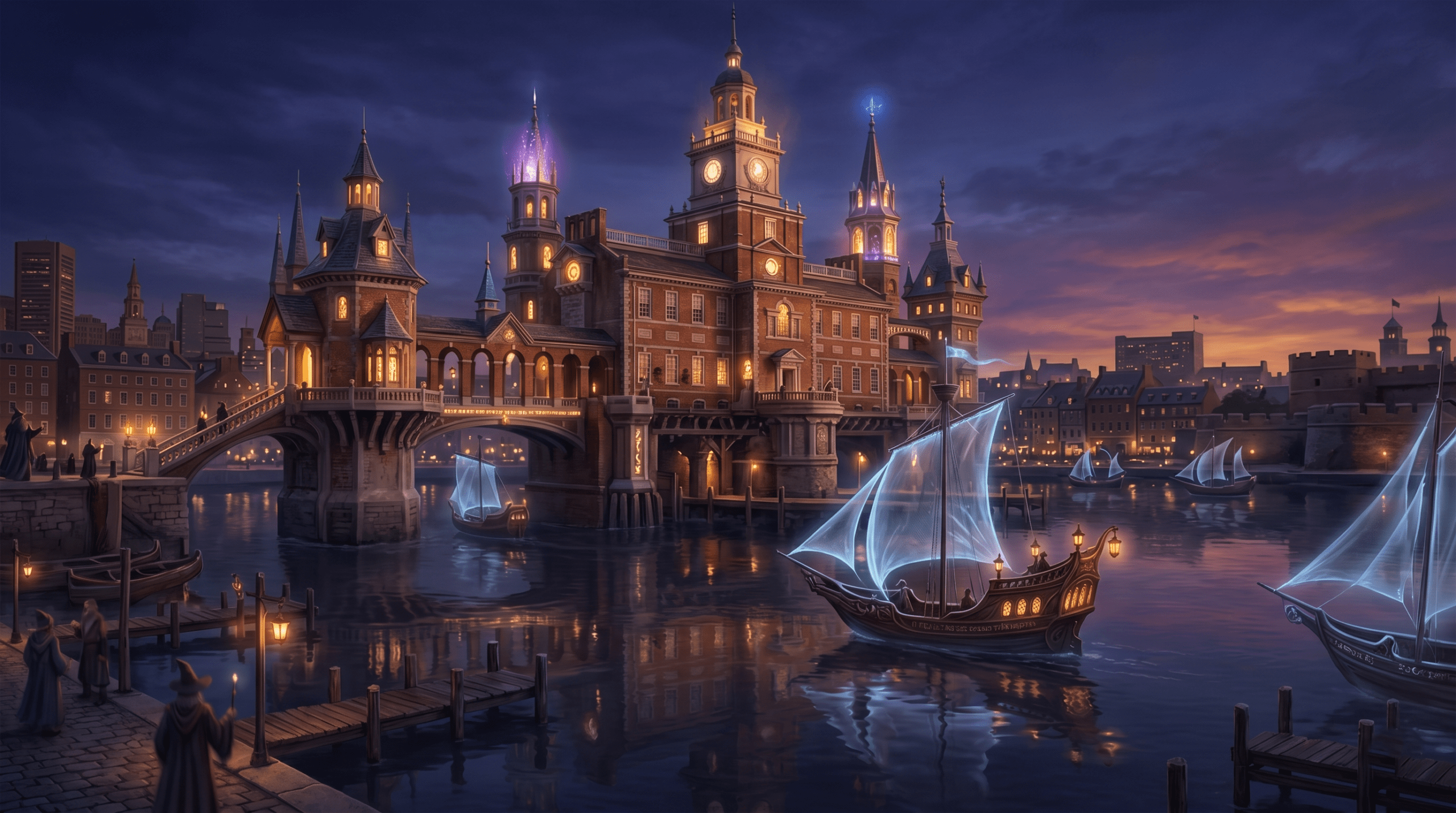
Had MACUSA remained, Baltimore would have evolved into the magical capital of the United States, heavily influenced by its rich maritime culture.
We can theorize that a Baltimore-based MACUSA would have developed specialized, water-based magical law enforcement to monitor the Chesapeake Bay. We might have seen the rise of magical shipbuilding, with enchanted vessels navigating the Atlantic under heavy Disillusionment Charms, trading potions and artifacts with the British Ministry of Magic or the wizarding communities of the Caribbean. Furthermore, the diverse magical creatures native to the American waterways—such as the Horned Serpent, one of the four house mascots of the Ilvermorny School of Witchcraft and Wizardry—might have played a more prominent role in local magizoology and wandmaking.
 The Impact on the Revolutionary War
If the wizarding government had stayed anchored in Baltimore, neutrality during the Revolutionary War might have been impossible. The British naval attacks that plagued the Maryland coastline, culminating decades later in the Battle of Baltimore during the War of 1812, would have directly threatened MACUSA headquarters.
American wizards would have been forced to cast massive, city-wide protective enchantments (similar to the Protego Maxima spells used during the Battle of Hogwarts) to shield their hidden enclaves from cannon fire. The likelihood of a massive Statute of Secrecy breach would have skyrocketed, potentially exposing the wizarding world to the Founding Fathers.
Real-World Magic: A Potterhead’s Guide to Baltimore Today
While President Able Fleming and MACUSA may have vacated the city centuries ago, modern-day Baltimore still holds an incredible amount of real-world magic for Potterheads. If you are a fan looking to connect with the aesthetic and atmosphere of the wizarding world, Maryland’s largest city offers architectural wonders and local experiences that feel pulled straight from the pages of a Harry Potter book.
Architecture That Could Hide a Wizarding World
If you want to step into a space that feels indistinguishable from the restricted section of the Hogwarts Library, you must visit The George Peabody Library in the historic Mount Vernon neighborhood. With its towering, six-story cast-iron balconies, sweeping skylight, and thousands of ancient, leather-bound volumes, it is widely considered one of the most breathtaking libraries in the world. Walking through its aisles, it is incredibly easy to imagine MACUSA aurors or Ilvermorny scholars using this space as a hidden magical archive.
Similarly, the cobblestone streets, towering gothic spires, and historic brownstones of Mount Vernon feel like an American extension of Diagon Alley. The city’s rich, historical preservation makes it the perfect backdrop for visualizing the era of President Able Fleming.
Where to Experience Harry Potter in Baltimore
Beyond the architecture, Baltimore boasts a vibrant community that frequently celebrates wizarding lore:
-
The Charmery: This beloved local ice cream parlor frequently conjures up magical, Harry Potter-themed flavors during special events and anniversaries, turning a simple dessert into an apothecary-style experience.
-
Wizarding Pub Crawls: The historic district of Fells Point—with its centuries-old taverns and maritime ghost stories—regularly hosts wizard-themed pub crawls and trivia nights, allowing fans to don their house robes and sample local takes on Butterbeer.
-
Local Apothecaries: Shops throughout the Hampden and Mount Vernon neighborhoods offer vast selections of loose-leaf teas, crystals, and botanical remedies that perfectly replicate the vibe of a Potions classroom.
Frequently Asked Questions (FAQs)
To ensure you have a complete mastery of this niche wizarding history, here are the answers to the most common questions regarding Baltimore’s place in the magical universe:
Was Baltimore mentioned in the Harry Potter books?
No, Baltimore is not mentioned in the original seven Harry Potter novels. The city’s magical history was officially revealed by J.K. Rowling in her expanded lore series, History of Magic in North America, which was published on Pottermore (now the Wizarding World website) to promote the Fantastic Beasts film franchise.
Who was the MACUSA President from Baltimore?
President Able Fleming was the leader of the Magical Congress of the United States of America who relocated the government’s headquarters to his hometown of Baltimore in the 1770s.
Why did MACUSA leave Baltimore?
MACUSA was forced to evacuate Baltimore in the winter of 1776 because the No-Maj Continental Congress fled Philadelphia and relocated to the city. The sudden influx of revolutionary politicians and soldiers posed a catastrophic threat to the International Statute of Wizarding Secrecy.
The story of Baltimore in Harry Potter is a testament to the incredible depth of the Wizarding World’s expanded lore. It is not just a piece of obscure trivia; it is the fundamental turning point in American magical history.
President Able Fleming’s decision to bring MACUSA to Maryland, and the subsequent forced evacuation due to the Revolutionary War, permanently altered the psychology of North American wizards. It fostered the deep-seated fear and isolationism that ultimately birthed Rappaport’s Law, shaping the highly segregated society we witness in the Fantastic Beasts films.
The next time you re-watch the movies or read about the history of Ilvermorny, remember the brief, chaotic period when the heart of American magic beat fiercely on the shores of the Chesapeake Bay.
What are your thoughts on this hidden chapter of wizarding history? Do you think American wizards should have stayed in Baltimore and fought in the Revolutionary War? Let us know in the comments below!