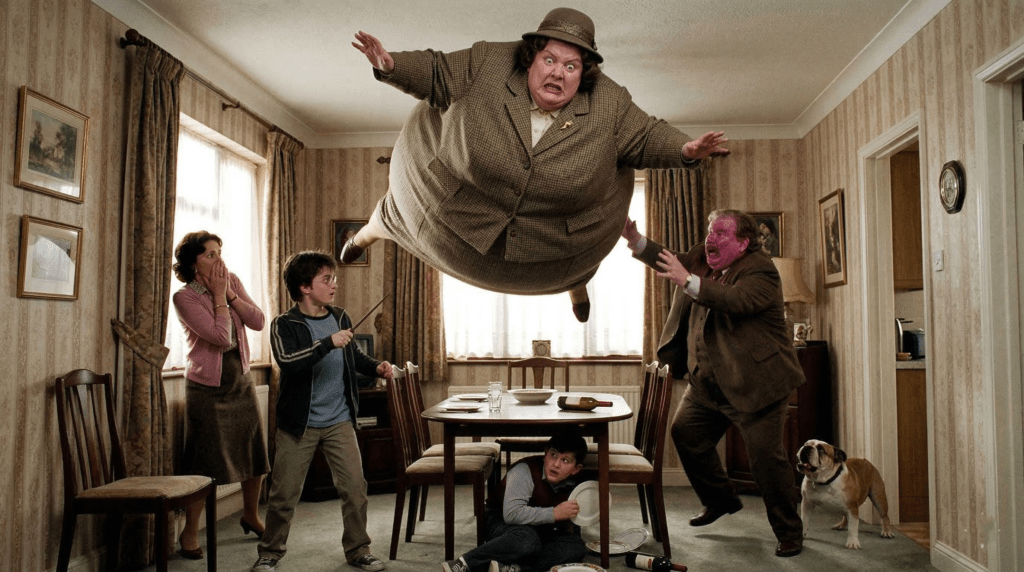
Imagine this: a pompous, bulldog-breeding Muggle aunt sits at the dinner table, glass of brandy in hand, spewing venom about a teenage boy’s dead parents. She calls his mother a “bitch,” labels his father a drunk layabout, and suggests the boy himself needs a good beating to sort out his “bad blood.” The boy’s anger builds until — pop! — buttons fly off her tweed jacket, her face swells red, and she inflates like a monstrous balloon, floating helplessly toward the ceiling while her horrified family watches.
This isn’t just any family argument. It’s one of the most satisfying, cathartic moments in the entire Harry Potter series. Marge Dursley from Harry Potter, Vernon Dursley’s older sister, embodies the worst kind of ordinary cruelty — the kind that hides behind “plain speaking” and family favoritism. Her brief but unforgettable appearance in Harry Potter and the Prisoner of Azkaban delivers poetic justice that fans still cheer for years later. In a world filled with dark lords and death eaters, sometimes the most monstrous villain is the inflated ego of an abusive relative.
As a longtime Harry Potter enthusiast and analyst of J.K. Rowling’s character work (drawing from the books, films, official Wizarding World writings, and decades of fan discussions), I’ll take you through everything you need to know about Marge Dursley: her background, her vicious treatment of Harry, the iconic inflation incident, what truly happened afterward, and why her comeuppance feels so deserved. Whether you’re revisiting the series, curious about side characters, or simply love reliving that glorious deflation, this deep dive uncovers more layers than typical summaries ever do.
Who Is Marge Dursley? Background and Family Ties
Early Life and Origins
Marjorie Eileen “Marge” Dursley was born in Great Britain sometime in the 1940s or 1950s to the staunchly Muggle Dursley family. As Vernon Dursley’s elder sister, she grew up in the same narrow-minded, status-obsessed environment that produced her brother. Little is known about her parents or childhood beyond the implication that the Dursleys valued conformity, normalcy, and disdain for anything “abnormal.” Marge never married, instead channeling her energies into bulldog breeding and a life of self-satisfied superiority in the English countryside.
She has no blood relation to Harry Potter — he’s the son of her brother-in-law’s sister-in-law — yet Harry is forced to call her “Aunt Marge” during her visits. This forced familial tie only amplifies the irony: she’s an adoptive aunt who treats him worse than a stray dog.
 Her Lifestyle and Personality Traits
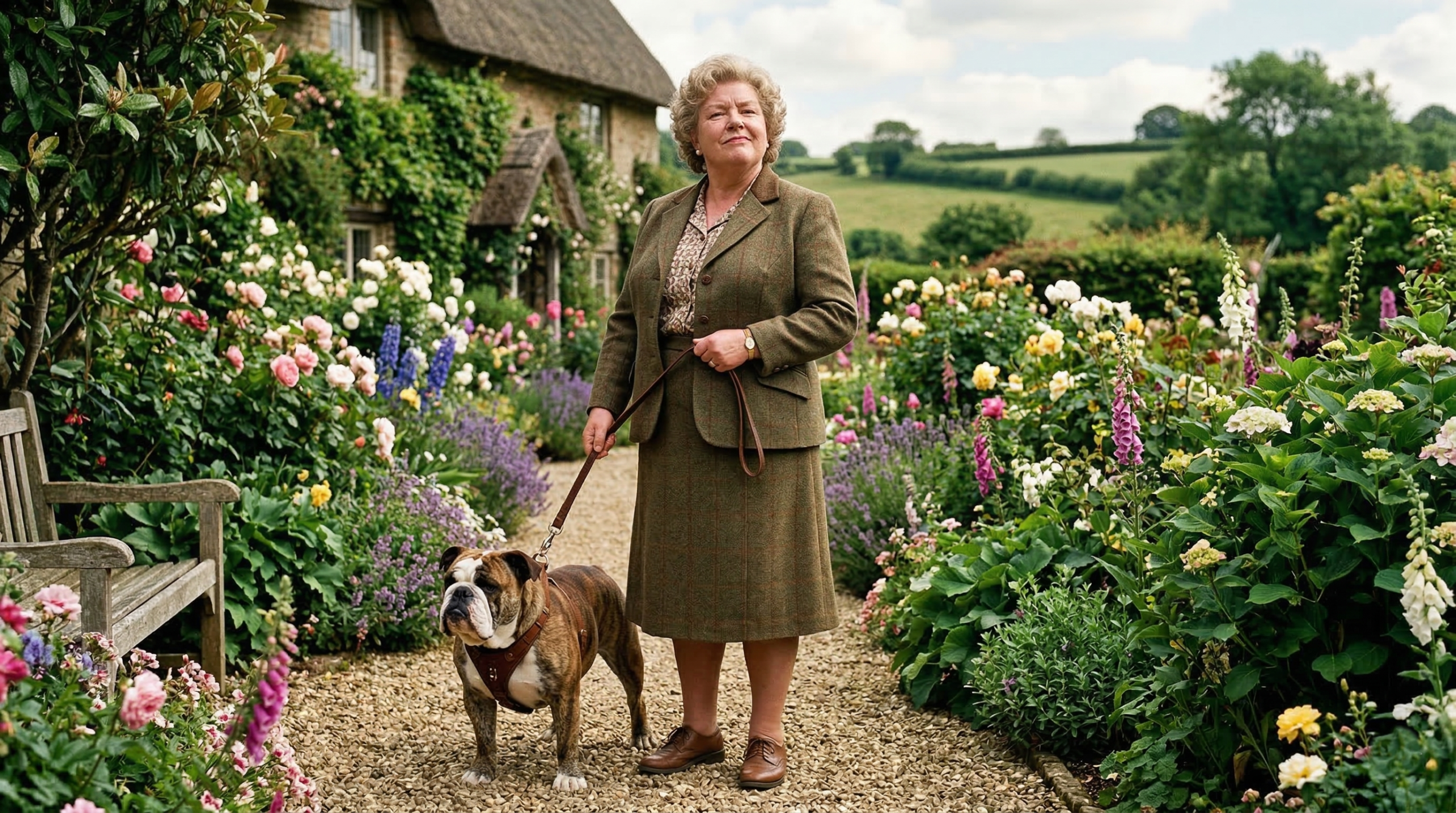
Marge lives in a house with a large garden, where she breeds bulldogs — a fitting choice for a woman whose personality mirrors the breed’s stubborn, aggressive reputation. Her favorite is Ripper, a particularly ferocious bulldog she dotes on more than most people. According to J.K. Rowling’s official Wizarding World profile (formerly Pottermore), Marge believes firmly in corporal punishment and “plain speaking,” which is really just an excuse for being deliberately offensive and rude.
She’s wealthy enough to spoil her nephew Dudley with expensive gifts while pointedly ignoring Harry. Secretly, she harbors a crush on her neighbor, Colonel Fubster, who dog-sits her pets when she’s away — though the feeling is clearly unrequited. Physically, she’s described as large, beefy, with piggy eyes, a mustache reminiscent of her brother’s, and an overall purple-faced, tweed-clad presence that screams entitlement.
Comparison to the Rest of the Dursley Family
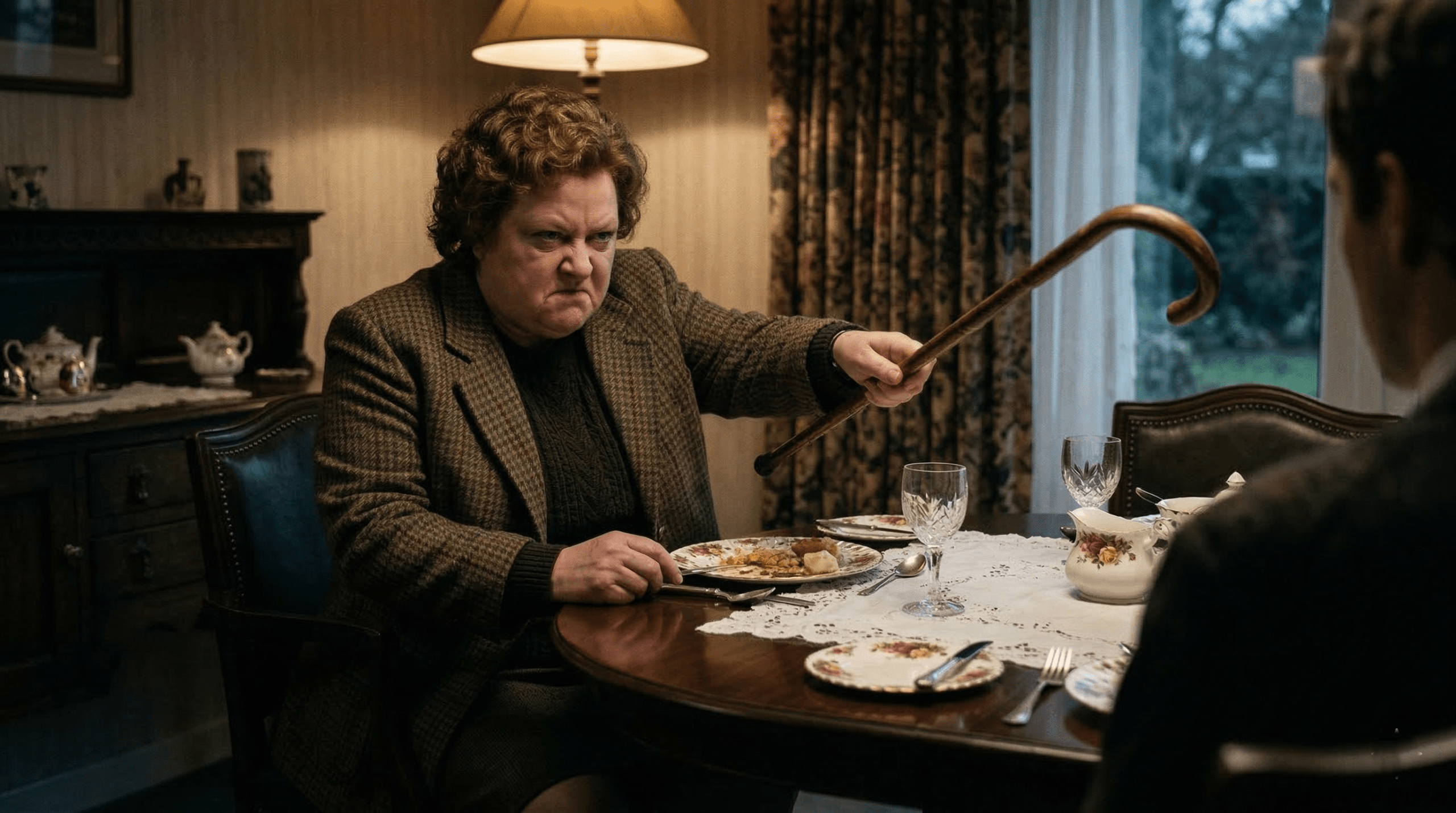
The Dursleys as a unit are abusive and neglectful toward Harry, but Marge stands out as the most sadistic. Vernon avoids direct confrontation when possible, content to ignore or shout at Harry. Petunia, while cruel, occasionally shows flickers of conflicted emotion (especially regarding her sister Lily). Dudley is a spoiled bully but ultimately redeemable. Marge, however, delights in Harry’s misery. She hits him with her walking stick during childhood games to ensure Dudley wins, openly suggests beatings as discipline, and compares Harry unfavorably to her dogs — implying he’s defective stock.
Rowling herself drew inspiration for Marge from her own maternal grandmother, Frieda, who reportedly preferred her dogs to human relatives. This personal touch adds authenticity to Marge’s unpleasantness, making her feel like a real, uncomfortably familiar type of relative.
Marge’s Cruel Treatment of Harry – A Chronicle of Abuse
Incidents from Harry’s Childhood
Marge’s cruelty toward Harry began early. When Harry was just four years old (around 1985), during a game of musical statues, she struck him with her walking stick to prevent him from beating Dudley — ensuring her favorite nephew always came first. This pattern continued: she treated Harry as a “hopeless case” in need of harsh correction, while showering Dudley with affection and gifts.
Her visits were dreaded events at Privet Drive. Harry was forced to endure her presence, calling her “Aunt” despite the lack of blood tie, and listening to her constant belittling.
 The Visit in Prisoner of Azkaban – The Breaking Point
The infamous week-long stay in the summer of 1993, detailed in Harry Potter and the Prisoner of Azkaban, marks the peak of her abuse. Marge arrives with Ripper in tow, immediately launching into daily torments. She insults Harry’s appearance, behavior, and heritage, calling him a “bad blood” case and suggesting Vernon should have beaten the “nonsense” out of him long ago.
The cruelty escalates over dinners and conversations. She compares people to dogs: “You get the odd one that goes wrong… Needs a firm hand.” She dotes on Dudley while glaring at Harry, daring him to complain about the inequality.
Psychological Impact on Harry
Marge’s words cut deepest when they target Harry’s parents. She accuses James and Lily of being “drunks” and “layabouts,” culminating in the dinner scene where she calls Lily a “bitch” who got what she deserved. These insults strike at Harry’s core insecurities — his orphan status, his lack of family knowledge, and the mystery surrounding his parents’ deaths. Suppressed anger builds until it erupts in accidental magic, a pivotal moment showing Harry’s emotional growth and the dangers of uncontrolled wizard power.
This abuse highlights real-world themes: family toxicity, favoritism, and the long-term damage of verbal cruelty disguised as “tough love.”
The Iconic Inflation Scene – What Really Happened
The Build-Up and Trigger
By the final dinner of Marge’s week-long visit, tensions had reached a boiling point. Harry, already on edge from Sirius Black’s escape and the looming threat of dementors, had spent days biting his tongue while Marge hurled insult after insult. Vernon had warned Harry repeatedly: behave, or no return to Hogwarts. But Marge’s drunken tirade proved too much.
Seated at the table, brandy glass sloshing, Marge launched into her most vicious attack yet. She criticized Harry’s parents relentlessly: James was a “drunkard and a wastrel,” Lily a “bitch” who got herself killed, and Harry himself a “nasty little boy” full of “bad blood” that needed beating out. Each word landed like a physical blow on Harry’s already fragile sense of identity.
When Marge raised her glass in a mock toast—“To Harry Potter… the little blister!”—something inside Harry snapped. His suppressed rage, grief, and humiliation fused into a single, uncontrollable burst of accidental magic. No wand, no incantation—just raw emotion channeled through an untrained wizard.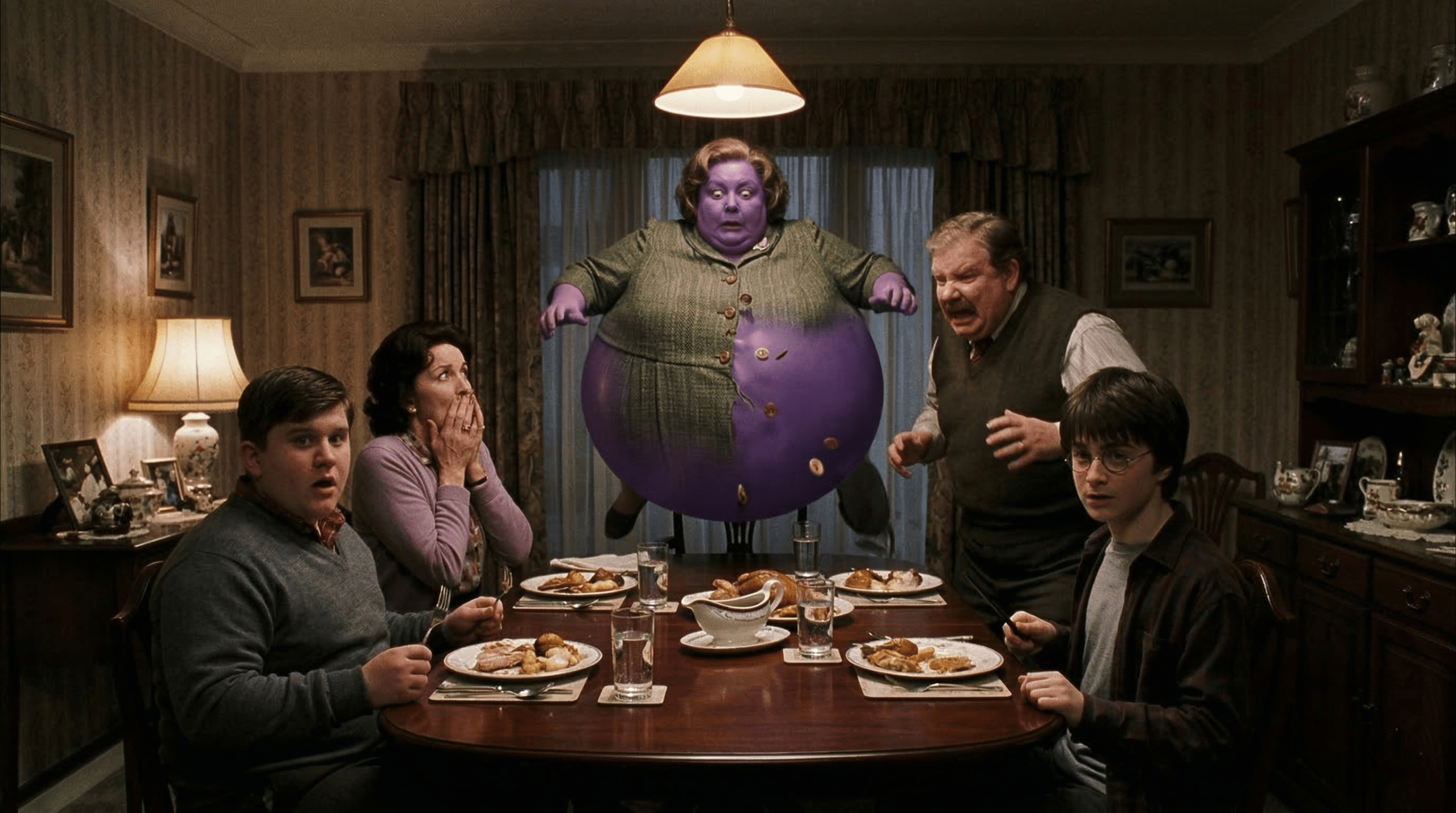
Detailed Breakdown of the Moment
In the book, J.K. Rowling describes the transformation with vivid, almost comical horror:
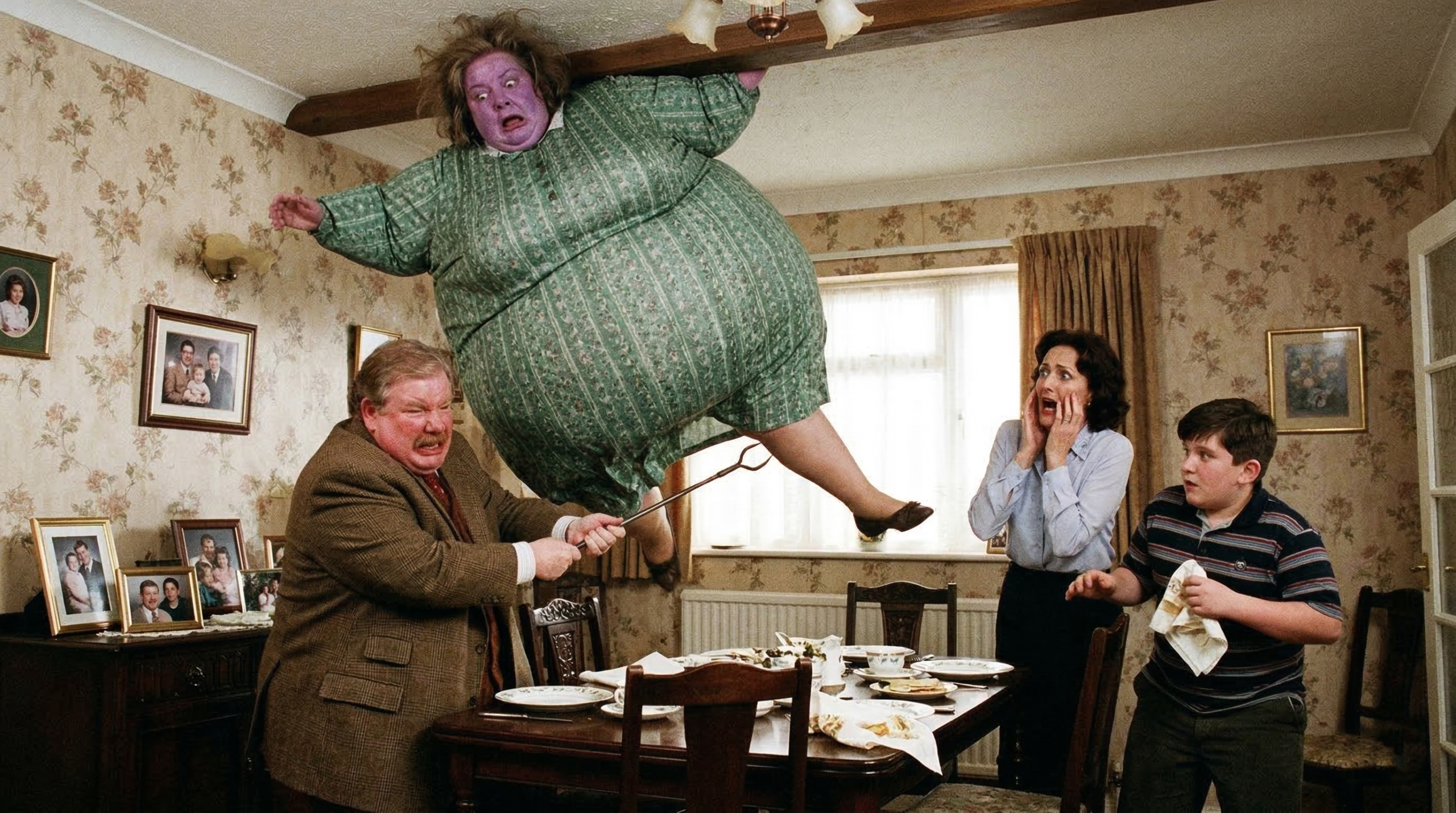
“Aunt Marge… began to swell. She was blowing up like a monstrous balloon, her face turning from purple to mauve, her tiny piggy eyes bulging, her mouth stretching so wide that no sound could escape… Buttons burst off her tweed jacket and pinged off the walls… She was rising off her chair toward the ceiling, making low, strangled noises.”
The scene is deliberately grotesque and absurd, turning Marge’s physical bulk into literal inflation. Her body becomes a caricature of her overblown ego and self-importance. The symbolism is unmistakable: the woman who has spent her life looking down on others is now literally elevated—and helpless.
The film adaptation (2004, directed by Alfonso Cuarón) amplifies the visual comedy while staying faithful to the tone. Pam Ferris, already unforgettable as the sadistic Miss Trunchbull in Matilda, delivers Marge with gleeful nastiness. The inflation effect—achieved with a combination of an inflatable body suit, wires, and clever editing—remains one of the franchise’s most memorable practical-effects sequences. No heavy CGI was needed; the sheer absurdity of a ballooning aunt carried the moment.
Immediate Aftermath
Harry, realizing he has performed underage magic outside school, panics. He grabs his trunk, storms out of Privet Drive, and is picked up by the Knight Bus. Meanwhile, back at Number Four, Vernon and Petunia are left with a floating, purple-faced Marge bumping against the ceiling like a grotesque party balloon. Vernon tries (and fails) to drag her down with a poker, while Petunia shrieks in horror.
The scene ends on a darkly humorous note: Marge, still swollen and speechless, drifting helplessly while her beloved Ripper barks in confusion below.
What Happened to Marge After the Inflation? Her Fate Revealed
Ministry Intervention
Accidental underage magic always draws attention from the Ministry of Magic, especially when it occurs in front of Muggles. Within hours, the Accidental Magic Reversal Squad arrived at Privet Drive. Their job: repair the damage and preserve the Statute of Secrecy.
According to canon (confirmed in the book and by Rowling in supplementary writings), the squad “deflated” Marge—essentially puncturing the magical inflation—and performed a Memory Charm to erase her recollection of the event. She was returned to normal size, placed back in her chair, and left believing she had simply enjoyed a rather large dinner and perhaps too much brandy.
Importantly, the Ministry did not Obliviate the Dursleys. Vernon and Petunia retained full memory of the incident, which only deepened their fear and resentment of Harry’s magical nature.
 Long-Term Consequences
Marge never returned to Privet Drive while Harry was still living there. Rowling has stated in interviews and on Wizarding World that Vernon and Petunia were so traumatized by the event—and so terrified of further magical outbursts—that they never invited Marge back during Harry’s school holidays. After Harry left Privet Drive permanently at age seventeen, it’s implied Marge resumed her normal life: breeding bulldogs, terrorizing her neighbors, and nursing her unrequited crush on Colonel Fubster.
There is no redemption arc, no moment of reflection, no hint that Marge ever learned the truth about Harry or magic. She remains exactly as she was—cruel, prejudiced, and blissfully ignorant.
Why Fans Say She “Got What She Deserved”
Marge’s punishment is satisfying on multiple levels:
- Poetic justice: A woman obsessed with physical dominance and control is rendered completely powerless and ridiculous.
- Emotional catharsis: For Harry—and for readers who have endured similar family cruelty—watching her inflate and float away feels like a long-overdue reckoning.
- Thematic resonance: In a series full of larger-than-life villains, Marge represents the small, everyday monsters who hide behind “family values.” Her deflation reminds us that justice doesn’t always require epic battles—sometimes a burst of honest anger is enough.
Why Marge Dursley Matters – Themes and Legacy in Harry Potter
Representation of Muggle Prejudice and Abuse
Marge is more than comic relief. She is Rowling’s sharpest portrait of Muggle bigotry and familial abuse. Her insistence on “bad blood,” her casual endorsement of violence as discipline, and her willingness to dehumanize Harry mirror real-world patterns of emotional and verbal abuse within families. By making her a blood relative of the Dursleys (albeit by marriage), Rowling underscores how prejudice can be generational and normalized.
Catalyst for Harry’s Development
The inflation incident is a turning point. It marks Harry’s first major display of uncontrolled magic outside Hogwarts since his disastrous first trip to the zoo (where he made the glass vanish). More importantly, it forces Harry to confront his emotions head-on. His anger is no longer just suppressed resentment—it becomes a literal force. This foreshadows his eventual mastery of the Patronus Charm and his ability to channel emotion constructively against Voldemort.
Fan Reception and Cultural Impact
Marge remains one of the most hated (and therefore beloved) minor characters. Online discussions, memes, and reaction videos frequently revisit the inflation scene as peak “Harry Potter justice.” Pam Ferris’s performance is widely praised for making Marge both loathsome and hilariously over-the-top. The moment has even inspired academic analysis in literary studies, with scholars noting its use of the grotesque to critique class snobbery and toxic masculinity.
Fun Facts and Behind-the-Scenes Insights
- Practical Effects Magic: The inflation scene in the Prisoner of Azkaban film relied almost entirely on practical effects rather than CGI. Pam Ferris was fitted into a custom inflatable suit that could be gradually pumped up with air. Additional buttons were rigged to pop on cue, and wires (carefully hidden) helped lift her toward the ceiling. The production team tested multiple versions of the suit to achieve the right grotesque-yet-comedic swell. Cuarón later praised the sequence as one of the most enjoyable to shoot because of its old-school movie magic feel.
- Rowling’s Personal Inspiration: J.K. Rowling has openly said that Marge was partly modeled after her own maternal grandmother, Frieda, who was known for preferring her dogs over people and for her blunt, often harsh manner. In a 2000 interview, Rowling described Frieda as someone who “would have got on famously with Marge Dursley.” This real-life connection adds depth to Marge’s believability as a character.
- Pam Ferris Casting Double Duty: Ferris was already a household name among younger audiences for playing the terrifying Miss Agatha Trunchbull in the 1996 film Matilda. Casting her as Marge created an instant visual and emotional link for viewers: two larger-than-life, bullying female authority figures who both meet humiliating, physically exaggerated downfalls (Trunchbull gets spun by her own pigtail; Marge inflates and floats).
- Cut Content from the Book: Early drafts of Prisoner of Azkaban included slightly more detail about Marge’s home life and her interactions with Colonel Fubster. Some of this was trimmed to keep the focus on Harry’s emotional arc, but it reinforced her as a lonely, bitter woman whose only real attachments were to her dogs.
- Cultural Legacy in Memes and Media: The inflation scene has become a staple of “satisfying revenge” compilations on platforms like YouTube and TikTok. It’s frequently referenced in discussions of cathartic fictional punishments, alongside moments like Cersei’s walk of shame or Joffrey’s poisoning in Game of Thrones.
- Comparison to Other Minor Antagonists: Marge shares DNA with other one-off Harry Potter villains like Dolores Umbridge (institutional cruelty) and Walden Macnair (casual brutality), but she stands apart because her villainy is purely domestic and Muggle. She has no magical power, no grand ideology—just petty, personal malice.
Frequently Asked Questions (FAQs)
Who plays Aunt Marge in the Harry Potter movies? Pam Ferris portrays Marge Dursley in Harry Potter and the Prisoner of Azkaban (2004). Her performance is widely regarded as pitch-perfect, blending menace with absurd comedy.
Does Marge ever find out Harry is a wizard? No. After the inflation incident, the Accidental Magic Reversal Squad erased her memory of the magical event. She never learns the truth about Harry or the wizarding world.
What spell did Harry use on Aunt Marge? Harry did not use a deliberate spell. The inflation was an outburst of accidental, wandless magic triggered by intense emotion. No specific incantation is mentioned in canon.
Is Marge related to Harry by blood? No. Marge is Vernon Dursley’s sister, making her Harry’s aunt by marriage only (through Petunia, who is Lily Potter’s sister). Harry is required to call her “Aunt Marge” as a matter of family etiquette.
Did Marge appear in any other Harry Potter books or films? Marge appears only in Harry Potter and the Prisoner of Azkaban (book and film). She is mentioned briefly in passing in later books (e.g., Vernon referencing “that business with Marge” in Order of the Phoenix), but she never physically returns to the story.
Why do fans love seeing Marge get inflated so much? The moment combines several satisfying elements: visual comedy, poetic justice, emotional release for Harry, and a rare victory over everyday family cruelty in a series otherwise filled with large-scale threats.
Marge Dursley from Harry Potter may only occupy a handful of pages and a single memorable film sequence, but her impact lingers far beyond her screen time. She represents the kind of small, insidious cruelty that many readers recognize from real life—prejudice dressed up as family concern, favoritism masquerading as love, verbal abuse disguised as “plain speaking.” In a saga defined by epic battles against Voldemort and his followers, Marge’s downfall feels uniquely personal and earned.
When Harry’s suppressed rage finally erupts and sends her floating toward the ceiling, it’s more than just a funny moment. It’s a declaration: the powerless can become powerful, the silenced can speak (even without words), and sometimes justice arrives in the most absurd, balloon-shaped package imaginable.
Marge never changes. She never apologizes. She never learns. And that’s precisely why her punishment resonates so deeply. In the end, the cruel aunt who built her entire identity on looking down on others was literally reduced to something ridiculous and helpless—exactly what her inflated ego deserved.
If you’ve ever cheered when Marge started to swell, you’re not alone. Revisit that scene in Prisoner of Azkaban the next time you need a reminder that even the most ordinary monsters can be deflated with a burst of honest emotion.
What’s your favorite part of the Marge inflation scene? Or do you think she got off too lightly with just a Memory Charm? Drop your thoughts in the comments—I’d love to hear from fellow Potterheads.